



The U.S. Bureau of Land Management announced the start of environmental review today for a Nevada lithium mine that jeopardizes an endangered wildflower, kicking off a 30-day scoping comment period that spans the holidays.
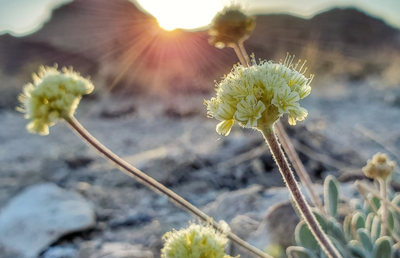
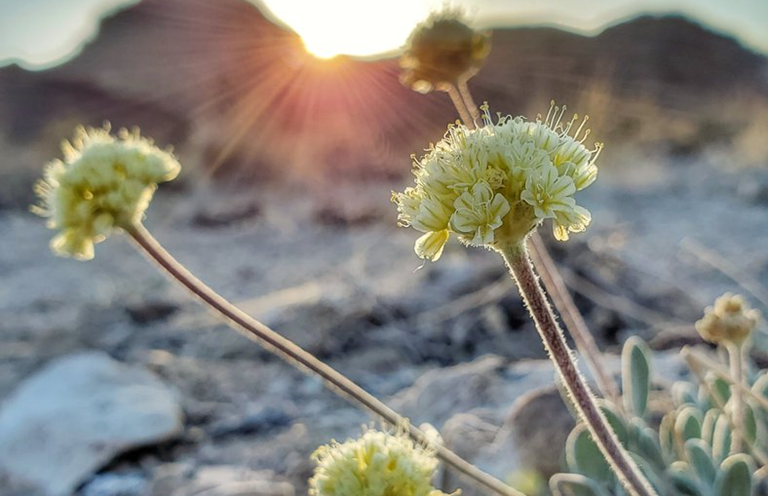
The announcement comes less than a week after the U.S. Fish and Wildlife Service declared the rare Nevada wildflower Tiehm’s buckwheat an endangered species because of the threat posed by the Rhyolite Ridge Mine.
“Rhyolite Ridge Mine poses an existential threat to Tiehm’s buckwheat, and we’re gearing up for a fight,” said Patrick Donnelly, Great Basin director at the Center for Biological Diversity. “The recent endangered species listing gives us the most powerful tool in the conservation toolbox to prevent the extinction of this rare, beautiful wildflower.”
Earlier plans for Rhyolite Ridge Mine called for the complete destruction and removal of most Tiehm’s buckwheat plants. Now Australian mining company Ioneer’s proposal is to almost completely surround most of the buckwheat with open-pit mining operations, leaving just a 12-foot buffer between the endangered species and the mining pit.
In the Endangered Species Act listing for Tiehm’s buckwheat, published Friday, the Service said Ioneer’s plan would “disturb and remove up to 38% of the critical habitat for this species, impacting pollinator populations, altering hydrology, removing soil, and risking subsidence.”
The Plan is the foundational permitting document for the Project and will become the basis for compliance during operations and closure. Ioneer commenced work on the Plan almost four years ago. The latest revised Plan was submitted to the BLM in July 2022. Under the revised Plan, there are no Project-related direct impacts to any of the subpopulations of Tiehm’s buckwheat.
Ioneer’s Executive Chairman James Calaway said:
“We understand the Rhyolite Ridge Project is the first lithium project to be issued a Notice of Intent under the Biden administration, and we see this as a significant step toward ensuring a strong domestic supply of critical minerals and strategic materials necessary for development of a domestic battery supply chain essential to the electrification of transportation in the U.S.”
BLM determined that the Plan was complete on August 17, 2022. However, BLM cannot approve the Plan until an environmental review is completed under NEPA. With work on the Plan completed and the NOI issued, the Project moves into the public review and comment phase of the NEPA process.
To optimize the revised Plan and allow for mining to commence at the southern limits of the deposit, Ioneer says it will undertake further drilling activity at the southern extension of the ore body as soon as a positive ROD is received.
The Company intends to complete the drilling, optimize the mine plan and update capital and operating cost estimates before making a Final Investment Decision (FID).
This work is underway, with the exception of the drilling program. The 24-month construction estimate remains unchanged, with first production expected in 2026.
Ioneer Managing Director Bernard Rowe said:
“The NOI marks an important milestone toward the realisation of the Rhyolite Ridge Lithium-Boron Project and reflects the hard work and dedication of the Ioneer and Stantec teams working closely with the BLM and cooperating agencies.
“Our Project is uniquely positioned in the U.S., and has been engineered to ensure a stable, long-term, environmentally sustainable source of lithium. The Project is expected to produce sufficient lithium to allow for the manufacture of approximately 400,000 electric vehicles per year over many decades. In delivering this world-class project, Ioneer will help the U.S. create a domestic supply of lithium for auto manufacturers, quadrupling the current domestic supply, critical to meeting the climate goals established by the Biden administration, while also positively impacting the Nevada economy by creating 400-500 construction jobs and 250-300 operating jobs to help diversify the Nevada economy.”
In addition to protecting Tiehm’s buckwheat as an endangered species, the Service also protected 910 acres of critical habitat for the rare wildflower, which includes the plants and a 500-meter buffer. This was determined to be an “area sufficient to support the maximum foraging distance of primary insect visitors… that are presumed to be the pollinators of Tiehm’s buckwheat.”
In 2021 the Center proposed a protected area around the wildflowers with a one-mile buffer. There is an extensive body of peer-reviewed literature demonstrating that harm to rare plants from dust and pollution deposits from mining is most severe within one mile of mining operations.
“Ioneer’s ‘Buckwheat Island’ scenario would spell doom for this sensitive little flower,” said Donnelly. “The Endangered Species Act is designed to protect not just plants and animals but the ecosystems those species depend on. We’re going to fight tooth and nail to stop Ioneer from destroying Tiehm’s buckwheat’s ecosystem.”
The mine announcement and endangered species listing for the buckwheat come just weeks after the Service gave endangered species status to another rare Nevada endemic, the Dixie Valley toad. That species is threatened by a geothermal power plant being proposed by developer Ormat and being permitted and pushed forward by the BLM.
In both instances the BLM and Fish and Wildlife Service appear to be at cross purposes, with the Service declaring species endangered precisely because of actions the other federal agency is approving.
“We have to transition to renewable energy to address the climate emergency, but we can’t wipe plants and animals off the planet in the process,” said Donnelly. “If the Biden administration wants the renewable energy transition to succeed, it needs to devise a plan that doesn’t drive species extinct.”
(Center for Biological Diversity)