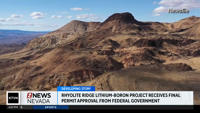

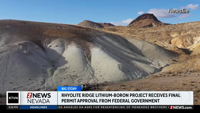


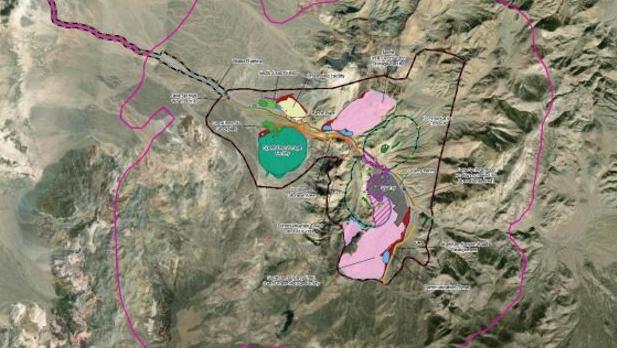
The U.S. Bureau of Land Management has given final permit approval for Ioneer's Rhyolite Ridge Lithium-Boron Project in Esmeralda County.
With the decision, Rhyolite Ridge becomes the first U.S. lithium project approved by the Biden Administration as part of its efforts to accelerate domestic mineral production.
Construction is planned to start in 2025 with first production in 2028.
Rhyolite Ridge will supply batteries for more than 370,000 American-made electric vehicles annually and process battery materials on-site in the United States. The project will create an estimated 500 jobs during construction and 350 high paying jobs during its decades in operation.


“For more than six years, we have worked closely with state, federal and tribal governments, as well as the Fish Lake Valley community, to ensure the sound and sustainable development of our Rhyolite Ridge Lithium-Boron Project. We value our relationships with these stakeholders and appreciate their openness to engage, discuss concerns and develop solutions. Without that open and honest dialogue, such an outcome could never have been possible,” said Ioneer Managing Director Bernard Rowe. “This permit gives us a license to commence construction in 2025 and begin our work in creating hundreds of good-paying rural jobs, generating millions in tax revenue for Esmeralda County, and bolstering the domestic production of critical minerals.”
“I can say with absolute confidence there are few deposits in the world as impactful as Rhyolite Ridge. Today’s approval of Ioneer’s federal permit is the culmination of countless hours of work and a testament to our remarkable team’s dedication to developing and building one of the most sustainable mining projects in the country,” said Ioneer Executive Chairman James Calaway. “We are pleased by what we have achieved working with the Biden Administration, and by the bi-partisan support we have received at the federal, state and local levels.”
Ioneer’s pre-permitting work began in early 2019 and, in December 2022, the company formally entered the final stages of the National Environmental Policy Act (NEPA) review, as required by all projects on federal lands.
As part of the final Environmental Impact Statement, the U.S. Fish and Wildlife Service, which oversees the administration of the Endangered Species Act (ESA), also formally released the ESA Section 7 Biological Opinion concluding Rhyolite Ridge will not jeopardize Tiehm’s buckwheat or adversely modify its critical habitat.
Ioneer says it will limit its operational footprint by avoiding the use of evaporation ponds and curtail its carbon footprint as its steam-powered facility will operate independently from the Nevada energy grid.
With the project formally approved by the federal government, Ioneer says it expects to issue updated reserve figures and estimated project costs by December 2024 and advance toward a Final Investment Decision with its financing partners.
“By greenlighting this mine the Bureau of Land Management is abandoning its duty to protect endangered species like Tiehm’s buckwheat and it’s making a mockery of the Endangered Species Act,” said Patrick Donnelly, Great Basin director at the Center for Biological Diversity. “We need lithium for the energy transition, but it can’t come with a price tag of extinction.”
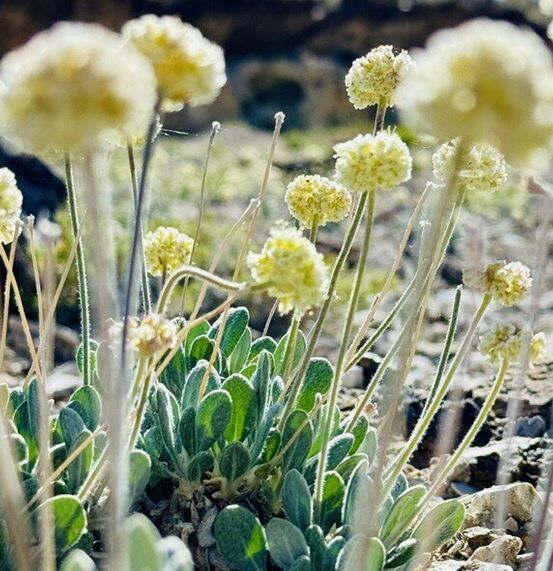
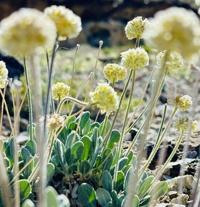
Tiehm’s buckwheat is a rare Nevada wildflower with cream-colored blossoms that grows on just 10 acres of the boron- and lithium-rich soils of the Silver Peak Range in Esmeralda County.
The Center says the mine threatens water sources in the Silver Peak Range, affecting desert bighorn sheep and mule deer herds. Nearby Cave Spring, a cultural site will also be threatened.
“The BLM no longer manages public lands, and instead it provides the means to destroy the environment and pollute water,” said Fermina Stevens, executive director of the Western Shoshone Defense Project. “By fast-tracking lithium projects, ignoring water scarcity, environmental impacts and the opposition of local communities and Indigenous peoples, we see how future projects will be implemented. The United States claims lying, cheating and manipulating their laws somehow gave them ownership of land that was never for sale when in fact they violated our human rights as stated by United Nations committees. For over 150 years the Western Shoshone people have been fighting for land and treaty rights and throwing pennies at us does not relieve the United States of their debt to the Western Shoshone people. All of Nevada belongs to Indigenous people. Our voices will be heard as we continue the fight for justice for the future of all beings of our earth mother.”
On October 24, we were able to attend the meeting announcing the permit approval.
C.E.O. Bernard Rowe says the project will go under construction in early 2025, and it will take about 36 months to finish.
Before that can happen though, Ioneer has to finalize multiple loans to make the project happen.
Those loans were dependent on this decision.
“Turn our attention to closing the D.O.E. loan that we have with the loan programs office through the Department of Energy for 700 million U.S. dollars and we have an equity conditional partnership with Sibanye-Stillwater,” said Bernard Rowe, Managing Director and C.E.O. of Ioneer.
Rowe adds that finalizing those loans will take a few weeks, and once they’ve done that, the company will make final investment decisions, and begin construction.
The construction will create over 500 jobs, and the completed lithium-boron mine will create around 350 jobs.
Along with this, members of the company estimate that this mine will have a big economic impact on Nevada.
“The total economic output impact they calculate of the project for Nevada is $15 billion over a 20 year line and then from a state and local tax revenue perspective, that is around $22 million a year,” said Chad Yeftich, Vice President for Corporate Development and External Affairs at Ioneer.
C.E.O. Bernard Rowe also addressed some environmental concerns with the project, and he says that the lithium-boron mine will be able to co-exist with the environment in Esmeralda County.
“We’ve designed the project to be very very respectful of the environmental sensitivities, particularly the one that most people know about Tiehm’s Buckwheat. The project has been designed to avoid it and we are still sating well away from it,” said Bernard Rowe, Managing Director and C.E.O. of Ioneer.
As we continue to follow the Rhyolite Ridge project, we will continue to provide updates as new information becomes available.