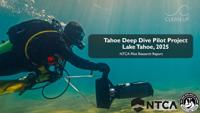
Clean Up The Lake (CUTL) has completed its Tahoe Deep Dive Pilot Project, a six-month effort that explored litter accumulation and underwater health at depths of 35 to 55 feet in Lake Tahoe.
The research tested new diving methods and gathered data to guide future large-scale cleanup operations.
Between February and July 2025, CUTL held 14 cleanup days and 29 dives, with 26 volunteers filling 80 positions and contributing 480 hours both underwater and onshore.
Divers removed 1,933 pounds of debris, totaling 1,042 individual items, from 6.1 miles of lakebed and 4.75 miles of shoreline in Placer County.
Common items recovered included 248 glass bottles, 21 anchors, and a mix of metal, plastic, and recreational debris.
Preliminary data suggests that if similar litter concentrations exist throughout the lake, there could be more than 29,000 pounds of debris and 17,000 items remaining at comparable depths.
Those findings could exceed totals from CUTL’s 2021 cleanup of shallower areas.
Divers reported no new aquatic invasive species beyond known populations such as crayfish and Asian clams.
“This project helped us understand what lies unseen in Tahoe’s deeper waters and how to approach those depths safely and efficiently,” said Jenny Uvira, Programs Manager for Clean Up The Lake. “Our findings not only advance scientific understanding of underwater litter patterns but also guide how we educate and engage the next generation of lake stewards.”
The project also expanded CUTL’s Litter Education and Awareness Program (LEAP) across Placer County schools and youth groups.
The group exceeded its goal of reaching 250 students, ultimately engaging 657 in lessons on submerged litter and invasive species. Some students created an art installation titled Trashcade, made entirely from litter collected by divers, now displayed at the Gatekeepers Museum in Tahoe City.
Support from the North Tahoe Community Alliance (NTCA) and Tourism Business Improvement District funding allowed CUTL to extend its outreach beyond Placer County into Washoe, Douglas, and Nevada counties.
Combined with support from the Pay It Forward Project, LEAP reached more than 1,000 additional students, bringing total participation to 1,693 by mid-2025.
Data from the pilot will help inform future lakewide cleanup efforts and youth education programs. A full report detailing findings on litter, aquatic species, and next steps for protecting Tahoe’s deeper waters is now available.
The Tahoe Deep Dive Pilot Project was made possible through partnerships with NTCA and other regional organizations dedicated to preserving Lake Tahoe’s clarity and ecosystem.