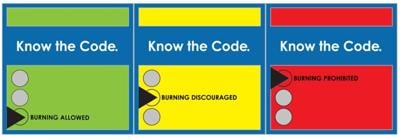

Daily burn code updates that help residents determine if they are allowed to use a wood-burning fireplace, stove or other device, start Tuesday, Nov. 1, 2023 and end on Feb. 29, 2024, as the Northern Nevada Public Health (NNPH) Air Quality Management Division (AQMD) encourages people to “Keep It Clean – Know The Code.”
Sign up for Washoe County Air Quality updates here.
Residents can find green (allowed), yellow (discouraged) or red (prohibited) updates daily on our website OurCleanAir.com, on social media (X, Facebook, or Instagram), on most local news weather segments, or by calling 775-785-4110. Last year, the burn code was in place for 120 days – of those days, 115 were green and 5 were yellow. The last red burn code, when burning was prohibited, was issued on Dec. 29, 2017.
The burn code applies to residences in specific ZIP codes from Washoe Valley extending up to, and including, Silver Knolls, with a fireplace, wood stove, pellet stove or any other wood-burning device; households where the wood-burning device is the only source of heat can receive a sole source of heat exemption through AQMD (call 775-784-7200 for more information).
“The burn code has been around for 35 years and has led to better air quality outcomes in Washoe County,” said District Health Officer Kevin Dick. “Our AQMD team puts in a lot of hard work to develop and maintain programs to reduce air quality hazards and we ask that residents pay close attention to these daily updates to protect our community members who are vulnerable to poor air quality conditions.”
Wood burning in fireplaces and wood stoves during winter months accounts for around 40% of wintertime fine particulate matter in the Truckee Meadows. The harmful emissions can end up in lungs and pass into the blood stream causing both respiratory and cardiovascular health problems. Long term exposure to wood smoke can lead to decreased lung function, aggravated asthma, irregular heartbeat, heart attacks, premature death in people with heart or lung disease and increased susceptibility to heart and vascular disease for postmenopausal women.
(Northern Nevada Public Health)