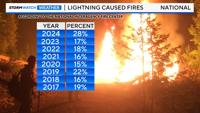
Most wildfires are human caused, but some are caused from lightning as well.
Less than 30% of the fires last year were caused by lightning nationwide. The year prior was less than 20%.
Lightning can cause large fires though, and can still happen when a thunderstorm also produces rain.
The trick is to get the lightning lined up exactly with the rain. If the rain core is small or the storm is moving quickly, odds of starting a fire are greater.
Sometimes lightning can strike vegetation and only smolder for a couple of days before wind speeds pick up, growing the fires.
Fire risk is higher during the initial stage of the storm, as it is gathering moisture, as well as towards the end when the storm is fizzling out.
A slow moving storm has more time to gather moisture and rain over the same area.
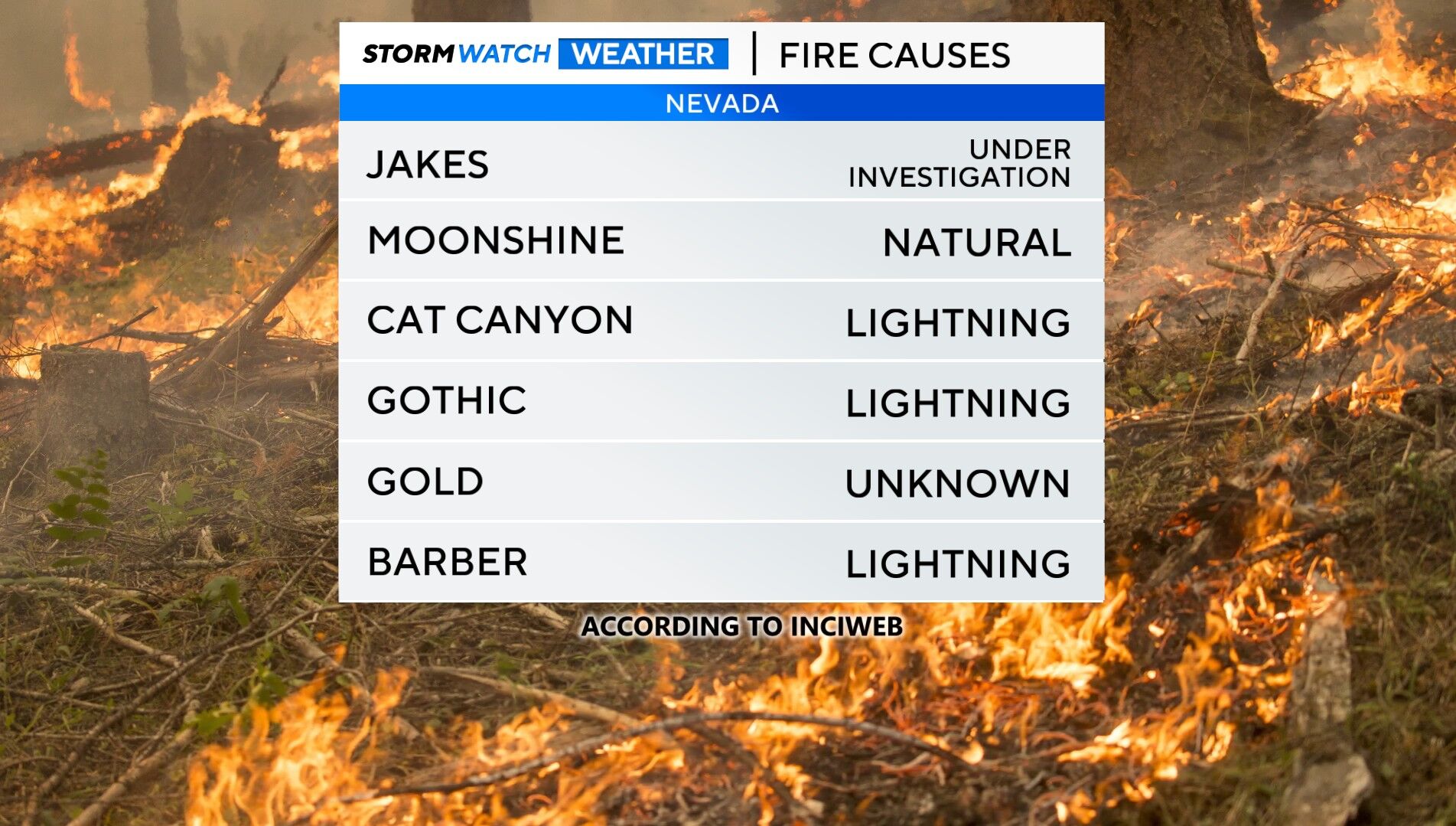
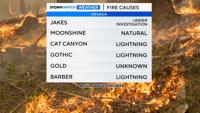
According to Inciweb, lightning is to blame for some of the active fires in Nevada as well as northern California.
The Jakes Fire in Nevada is under investigation, but the Cat Canyon, Gothic, and Barber Fire were all caused by lightning. The cause of the Gold fire is unknown.

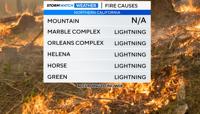
Lightning is to blame for a handful of fires in northern California as well. This includes the Marble Complex, Orleans Complex, Helena, Horse, and Green fire. Some of these fires have already reached 100% containment.

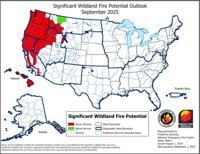
The fire risk for significant wildland fire potential is forecasted to be above normal for the Truckee Meadows as well as Tahoe for both August and September.
The lightning risk moves east on Thursday. We always want to stay fire aware in our area, especially since it's been hot lately.

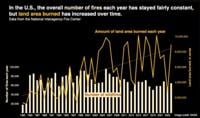
While the number of fires has stayed about the same since the 1980's nationwide, the size of them is growing.
In the 1980's and 1990's the total number of acres stayed below six million overall, but we've had multiple years above that since 2005. This is according to the National Interagency Fire Center.