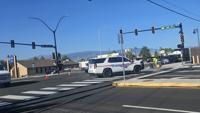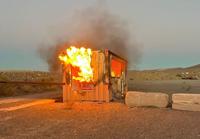
While tornadoes are rare in northern Nevada, flash floods are not. Debris flows can happen too, especially over burn scars. Clogged storm drains can also lead to flash flooding. The soil absorbs rainfall better than the pavement does. However, saturated soils that are water logged can lead to rapid runoff too. Flash flooding is quick, and can seem to happen out of nowhere. Hence the name flash flooding.

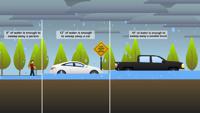
It only takes six inches of water to knock someone off their feet, twelve inches for a car to get swept away, and 18 inches for a truck to get lost in the water. It's best to turn around and not drive through standing water. It is usually deeper than it appears. Most deaths from flooding occurs in vehicles. Oftentimes, flash flooding continues or even starts after the rain has fallen. This can be dangerous if you're camping at night by a river or stream that is prone to flooding. A NOAA Weather Radio is battery operated and can give you alerts when you don't have cell service.

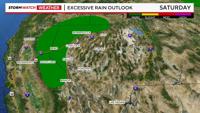
Flash flooding is possible in Northern California and Nevada on Friday and Saturday. Hail, frequent lightning, gusty winds, and flash flooding are possible with any storms that do develop both days. Some of them could turn severe as well. The storm threat goes down Saturday after sunset, with a slight chance of a stray storm on Sunday. Precipitable water values are higher in California compared to Nevada, but there is plenty of moisture to work with overall. The storms will be moving quicker south of Highway 50 closer to the low, but slow moving north of the Tahoe Basin where flash flooding is more likely. Precipitable water values tells us the amount of water vapor in a vertical column of air.


The upper level low is cooler than what's at the surface, allowing the air to rise. Warm air rises, condenses, cools, and forms a cloud. As the low lifts northward and weakens on Sunday, the storm threat goes down, but it's not zero. Northern Nevada can see both flash flooding and dry lightning throughout the year. The storms on Saturday will be rain producers, lowering the fire risk. We typically see our highest rain totals with atmospheric rivers during the winter season. Almost two inches of rain fell in one day on October 24th, 2021 in Reno because of an early season atmospheric river. This is the most rain that has ever fallen at the Reno Airport in one day. Within 45 minutes, over an inch of rain fell in Hidden Valley last July, leading to flash flooding.