
New federal lands proposal could change how one Nevada community manages growth and floods
Douglas County leaders say a new piece of federal legislation could reshape how land is managed across the Carson Valley, with impacts tied to flood control, development, and cultural preservation.
On Wednesday, U.S. Senator Catherine Cortez Masto introduced the Douglas County Economic Development and Conservation Act, a proposal focused on shifting how certain federal lands are used and managed at the local level.
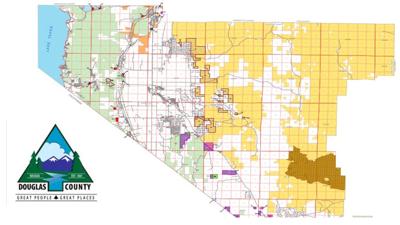
The legislation centers on giving Douglas County and the State of Nevada more authority over thousands of acres of land for recreation, development, and flood mitigation, while also setting aside areas for conservation and cultural use.
County leaders point to past flooding as a key driver. In 2017, nearly 20,000 acres in Douglas County were flooded, affecting roads, private property, and homes. Officials say ongoing severe weather highlights the need for more local control, especially in areas where federal land borders residential communities.
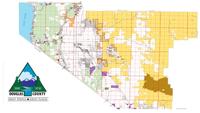
Under the proposal, 7,777 acres of Bureau of Land Management and U.S. Forest Service land would be conveyed to Douglas County, with an additional 67 acres going to the State of Nevada for management within Lake Tahoe Nevada State Park.
The bill also allows for up to 31.5 acres of land to be used for economic development, with proceeds directed toward projects aimed at protecting the Carson River floodplain.
Additional provisions include transferring 1,084 acres to Douglas County for recreation, conveying 724 acres at Dance Hill to the Washoe Tribe for cultural and ceremonial purposes, and transferring 2,669 acres of cultural sites to the Washoe Tribe of California and Nevada.
The proposal also calls for designating nearly 12,400 acres as the Burbank Canyons Wilderness to support wildlife habitat, including sage grouse.
“I worked closely with my partners in Douglas County and the Washoe Tribe to create a bill that would prioritize responsible land management, economic development, outdoor recreation, and preservation of cultural sites,” said Senator Cortez Masto. “Together, we can pass a bill that will give Douglas County the tools it needs to keep its residents safe and conserve its iconic scenery.”
Local officials say the legislation could help address long-standing flooding challenges.
“Floodwater does not respect jurisdictional boundaries, and flooding events do not wait for jurisdictional clarity,” said Mark Gardner, Chairman of the Douglas County Board of Commissioners. “The Douglas County Lands Bill gives the County the ability to implement locally-driven, federally-facilitated solutions that protect lives, improve watershed health, and reduce disaster recovery and mitigation costs in Douglas County. We are grateful for the efforts of Senator Cortez Masto, who is working in partnership with the Board of County Commissioners to serve the interests of Douglas County residents with the introduction and highly anticipated passage of this bill.”
Supporters say the measure reflects coordination across multiple agencies and groups, including federal, state, county, and tribal partners.
“We are grateful to Senator Catherine Cortez Masto for her efforts on the Douglas County Bill,” said Shaaron Netherton, Executive Director of Friends of Nevada Wilderness. “It is wonderful to have a final resolution for the small but beautiful Burbank Canyons Wilderness. In Nevada, these public lands bills, where stakeholders come together to resolve issues, are the appropriate way to find common sense solutions both for conservation and for our communities.”
Emergency response officials say the bill could also reduce long-term costs tied to flood events.
“From the perspective of the East Fork Fire Protection District, the Douglas County Lands Bill is an important step toward strengthening our community’s resilience to stormwater and flood events,” said Alan Ernst, East Fork Fire Protection District Fire Chief. “By enabling the County to proactively manage stormwater generated on federal lands, this legislation will help the County protect the residents of neighborhoods like Johnson Lane and Ruthenstroth that have experienced significant impacts from multiple flash flooding events over the last decade and will ultimately save the District and the County hundreds of thousands of dollars in flood response over time. This is a practical investment in preparedness, safety, and long-term community resilience.”
Tribal leaders say the proposal also reflects years of work to return culturally significant land.
“On behalf of the Washoe Tribe of Nevada and California, I express our support for the Douglas County Economic Development and Conservation Act. This bill provides for the transfer of approximately 2,500 acres of federal land to be held in trust for the benefit of the Washoe Tribe. The lands designated to the Washoe Tribe come from many years of work and negotiations from prior Washoe Elders and Tribal Council members, most of whom have passed on. This meaningful action supports tribal sovereignty, restores Washoe connections to the lands, and will provide new opportunities. We appreciate the collaborative effort that led to this legislation and look forward to continued partnership to ensure these lands are managed with Washoe cultural values and benefit the entire region,” said Chairman Serrell Smokey of the Washoe Tribe of Nevada and California.
The proposal now heads into the federal legislative process. The full text of the legislation can be found by clicking here, and a map of the proposal can be found by clicking here.