


UPDATE - FEBRUARY 13:
A Nevada legislative bill that would help lower egg prices was signed into law by Governor Lombardo Thursday.

ORIGINAL - FEBRUARY 12:
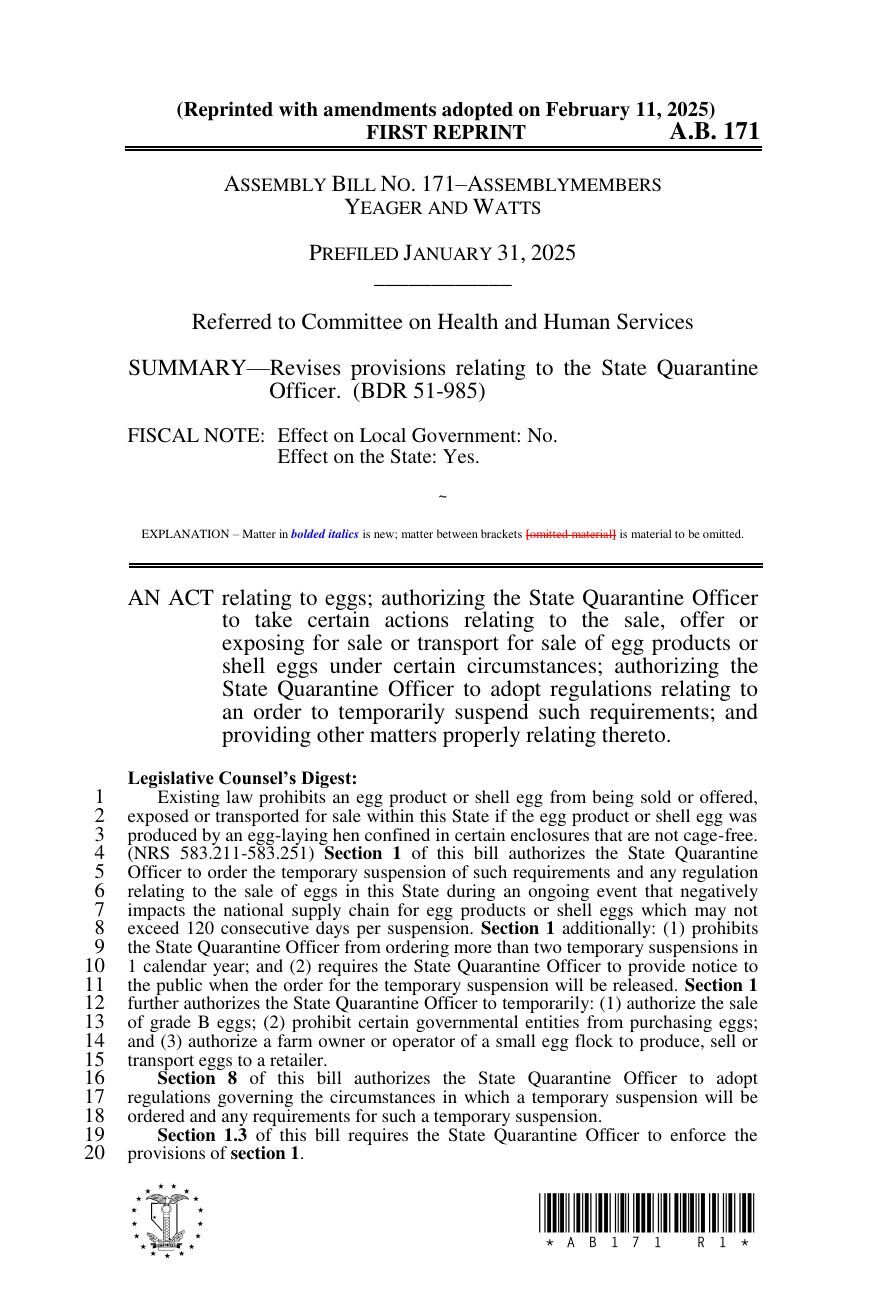
Assembly Bill 171 passed both houses of the legislature this week.
"Our legislative leaders stepped up to support Nevada's retailers in bringing more eggs into the state," said Bryan Wachter, Senior Vice President of the Retail Association of Nevada. "We are grateful to the U.S. Humane Society and other stakeholders who joined this process to ensure consumers receive much-needed relief."
The average price of a dozen Grade A eggs in U.S. cities reached $4.95 in January, eclipsing the previous record of $4.82 set two years earlier and more than double the recent low of $2.04 that was recorded in August 2023.
The main reason that eggs are more expensive is the bird flu outbreak. When the virus is found on a farm, the entire flock is killed to limit the spread of disease. Because massive egg farms may have millions of birds, just one outbreak may put a dent in the egg supply.
The Agriculture Department says more than 23 million birds were slaughtered last month and more than 18 million were killed in December to limit the spread of the bird flu virus. Those numbers include turkeys and chickens raised for meat, but the vast majority of them were egg-laying chickens.
Ten states have passed laws allowing the sale of eggs only from cage-free environments. The supply of those eggs is tighter and focused in certain regions, so the effect on prices can be magnified when outbreaks hit cage-free egg farms.
Many of the egg farms with outbreaks were cage-free farms in California. Cage-free egg laws have already gone into effect in California, Massachusetts, Nevada, Washington, Oregon, Colorado and Michigan.
(The Associated Press contributed to this report.)