

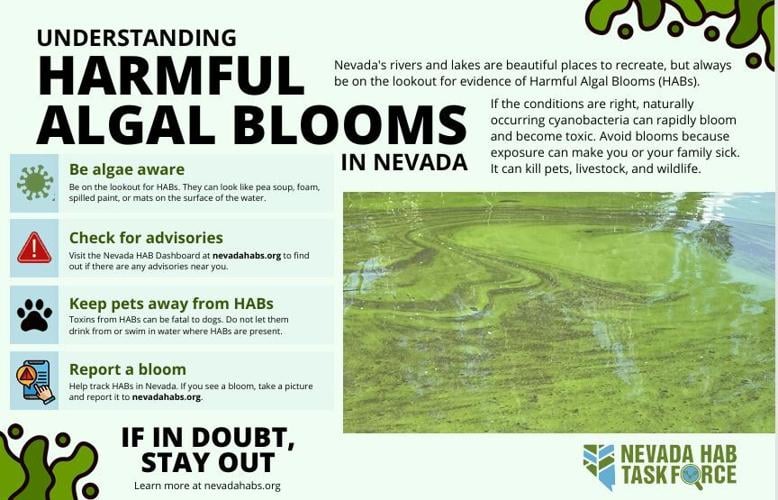
Nevada agencies are working together to provide information on harmful algal blooms, how to recognize them, and what people should know about protecting themselves, pets, and wildlife when using lakes and rivers across the state.
The Nevada Harmful Algal Bloom Task Force is a multi-agency collaboration that brings together the Nevada Department of Agriculture, the Nevada Department of Conservation and Natural Resources Division of Environmental Protection, the Nevada Division of State Parks, the Nevada Department of Human Services Division of Behavioral Health Office of the State Epidemiologist, and the Nevada Department of Wildlife. The effort focuses on improving awareness, monitoring, and response to harmful algal blooms across Nevada waterways.
Officials say Nevada’s lakes and rivers are popular recreation areas, but conditions can sometimes allow naturally occurring cyanobacteria to rapidly grow into harmful algal blooms. These blooms can produce toxins that may make people and animals sick and can be fatal to pets, livestock, and wildlife.
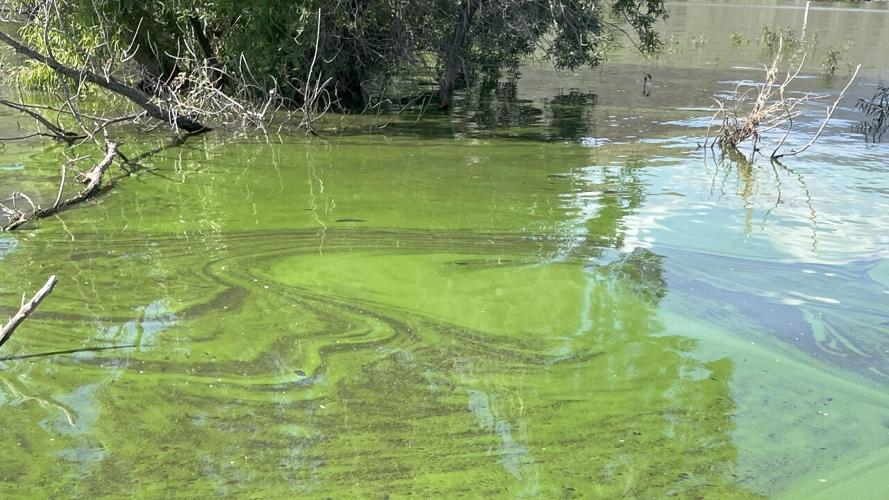
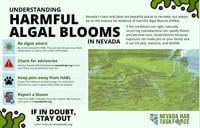
Public guidance stresses the importance of recognizing possible blooms, which may appear as pea soup, foam, spilled paint, or mats on the surface of the water. People are also encouraged to check advisories through the Nevada HAB Dashboard at nevadahabs.org, avoid contact with suspicious water, keep pets away from potential blooms, and report sightings to help monitoring efforts. Officials emphasize, “If in doubt, stay out.”
The task force began in 2019 and was formalized in 2024 to improve detection and response using tools such as satellite imaging, cyanotoxin analysis, and water quality monitoring. Researchers at the University of Nevada, Reno, are also studying environmental factors that contribute to bloom formation.
Over the next several years, the task force plans to expand monitoring networks, improve data collection, and secure additional resources to support ongoing research and public awareness efforts.
More information on harmful algal blooms and public health guidance is available through the Nevada Office of State Epidemiology and at nevadahabs.org.