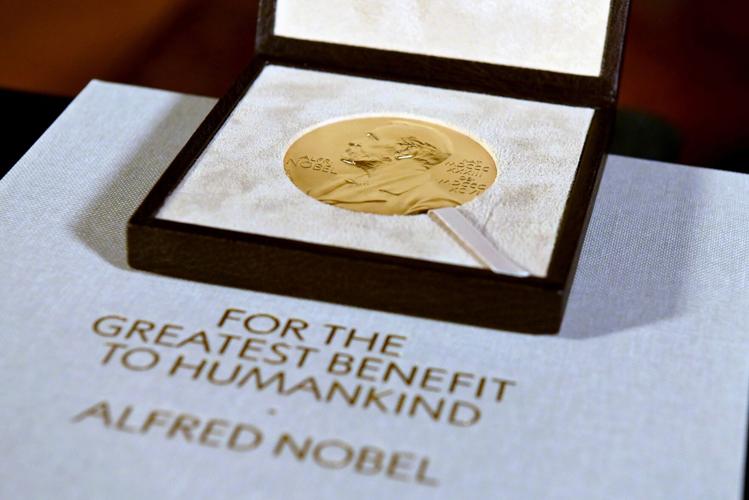


STOCKHOLM (AP) — This year’s Nobel Prize awards concluded Monday after two economists won the Memorial Prize in Economic Sciences for their work on models that help manage economic shocks.
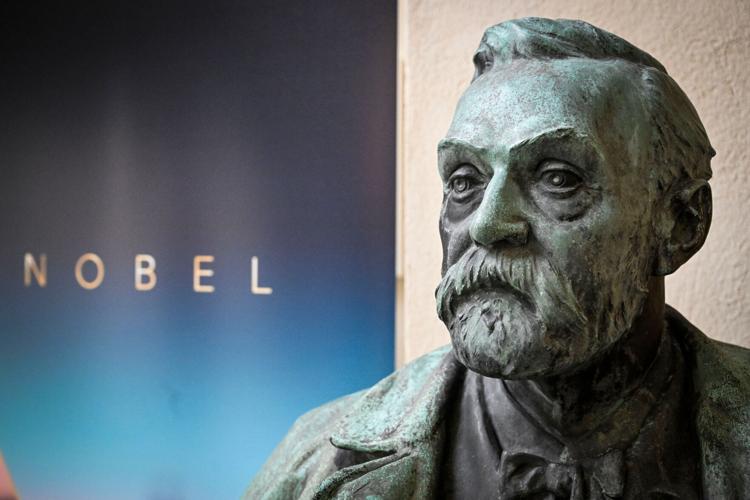
The award ceremonies will be held on Dec. 10, the anniversary of the death of Alfred Nobel, who founded the prizes.
The prize money this year was 12 million Swedish kronor (about $1.2 million), whether for an individual, a small group of laureates, or an organization.
Here are this year’s winners:
Medicine
On Oct. 5, the Nobel Prize in medicine was awarded to three scientists whose work led to a tool that uses light to help unravel how the brain works.
Dr. Karl Deisseroth, Peter Hegemann, and Georg Nagel conducted research that opened a new field with the wonky name optogenetics, combining light and genes to switch neurons on and off in living brains.
Physics
On Oct. 6, the Nobel Prize in physics was awarded to Belgian-born scientist Francis Halzen for his efforts to demystify a rare group of neutrinos, tiny cosmic particles that researchers believe offer clues to how the universe evolved.
Neutrinos are tiny cosmic particles with no electric charge and extraordinarily small mass, making them difficult to detect.
Scientists cannot glimpse the mysterious ghost particles zooming around on their own, so they measure what happens when the particles collide with other bits of matter. Halzen had the idea to turn the vast Antarctic ice into a detector for such collisions.
Chemistry
On Oct. 7, the Nobel Prize in chemistry was awarded to scientists Henri B. Kagan and Kenso Soai for untangling mysterious mirror images in molecules, a discovery that has been used to develop countless drugs and transformed modern medicine.
Many molecules come in versions that look alike but are not exactly identical, like right and left hands. Kagan and Soai found ways to make chemistry pick a side, describing and designing reactions to produce the desired mirror image.
Literature
On Oct. 8, the Nobel Prize in literature was awarded to Canadian poet, essayist and translator Anne Carson for “bold and inventive” works that fuse the classical and the modern and blur the boundaries of poetry and prose.
The Toronto-born Carson, 76, has drawn on themes from classical Greek and Roman literature, modern influences, and personal experience for genre-blending titles ranging from translations of ancient Greek poets to collaborations with dancers and musicians.
Peace
On Oct. 9, the Nobel Peace Prize was awarded to Navi Pillay, a South African-born jurist and former U.N. human rights chief, for efforts that the award committee said promoted international law as it comes under attack.
Her win is sure to be seen as a high-profile rebuke to U.S. President Donald Trump and Israeli Prime Minister Benjamin Netanyahu, who have both rejected the findings of the U.N. commission she led on Gaza.
Hours after the award was announced in Norway, the Trump administration imposed sweeping new sanctions on the International Criminal Court.
Trump, who has coveted the peace prize for years, also railed against the Nobel Committee's decision on Friday.
Pillay on Monday, in an interview with The Associated Press, had sharp words for the U.S. president and called Washington’s attacks on the International Criminal Court “completely unlawful” as well as “negative and cruel.”
Economics
Monday brought the economics prize to American economists Robert E. Hall and Michael Woodford for models that have helped governments and central banks manage economic fluctuations, such as energy crises and inflation.
Their work created the theoretical foundation to better understand how consumers decide whether to save or spend, insights that make it easier for policymakers worldwide to stabilize economies after major changes.
AP Nobel Prizes: https://apnews.com/hub/nobel-prizes