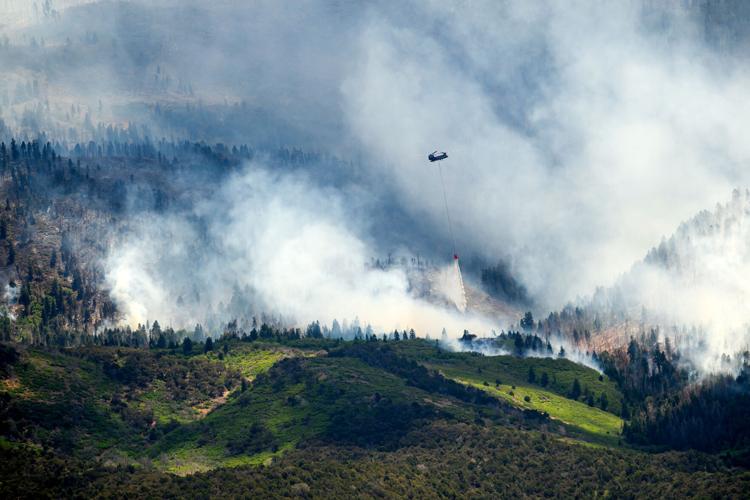


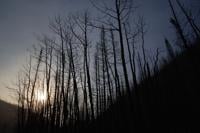

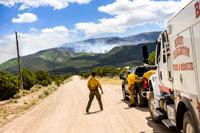

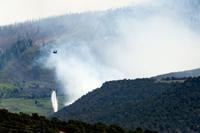

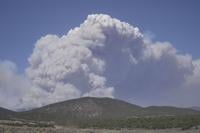

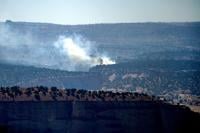

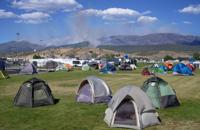
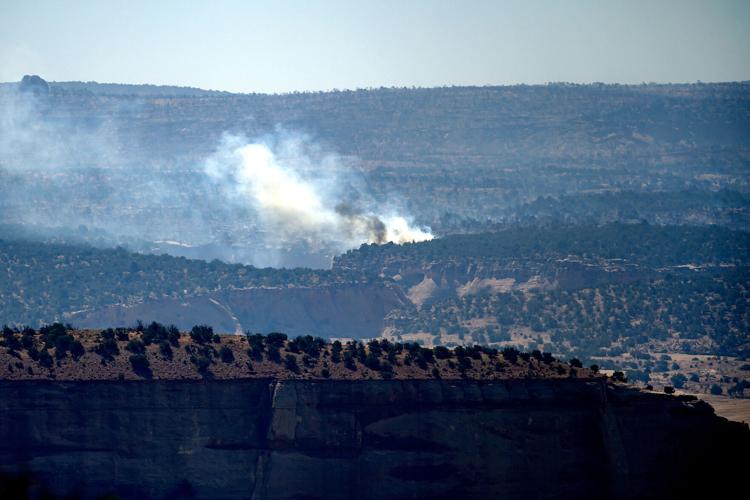
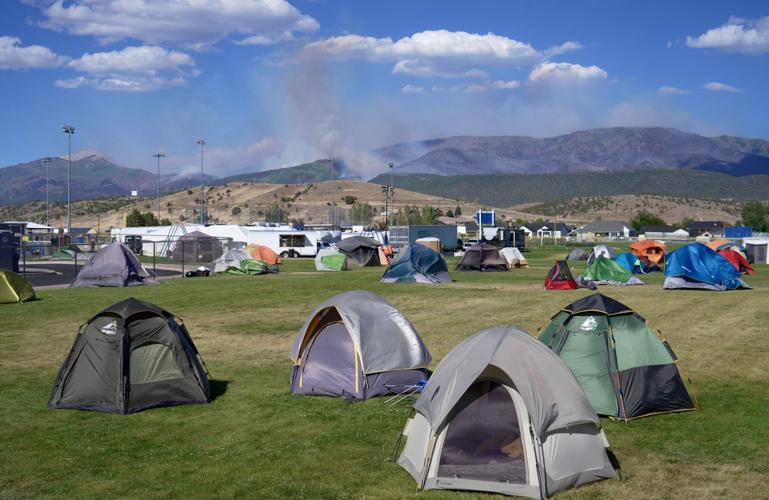
BEAVER, Utah (AP) — Three firefighters were killed and two sustained burn injuries when they were overcome by flames from fast-moving wildfires in hot, windy conditions near the Colorado-Utah border.
The firefighters deployed emergency shelters for themselves during the burnover incident — which occurs when a fire spreads and closes off all escape routes — on Saturday in Mesa County, Colorado, the U.S. Interior Department said.
They worked for the U.S. Wildland Fire Service and U.S. Forest Service and were part of an interagency response to the Knowles and Gore fires, which merged with other fires to form the Snyder Fire. So far, about 44 square miles (114 square kilometers) have burned.
Temperatures in Grand Junction hit a high of 93 degrees Fahrenheit (34 degrees Celsius), with winds gusting to 44 mph (71 kph), according to the National Weather Service.
The U.S. Wildland Fire Service, created earlier this year to streamline firefighting and fire reduction across public lands, said in a statement that it “stands united” with the Forest Service in grief and "in our unwavering support for the loved ones left behind."
"Their bravery, dedication, and sacrifice will never be forgotten," the statement said.
The names of the firefighters who perished were being withheld pending notifications to their loved ones, the Interior Department said.
The Mesa County Sheriff's Office was asking people to evacuate the potential path of the fire and to turn on irrigation water to saturate the land. The federal Bureau of Land Management closed public access to lands it manages nearby.
“Firefighter and public safety are the highest priority,” the agency said in a statement. “The temporary closing of the lands is to reduce exposure to hazardous situations due to the rapid rates of spread and fire behavior that the fire has exhibited. The public is to remain clear of these closed lands.”
Hot, dry and windy conditions
Wildfire activity has intensified across the western United States, as consecutive days of hot, dry and windy weather have fueled flames in Utah, Arizona and elsewhere as new fires popped up across the region.
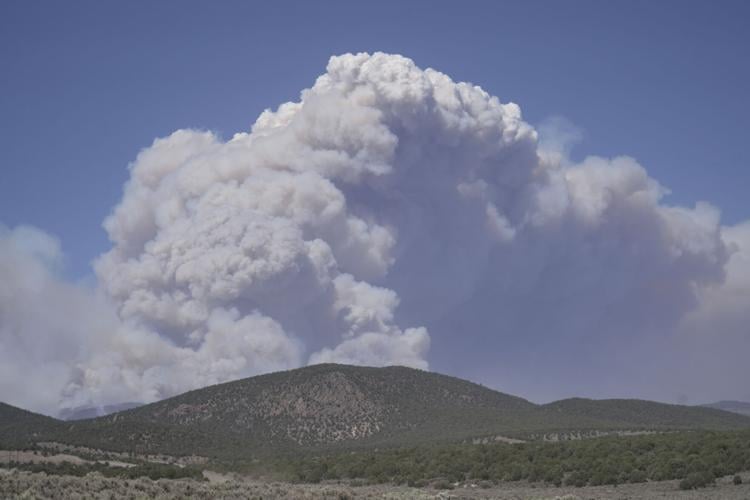
The largest blaze, the Cottonwood Fire, was burning in rugged terrain in southwest Utah. It ballooned Saturday to more than 144 square miles (373 square kilometers) after marching through canyons and mountainsides, destroying part of a ski resort and other summer cabins along the way.
Authorities in Beaver County began working with fire teams on Saturday to assess the extent of the damage, but no estimates were immediately available. Gov. Spencer Cox in a post on social media called it bleak, but he thanked crews for what he called "several miraculous stops and saves.”
The cliffs and steep slopes have made the job even harder, said Alyssa Mason, a spokesperson assigned to the fire.
“It's hard to get dozers and other heavy equipment into that. It's hard to get engines into that,” she said. “It doesn't make it impossible to firefight, but it does just kind of slow things down.”
Hundreds of firefighters have been arriving in the arid state to battle new starts as well as those that have been growing because of what forecasters called critical fire weather — dangerously low humidity levels, warm temperatures and gusty winds.
The danger is even higher this year because of Utah's record-low snowpack and its warmest winter on record. Much of the West is grappling with similar conditions, according to the National Interagency Fire Center.
Nationally, nearly 3 million acres (1.2 million hectares) have burned since the start of the year. That is more than the 10-year average.
Emergencies declared in Utah and Colorado
The conditions in Utah were critical enough for Cox to declare an emergency earlier this week and clear the way for the state to ban fireworks ahead of the July Fourth holiday. The order comes as Utah is experiencing one of the most severe wildfire seasons in recent history, fueled by historic drought conditions.
State officials said that over the past week, Utah has seen an increase in wildfire starts, with each fire showing unprecedented behavior. These starts have stretched the state’s wildland firefighting capabilities, State Forester Jamie Barnes said.
Colorado Gov. Jared Polis also declared an emergency on Saturday, and authorized the use of the National Guard to tackle the fires.
Forecasters with the National Weather Service over recent days have been issuing red flag warnings for a wide swath of the West, from California to Arizona and New Mexico.
South of Grand Canyon National Park, authorities said the flames of a new wildfire were moving away from Grand Canyon Village and the nearby community of Tusayan on Saturday. But about 50 miles (80 kilometers) away, another fire prompted Coconino County officials to issue evacuation orders for those near Kendrick Mountain.
Parts of northern Arizona were without power Saturday as the utility serving the area initiated a safety shut-off in hopes of lessening the wildfire risk.
Power shutoffs have become more common in the West as wildfire risk has expanded. It is usually a last resort after utility forecasters weigh factors like sustained wind and gust speeds, available fuels and topography.
With extreme fire conditions persisting in Utah, Rocky Mountain Power also shut off power lines serving Beaver County and other areas.
Montoya Bryan reported from Albuquerque, New Mexico. Associated Press writers Jamie Stengle in Dallas; Julie Carr Smyth in Columbus, Ohio; and Ed White in Detroit contributed.