





NEW YORK (AP) — Most of the U.S. stock market rose Tuesday following strong profit reports from Equifax, Hasbro and other companies, while oil prices eased back after nearing their highest levels since the war with Iran began.
The S&P 500 added 0.3%. The Dow Jones Industrial Average rallied 529 points, or 1%, while more swings for stocks in the artificial-intelligence industry sent the Nasdaq composite to a modest loss of less than 0.1%.
Stock prices tend to follow the path of corporate profits over the long term, and several companies delivered results for the latest quarter that were better than analysts expected. Big expectations for growth generally are what have allowed the U.S. stock market to hit records recently despite worries about high inflation, higher interest rates and other challenges weighing on Wall Street.
Equifax rallied 11.3% for one of the market’s biggest gains after reporting a bigger profit for the summer than analysts expected, despite high mortgage rates slowing some parts of its business.
Hasbro climbed 11.2% after the toy company said its “Magic: The Gathering” game made more than $600 million in revenue during a quarter for the first time. 3M rose 5.8% after the company behind Ace bandages and Scotch-Brite sponges likewise reported a stronger-than-expected profit, even as shoppers broadly feel discouraged by high inflation.
Stocks got a lift after the price for a barrel of Brent crude erased an early gain to fall 0.7% to $108.79. Earlier in the morning, it got near $112 and approached its highest price since the war with Iran began in late February.
The drop in oil prices will relieve some of the pressure on inflation, if it lasts. Brent’s price has been yo-yoing between $97 and $112 per barrel this month on uncertainty about when the energy industry will return to normal.
For now, airlines and other companies with big fuel bills enjoyed the benefit of Tuesday’s drop. American Airlines rallied 3.7%, and United Airlines flew 2.3% higher.
Another winner was Braze, a customer engagement platform. Its stock soared 51.7% to $45.57 after Salesforce said it would buy the company for $47.50 in cash for each share.
Keeping the market in check was General Motors, which sank 6.8% despite reporting a bigger profit than analysts expected. It also announced a program to send up to $20 billion to investors by buying back its stock.
The pressure is on companies to deliver bigger profits not only now, but also in the future. GM gave a forecasted range for profit over the full year of 2026 whose midpoint fell short of analysts’ expectations.
AI stocks, meanwhile, continued to swirl. They’ve been at the center of the market’s recent uneasiness, as euphoria around the technology’s boom gives way to worries that high interest rates in the bond market will slow the borrowing that’s allowed companies to buy so many AI chips. Last week was the U.S. stock market’s worst since June because of weakness for AI-related companies.
CoreWeave has been particularly shaky. It initially fell more than 6% at the start of Tuesday’s trading, only to swing to a gain of 5% before pulling back to a rise of 1.7%.
Such reversals are nothing new for the company, which has borrowed money to buy AI chips that it rents out to customers over the cloud. A day earlier, it careened between a gain of 7% in the morning and a loss of 3.5% in the afternoon following last week’s tumble of roughly 25%.
All told, the S&P 500 rose 21.84 points to 7,712.57. The Dow Jones Industrial Average rallied 529.85 to 52,495.88, and the Nasdaq composite slipped 6.07 to 26,424.82.
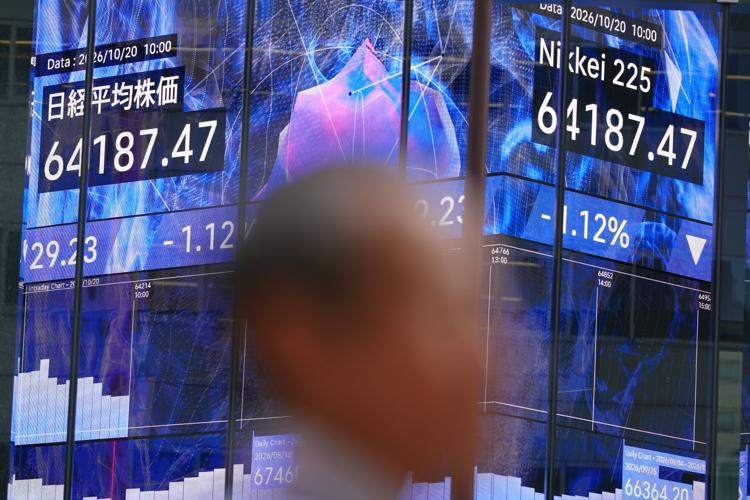
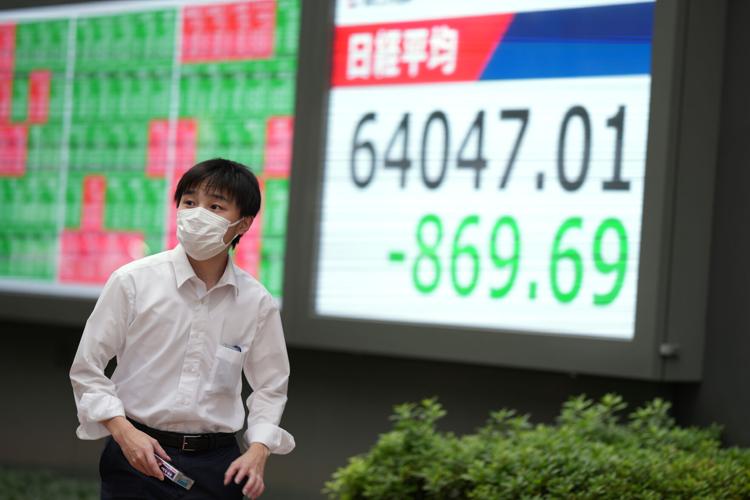
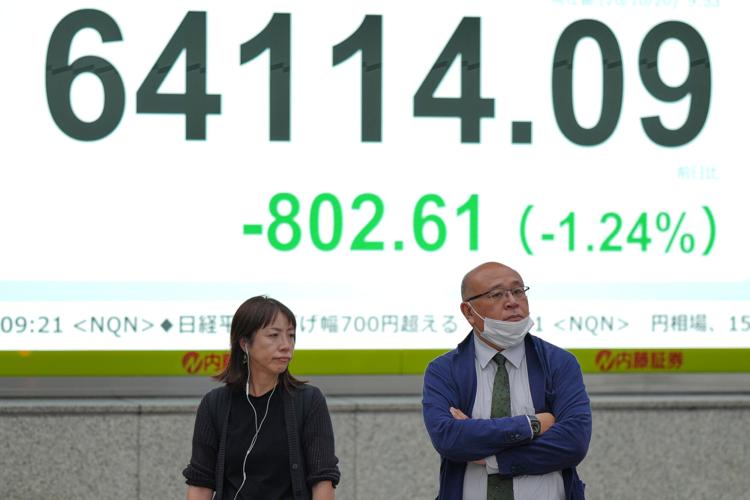
Tuesday’s struggles for AI stocks began in Asia, where a South Korean AI company, Elice, confronted a rough welcome to the stock market. Its stock dropped 32% in its first day of trading in Seoul, and South Korea’s Kospi index fell 3.7% overall.
In other stock markets abroad, indexes in Europe dipped after paring bigger losses from earlier in the day. The CAC 40 in Paris slipped 0.4%, and the FTSE 100 in London fell 0.3%.
A day earlier, European indexes fell sharply following violent protests that could ultimately force governments on the continent to increase their spending to ease voters’ anger. That in turn could put more pressure on their bond markets, which are already strained because of worries about already heavy debt loads for governments.
AP Business Writers Yuri Kageyama and Michelle Chapman contributed to this report.