









NEW YORK (AP) — Hour-to-hour swings for oil prices keep jerking financial markets around, and U.S. stocks wavered Thursday following the latest reversal.
The S&P 500 rose 0.2% and inched closer to its all-time high set last week. The Dow Jones Industrial Average added 276 points, or 0.6%, and the Nasdaq composite climbed 0.1%.
All three indexes erased early drops and gained strength following the latest U-turn for oil prices. Brent crude oil briefly got above $109 per barrel in the morning, threatening to worsen the world’s already high inflation, before quickly erasing all its gains in midday trading and falling 2.3% to settle at $102.58.
Oil prices are yo-yoing because of uncertainty about how long the war with Iran will keep the Strait of Hormuz shut. The closure has prevented oil tankers from exiting the Persian Gulf to deliver crude to customers worldwide, driving up oil’s price.
As oil prices eased Thursday, so did pressure on Wall Street that’s been building from the bond market.
Yields had climbed so high that they threatened to slow economies worldwide and undercut prices for stocks, bitcoin and all kinds of other investments. They’ve already forced the average long-term U.S. mortgage rate to its most expensive level since last summer, and they could curtail companies’ borrowing to build the AI data centers that have supported the U.S. economy’s growth recently.
The yield on the 10-year Treasury briefly got near 4.63% in the morning before falling back to 4.55% following the midday turnaround for oil prices. That’s down from 4.57% late Wednesday and from 4.67% the day before.
Some of the biggest beneficiaries of lower yields can be the smallest companies, many of which need to borrow money to grow. The Russell 2000 index of the smallest U.S. stocks climbed 0.9%, far more than the rest of the market.
Stocks of companies with big fuel bills also rose because of the easing of oil prices. Southwest Airlines gained 2.7%, and American Airlines flew 4.9% higher.
Ralph Lauren jumped 13.9% after reporting stronger profit and revenue for the latest quarter than analysts expected.
They helped offset a 1.8% drop for Nvidia, which is one of Wall Street’s most influential stocks because of its immense size.
The chip company reported stronger profit and revenue for the latest quarter than analysts expected, while also forecasting revenue for the current quarter that cleared analysts’ estimates. “The buildout of AI factories — the largest infrastructure expansion in human history — is accelerating at extraordinary speed,” CEO Jensen Huang said.
But such performances and such talk have become routine, and Nvidia’s stock swiveled between losses and gains before falling.
Some analysts said the weakness may have been because investors were locking in profits after Nvidia’s stock had soared nearly 70% over the prior year, more than double the S&P 500’s 27% jump. The broad AI industry is also getting criticism for becoming too expensive, as well as too circular as Nvidia has bought ownership stakes in companies that use its own chips that drive Nvidia’s revenue.
Walmart also fell, 7.3%, following its profit report. The retailer delivered another quarter of impressive revenue but offered up weaker forecasts for upcoming profit than analysts expected.
Walmart has resonated with Americans who have grown increasingly cautious about where they spend their money with inflation taking a bigger bite out of paychecks.
All told, the S&P 500 rose 12.75 points to 7,445.72. The Dow Jones Industrial Average climbed 276.31 points to 50,285.66, and the Nasdaq composite gained 22.74 to 26,293.10.
A preliminary report on U.S. business activity suggested that companies are also feeling the bite of higher inflation.
A flash survey from S&P Global said growth in activity for U.S. services businesses unexpectedly slowed a tad, though growth was better than forecast for U.S manufacturers.
“The damaging economic impact from the war in the Middle East is becoming increasingly evident in the business surveys,” according to Chris Williamson, chief business economist at S&P Global Market Intelligence.
A separate report, meanwhile, gave the latest signal that the U.S. job market remains in better shape than economists expected. The number of U.S. workers applying for unemployment benefits last week unexpectedly declined in an indication of fewer layoffs.
In stock markets abroad, indexes were mixed in Europe following bigger moves in Asia.
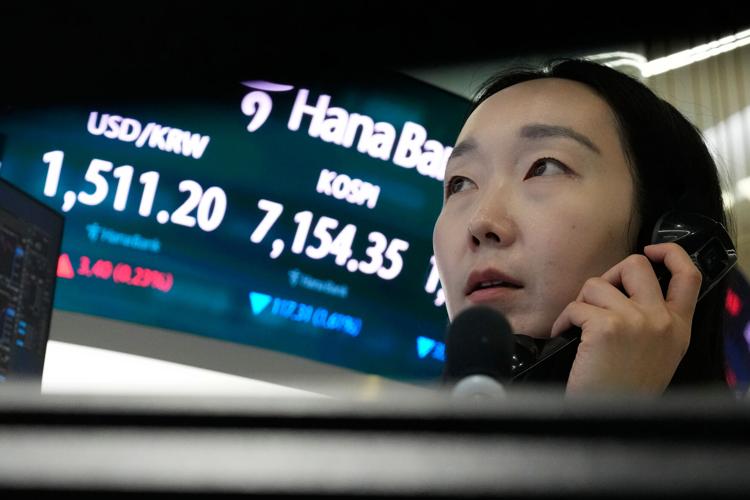
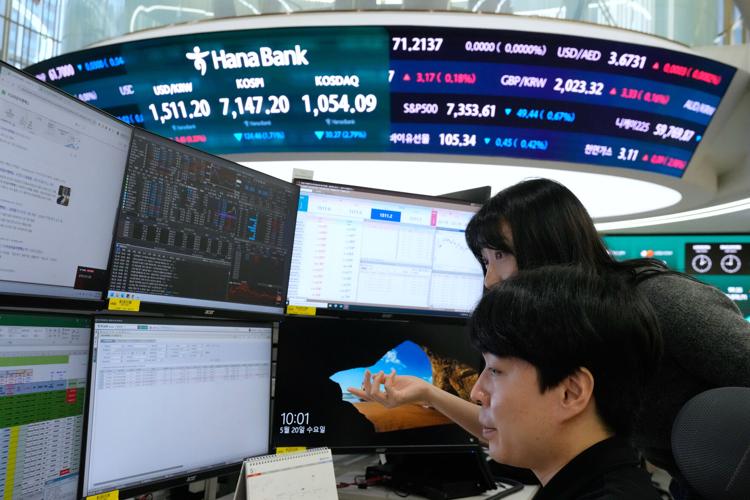
South Korea’s Kospi Kospi jumped 8.4% thanks to strength for technology stocks. Samsung Electronics leaped 8.5% after its labor union and management reached an agreement late Wednesday that averted a strike. SK Hynix, a chip company partnering with Nvidia, leaped 11.2%.
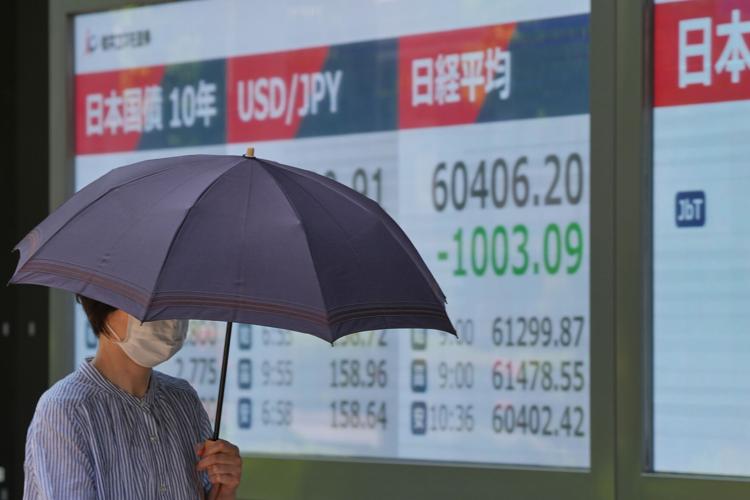
Tokyo’s Nikkei 225 jumped 3.1%, while indexes fell 1% in Hong Kong and 2% in Shanghai.
AP Business Writers Matt Ott and Elaine Kurtenbach contributed.