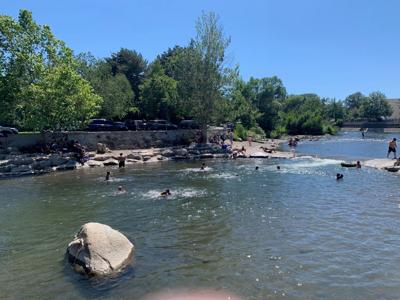




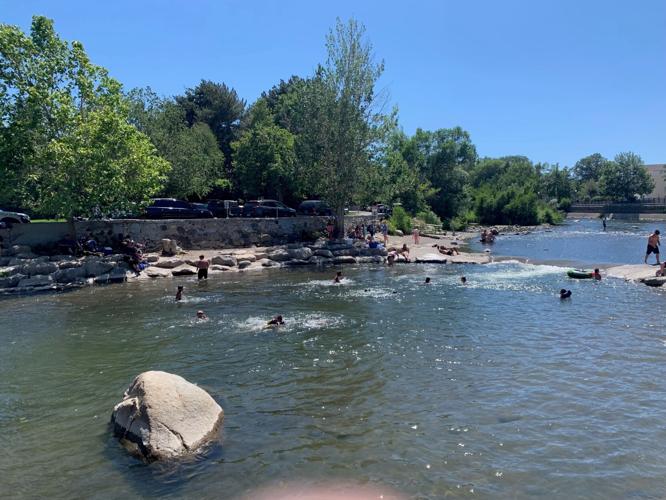
Today was one of the hottest days of the week, inching close to 100 degrees-- but that didn't stop people from gathering at Wingfield Park to enjoy the hot summer day along the river. While having fun, people also need to remember that with heat can come consequences if you're not careful.
Heat exhaustion and heat stroke can creep up on anyone, young or old, on a hot summer day. The key is looking for the signs before they become a serious problem.
Staying hydrated can also be key to preventing heat exhaustion and heat stroke, but sometimes we might forget to drink water throughout the day.
Jenny Walters, the Education Manager for REMSA's Center for Integrated Health and Community Education says "Sometimes we don't realize that we're getting dehydrated, so even if you are at the pool or in the back yard with your kids using your slip and slid we still want to make sure that you're drinking plenty of water."
People should also be keeping an extra close eye on children in the heat because they can't always tell us if something is wrong. Marcus Jones, a dad hanging out with his family near the river today talks about how he keeps and eye out for his own son "I know when he's fatigued, when he's getting tired, I can tell when he's hungry or really getting thirsty it's very easy for him because he can let me know in the way that he acts."
There are some key signs of heat stroke and heat exhaustion to look out for.
Heat Exhaustion:
- Fainting or Dizziness
- Excessive sweating
- Cool, pale, clammy skin
- Nausea or vomiting
- Rapid, weak pulse
- Muscles cramps
- Go to a cooler air conditioned place
- Drink water if fully conscious
- Take a cold shower or use cold compresses
Heat Stroke:
- Throbbing headache
- No sweating
- Body temperature above 103
- Red, hot, dry skin
- Nausea or vomiting
- Rapid, strong pulse
- May lose consciousness
- Call 911
- Take immediate action to cool the person until help arrives