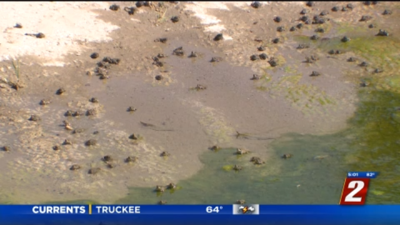
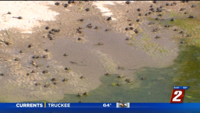

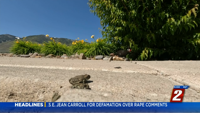

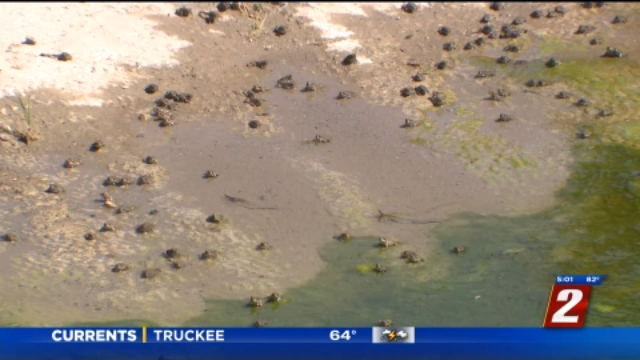
Our newsroom is getting a lot of calls from residents in the North Valleys about frogs swarming their parking lots, sidewalks, and yards.
It turns out they're not frogs; they are western toads, according to fisheries biologist with the Nevada Department of Wildlife Fisheries Biologist Kim Tisdale.
They tell us it's perfectly normal to see population explosions like this after a wet winter and spring, and it's a good sign for the environment.
For one thing they will eat a lot of pesky insects.
"They will eat anything that they can put in their mouths. So, they'll eat beetles and ants and worms. Some of the bigger ones they'll even eat small snakes so they're very opportunistic, they'll eat just about anything that's crawling," said Nevada Department of Wildlife Region Fisheries Biologist Supervisor Kim Tisdale
We spoke to a resident of Lemon Valley. She discovered the toads while taking her grandson on a stroller walk.
"They're all over the street, and they're all over everyone's grass. So, I'm literally going to everyone's grass trying to dodge them, and taking video it looks like people's grass was moving. That's how many there were," said Lemmon Valley resident Debi Vidal.
One employee of a restaurant off of Red Rock road called us to a toad explosion on Wednesday morning.
He says he's just tired of seeing people drive over them.
"They're so small and I kinda wanted to get the word out because they're innocent and they don't deserve to be hurt," said restaurant employee Brandon Woods.
One of the reasons why 2 News is getting so many calls about the toad swarms is because we humans have spread out into their natural environment.
"A lot of the reports that we get come from the North Valleys or you know South Meadows area, that's where we have a lot of standing water in the North Valleys you have those terminal lakes and after a good year like this we have a lot of standing water and that's what they take advantage of," explained Tisdale.
She says after a huge reproductive success like this many of the toads will die off as a self regulating function.
Tisdale says once the toads reach capacity, and it dries out more, we will not be seeing them as much.