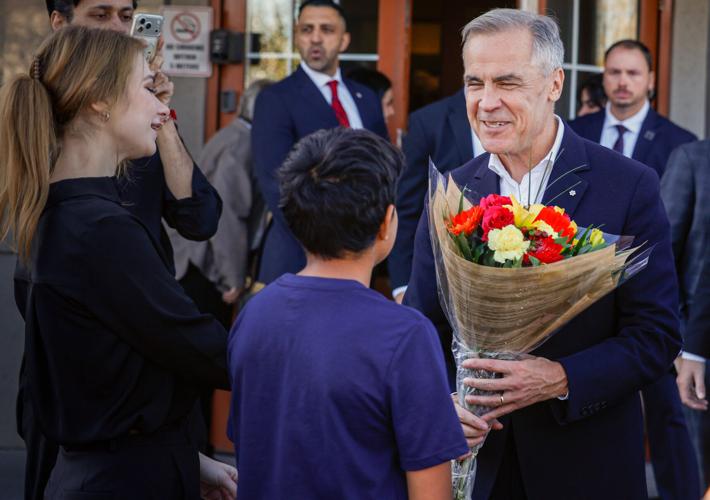



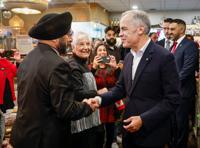

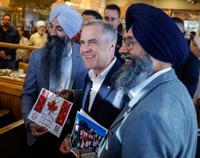




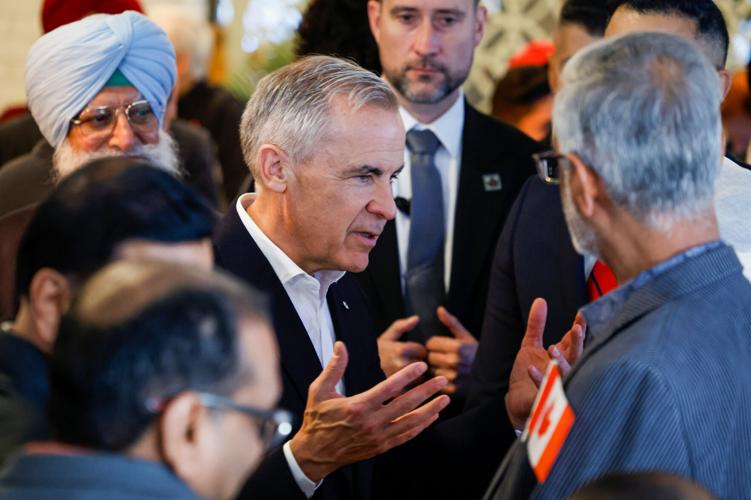
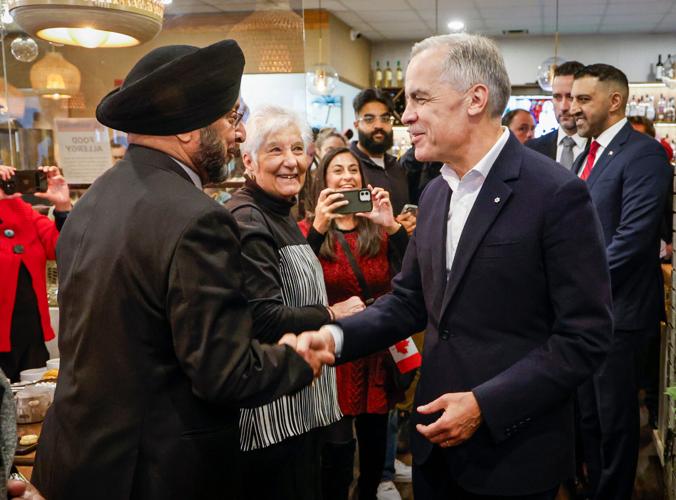
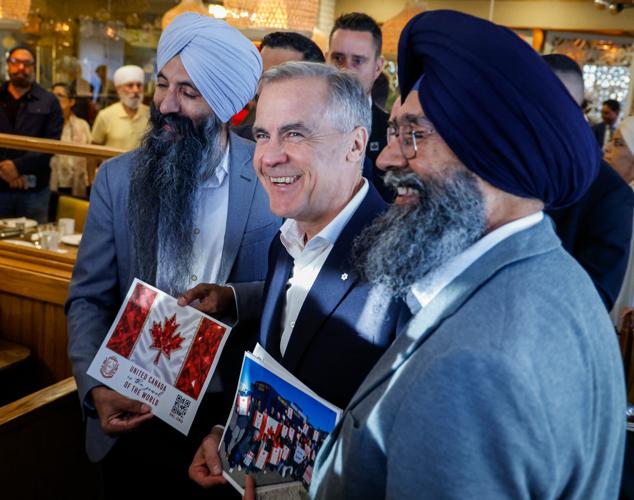
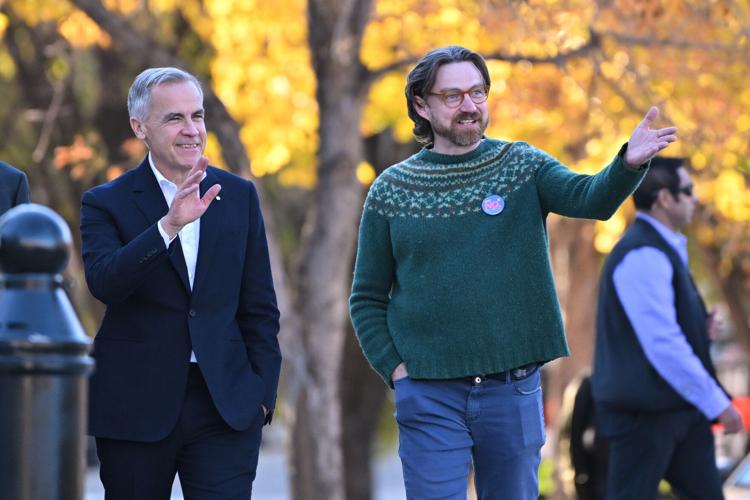
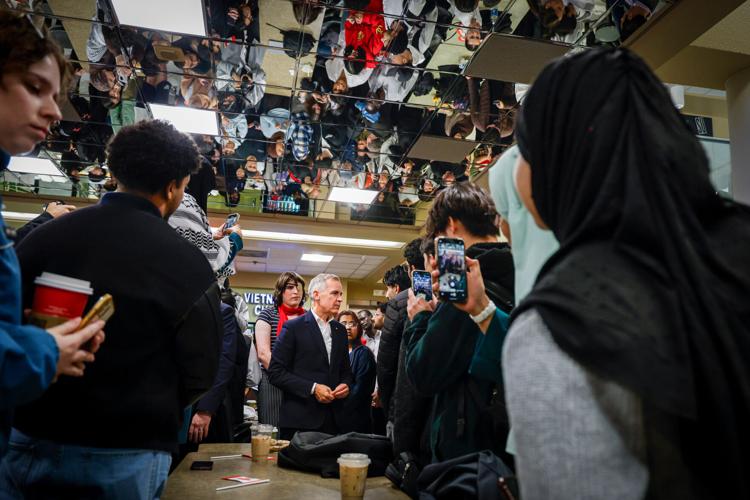
CALGARY, Alberta (AP) — Canadian Prime Minister Mark Carney said Thursday there “couldn’t be a worse time” for oil-rich Alberta to start down a path toward a future referendum on separation from Canada, as he campaigned for national unity in Calgary during advance voting.
Monday’s vote is not a direct referendum on independence. Alberta, which has the world’s fourth-largest proven oil reserves, will decide whether to remain a province or instruct the government to begin the legal process toward a future referendum on separation.
“There couldn’t be a worse time for this referendum,” Carney told pro-Canada volunteers working to turn out voters. “It’s a dangerous and divided world. And it’s time for us to come together and stand up for ourselves and take care of each other.”
Carney did not mention U.S. President Donald Trump, but his warning came amid Trump’s trade war with Canada, economic uncertainty from tariffs and repeated threats to make Canada the 51st state. Carney has repeatedly argued that Canada needs to become more economically resilient and less dependent on the United States.
“We are stronger together and Canada is worth fighting for,” Carney told the volunteers.
Carney takes his unity campaign to Alberta
Carney opened Thursday with three stops before heading to the day’s main event, a Forever Canadian rally at the BMO Centre, where he was expected to make the case for keeping Alberta in Canada. Organizers were also holding a second rally with Carney in Edmonton on Friday.
He pointed to the many Albertans who were born or educated elsewhere in Canada and to firefighters who come from across the country to help Alberta during wildfires as examples of the ties binding the province to the rest of Canada.
“We’re making ourselves stronger as a country, stronger as Albertans,” Carney said. He urged volunteers to make sure voters cast their ballots by Monday.
A Liberal prime minister finds unlikely support
The setting is striking for a Liberal prime minister. Alberta has spent decades feuding with Liberal governments in Ottawa, particularly over energy and federal power. But Carney has broken with some of the policies associated with his predecessor, Justin Trudeau, fast-tracked a proposed new oil pipeline to the Pacific and called Canada an energy superpower.
That has complicated the separatists’ case. Tanya Clemens, co-chair of the pro-independence group Let Alberta Decide, acknowledged Carney presents a challenge.
“He’s formidable for sure,” Clemens told The Associated Press.
Clemens argued, however, that Carney’s agreements with Alberta Premier Danielle Smith amount to “pinky promises” that do not resolve long-standing grievances with Ottawa.
Keith Wilson, another leader of Let Alberta Decide, rejected Carney’s argument that global instability made this the wrong time for the vote.
“The worst timing for this, why? I don’t understand what’s the logic,” Wilson said. “Then it’s the best time for him to get back to Ottawa.”
Wilson said Carney should ask Parliament to repeal federal laws that separatists say have hurt Alberta, including federal authority he says could be used to tax oil exports in retaliation against the United States. The U.S. imported an average 3.9 million barrels a day of Canadian crude last year, roughly 63% of all U.S. crude imports.
Wilson predicted Carney would eventually impose such a tax, even though Carney has said he does not see the value in using Canadian energy exports as leverage against the United States and has stressed the importance of Canada remaining a reliable supplier.
“It’s one Cabinet meeting away,” Wilson said. “He’s gonna do it. He has to do it.”
Smith, who called the vote but supports remaining in Canada, cast her ballot Wednesday and said she voted for Alberta to remain in Canada. She has said support for separation remains too high for her liking.
“Canada can still work,” Smith said after voting. “We just need to make some changes.”
Thomas Lukaszuk, a former Alberta deputy premier who leads the pro-Canada group Forever Canadian, said Carney has found surprising support among traditional conservatives.
At a recent fundraiser at Calgary’s Ranchmen’s Club, a private club popular with oil and gas executives, Lukaszuk said one prominent executive called himself a “Carney conservative” — and the room applauded.
Lukaszuk said the political landscape would be “very much” different if Trudeau were still prime minister.
Daniel Béland, a political science professor at McGill University, called Carney’s popularity in Alberta “highly unusual” for a Liberal prime minister. He said Carney has also benefited from a “Trump effect,” as Trump’s trade war and 51st-state threats have rallied Canadians around their leader — even in Alberta.
From the political fringe to a provincewide vote
The referendum marks a remarkable rise for a cause long relegated to Alberta’s political fringes. After the COVID-19 pandemic and the 2022 Freedom Convoy, activists who had organized against vaccine mandates and other restrictions turned their attention to Alberta independence.
The convoy began over vaccine requirements for cross-border truckers but grew into a broader protest against pandemic restrictions, paralyzing downtown Ottawa and blocking major Canada-U.S. border crossings.
Clemens said COVID accelerated the movement by teaching people how to organize politically and become more involved in party politics. She said separatists also see Monday’s vote not simply as a step toward independence but as a way to give Alberta leverage in negotiations with Ottawa.
Advance voting runs through Saturday, with the final vote Monday.