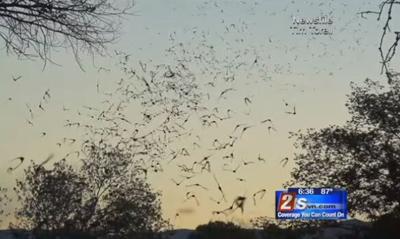


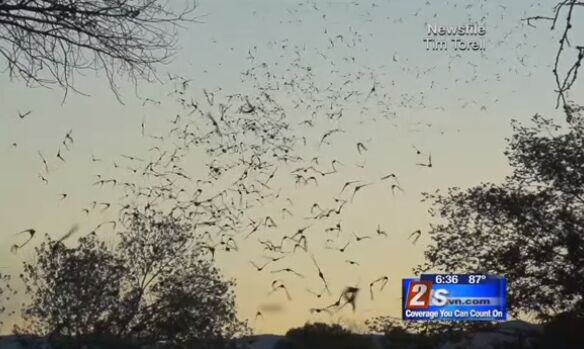
Bats are out and about in higher numbers this time of year, and the Nevada Department of Agriculture is issuing a warning: they've found several that tested positive for rabies.
Nevada State Veterinarian JJ Goicoechea said it's not uncommon to find bats that test positive for the virus. They've found six so far this year between Clark and Washoe Counties. He said it's enough that they want the public to be aware, since May to October is bat season.
"This time of year we tend to see an increase in human and pet interactions with bats," Goicoechea said, "and it's because the bats are getting ready to migrate, or to hibernate, depending on the species."
Healthy bats are not aggressive, and typically not harmful, but rabid bats are unpredictable and can spread the virus with a bite. Goicoechea said the main concern is for pets and children who might make contact with a bat.
For dogs, cats, and ferrets, the rabies vaccine is mandatory in Nevada, and needs a booster at least every three years.
While human infection in the United States is extremely rare, the virus can still be deadly.
"We do not want to see any one come in contact with a rabid bat," Goicoechea said, "and we definitely don't want to see anyone actually contract the disease."
If you find a bat acting strangely, like flying around during daylight hours, you should call animal control.
If you find a dead bat, they ask that you use gloves or a bag to pick it up, put it on ice, and take it to the Nevada Department of Agriculture, located at 405 21st Street in Sparks. They test dead bats for the virus, and then keep track of the areas in which they are found. They ask you to call the Animal Disease Lab first at (775) 353-3709.