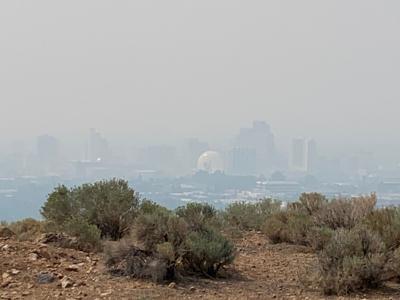


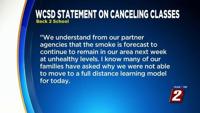


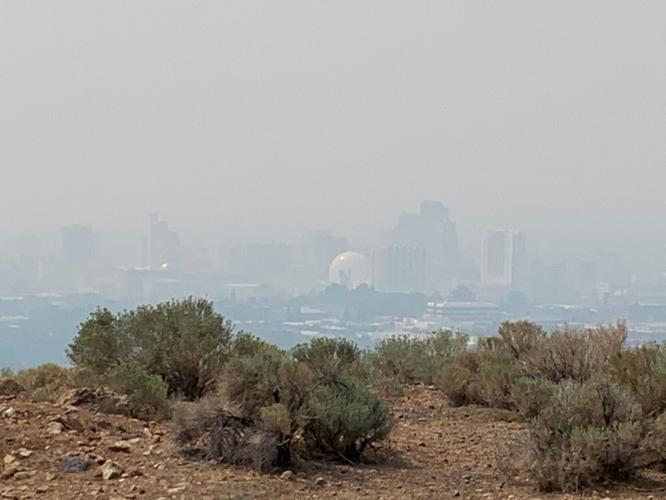
Smoke continues to fill the air in western Nevada, leading to bad air quality. That pollution is enough for many people to stay indoors.
"It's pretty awful. I'm really grateful I'm an indoor worker but I do feel bad for anybody having to work outside in these conditions," Amanda Winn, Sparks resident said. "Even doing things like walking my dog, I have not been doing that after work, which is a pretty regular activity,"
"It's very hard to breathe," Katie Krebs, Reno resident said. "I've got a lot of allergies."
"My wife and I usually sit outside on the patio afterwards, in the evening," Rich Trenery, North Valleys resident said. "We went out there and turned around and came right back in. It's just too bad."
The bad air quality is a result of wildfires burning in Northern California. The small particulates can get into the airways and have dangerous effects.
"Everybody, including healthy people, should try to stay indoors," Dr. Sonia Budhecha, Pediatric Pulmonologist at Renown Regional Medical Center said. "The elderly, children and people with underlying disease, especially lung disease, are at much higher risk."
Budhecha says she gets a lot more phone calls when the air quality is bad.
"Children start having more coughing and wheezing episodes and we always remind them, please use your inhaler and sometimes we have to prescribe additional medications," Budhecha said.
Children with asthma and other lung conditions may have a harder time dealing with the smoke in the air.
"I worry a great deal about those children that already have underlying health conditions because this can definitely exacerbate their symptoms, exacerbate their asthma, make them sick," Dr. Budhecha said. "I also worry that the incidents of asthma and asthma can develop more commonly in children that are exposed to large levels of air pollution because children are at such higher risk."
Charlene Hanson lives in Oakland but is visiting her parents in Northern Nevada. The wildfires in Northern California are preventing her from going back home.
"We don't have air conditioning out there so we came back to stay with my folks," Hanson said. "They have air conditioning, air filters, so that's making it tolerable."
Hanson says her family is avoiding the smoke as much as possible by staying inside.
"It does make me feel a little trapped inside the house," Hanson said. "It's sort of like a snow day where you don't really want to go outside. You want to stay indoors and find activities. Especially, for my young children."
People who have recovered from COVID-19 are also encouraged to take extra precautions to avoid exposure to the particulate matter in the air.
"People that have recovered from COVID can still have some lung abnormalities that persist for several weeks to months," Budhecha said. "So we would definitely urge them to be extra careful."
Anyone who jogs or exercises outdoors might want to change up their routine. It is better to avoid physical activity outdoors.
"When you're doing physical activities, you're breathing harder and faster so your exposure to these particulates is going to be even higher and can really cause problems," Budhecha said.
Governor Steve Sisolak's order for people to wear face coverings in public is still in place. Budhecha says regular cloth masks do not keep the small smoke particulates from getting into your airways, so an N95 mask is a better option. There is still a shortage for those as medical professionals continue to treat patients with COVID-19.
