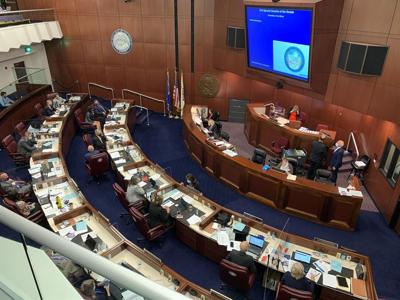


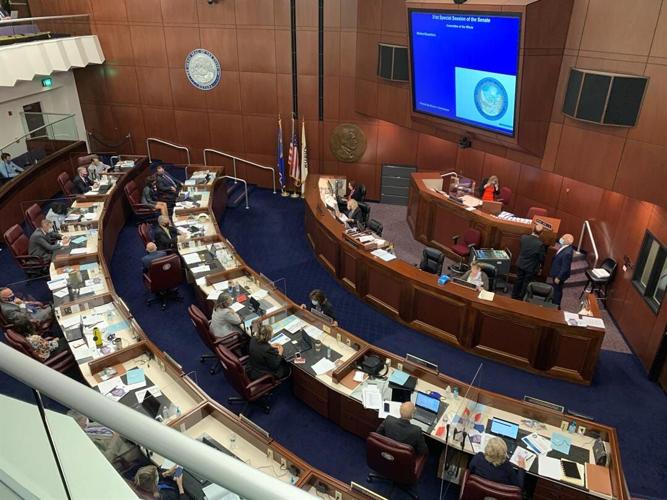
The Nevada state legislature wrapped up the 31st Special Session, Sunday night. It address the state's $1.2 billion dollar shortfall, which accounts for about one quarter of the general fund. The Assembly and Senate passed passed AB3 after an amendment added $50 million of CARES Act funding for educational purposes, including distance learning. That was the key for many republicans to approve the bill.
Many lawmakers worked remotely but had to be in Carson City to vote. The public had to testify via phone. The legislature put in many precautions ahead of the special session to keep people safe.
"I'm incredibly thankful for our staff, the national guard, for the folks that helped us make sure that this building was as safe as possible, that we had a process that used technology to be inclusive and hear input from the public," Speaker Jason Frierson, D-Las Vegas said.
AB3 cut all $31 million dollars from the Read By Three program and more than half of the Gifted and Talented program. It also cut school safety by more than two-thirds. Zoom and Victory schools kept their funding and per pupil spending will not change. The session also resulted in cuts to higher education, capital projects and health care.
The bill allows more than $41 million to avoid cuts for state workers. It will go towards merit pay raises, reducing annual furlough days from 12 to six, and prevents layoffs.
"I think one of our goals of looking at this budget in a comprehensive fashion was to ease pain across the board," Sen. Nicole Cannizzaro, D-Las Vegas said. "There's still a lot of pain in this budget. There is still a lot of things that we are cutting."
Lawmakers found an additional $138.6 million during the special session to use in other places, saving some cuts. They also saved some programs that were on the chopping block in the governor's budget proposal.
"He was draconian," Sen. James Settelmeyer, R-Minden said. "He was actually going taking away people's arms, legs and teeth. He wanted to get rid of the prosthetic program. He wanted to get rid of the dental program and to do that when you still had $26.5 million, at least, in the Medicaid reserve account didn't seem very wise."
With the current budget crisis behind us, they are hopeful the COVID-19 pandemic does not create more financial hardship for Nevadans and the state budget.
"We need to keep our economy on the right track, make sure that we do not dig ourselves another hole," Assem. Robin Titus, R-Smith Valley said. "That would be a disaster. Even more so than we already have."
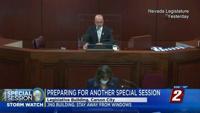
Governor Steve Sisolak says he will call another special session to address other policies that he says cannot wait for the 81st Legislative Session, which starts in February. He planned on signing a proclamation for the 32nd Special Session immediately after the last special session closed. He says that will wait until he thinks it is safe enough. Nevada is experiencing a spike in COVID-19 cases. Lawmakers say they will be ready when the governor calls them in.
"We've had conversations for months," Frierson said. "We're going to continue to talk, we're going to continue to talk about what would be appropriate for now versus next session and whether or not health conditions allow us to talk about some of those policies."
The next special session will likely focus on issues like criminal justice and police reform. Others say they want to pass legislation to protect schools and businesses from lawsuits in the event that someone catches the virus at their facility.
"We need to offer them some protection," Titus said. "They've already been devastated and so civil liability, liability for the school systems, we have to discuss that."
"We probably should have dealt with the liability factor here," Settelmeyer said. "As far as the police reforms, I'm not really sure that's a factor of COVID. Those are things that could have been done in the regular session and could wait until the next regular session."
Lawmakers say they expect to discuss mail-in ballots for the general election in November, remove barriers that impedes the work of Nevada's unemployment insurance program. The governor also wants to find ways to stabilize businesses and revise safety standards, all while creating a safe environment.
"We have to let him make sure that he's keeping us safe and creating an environment where I think folks are being responsible and staying home as much as possible, wearing masks and we're going to support that," Frierson said.
With safety in mind, Sisolak says he will not call the special session until his office and legislators have had a chance to review the policy items so they can conduct the hearings efficiently.
Gov. Sisolak issued this statement on Sunday:
I appreciate the hard work of the Nevada Legislature during the 31st special session in making the difficult decisions that were necessary to amend the state’s Fiscal Year 2020-21 budget and address the $1.2 billion shortfall caused by the COVID-19 pandemic. Some of the reductions were restored with limited one-time funding options that were identified and additional Medicaid dollars identified at the start of the session based on just released utilization rates. Yet, with a $1.2 billion shortfall, we know our state will be challenged to provide the essential services Nevadans deserve in health care, education, and so much more.
Legislation passed during the special session includes the requested flexibility to take advantage of any direct federal funding for state governments, if authorized, for this purpose, to replace lost revenue and restore reductions. Flexibility is also included to continue to take advantage of the enhanced Federal Medical Assistance Percentage (FMAP) if it is extended later this month, which could also reduce the impact of the related reductions during this fiscal year.
While all states are facing devastating impacts to their budgets as a result of the COVID-19 recession, Nevada once again finds itself hit the hardest due to an overreliance on an unbalanced revenue structure and the continued need to successfully diversify our economy beyond hospitality and tourism.As Governor, I have been faced with these budget realities and difficult decisions day in and day out since this global pandemic hit Nevada a little over four months ago in March. I know our lawmakers have also seen the impacts of this virus in their districts, and in this special session they have weighed the magnitude of this situation and its impacts on our State as a whole. Now that the immediate budget crisis has been addressed, we must recommit ourselves to uniting under our shared values and goals.
When faced with these unprecedented challenges, there is an expectation that disagreement will occur. Going forward, we must not focus on what divides us, but commit ourselves to the overwhelming consensus that was expressed by both parties during this session. That there are longstanding, structural problems that must be addressed to ensure Nevada is no longer the most vulnerable state in the nation every time the economy takes a downturn. We owe it to our fellow Nevadans, most importantly our children, to seize this opportunity going forward. I look forward to partnering with legislators and community leaders on this great task ahead of us.
We are in a constantly changing, unpredictable economic environment due to the COVID-19 pandemic. With governors around the country and our state legislators, I will continue to work to protect lives and advocate for federal assistance for the replacement of lost revenue that none of the COVID-19 bills have provided to date. I am grateful for the flexibility under the special session legislation to restore the reductions in whole or in part from any additional revenue that may be generated in this fiscal year.