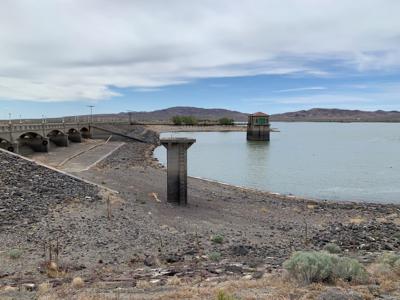

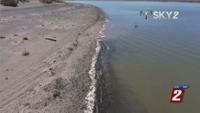

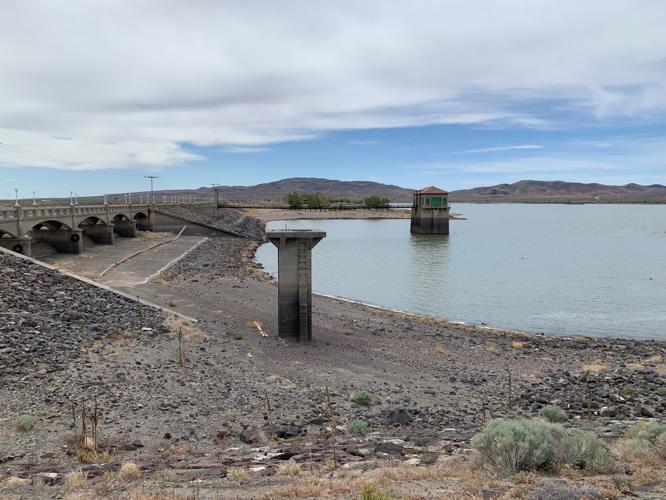
The Lahontan Reservoir will not fill up this year. It is currently at 151,711 acre feet. That compares to one year ago when the lake only had 118,034 acre feet. The reservoir has a capacity of approximately 300,000 acre feet. This year's water levels are an improvement over 2021 but farmers in Fallon are only expected to receive 70% of their water allocations.
"As producers, we love when we have plenty of water to produce for normal allocation but you have to remember, we're growing it in a high desert," Abe Schank, Fallon farmer said.
Schank grew up on the farm that he operates with his father.
"My dad and grandpa were in the dairy industry," Schank said. "Then when they got out of that, they went to beef and now we're just growing forages."
As a fourth-generation farmer, he knows that Nevada winters can be unpredictable. October and December brought above-average precipitation, followed by the driest January, February and March on record. That led to a disappointing snowpack.
"Historically, you can bet that we're going to get more storms along the way, and then just kind of an abnormal year where everything just kind of shut off and as it gets closer to growing season, then you kind of have to readjust stuff and start making changes," Schank said.
Water is still entering the the reservoir through the Carson River and the Truckee Canal. That is happening faster than it is being released, so the water level is still rising. It's a guessing game how much more it will rise before it peaks. Officials say it will not fill up, which is typically needed for farmers to get 100 percent of their allocations.
"We're going to see a real demand for that as we start to grow crops such as corn, requiring an incredible amount, so that will be right around the corner," Rusty Jardine, General Manager of the Truckee-Carson Irrigation District said.
The storms in April and over the past week have helped add more to the snowpack. That improves the likelihood that the farmers will get 70% of their water.
"We saw some concern exist that that may not be a sure number but now with a little help from Mother Nature, upstream, we're seeing that it still remains a good, solid 70% supply," Jardine said.
The cooler weather has delayed the growing season for some farmers. Schank usually cuts his first crop of hay during the first week of June. He does not expect that to happen until the middle of the month, now.
"I figure we're anywhere between two to three weeks behind where we normally would be," Schank said.
One reason the reservoir is higher than it was, last year, is that the October rain saturated the soil. That allows the spring snowmelt to happen more efficiently. The lake was close to empty by the end of 2021. Jardine expects a similar situation, this fall.
"I think you'll see that we will have depleted, for the large part, what we have in supply, presently," Jardine said.
Not all of northern Nevada's farmers are in the same boat as the Lahontan Valley. Most farmers in Lovelock do not expect any irrigation water because the Rye Patch Reservoir is not high enough.
Water is not the only factor that is affecting farmers, this year. High inflation is leading to higher costs for fuel, fertilizer and labor.