


The median home price in Reno is $600,000 and most households cannot afford to buy one. Data shows that 23 percent of households do not have enough income to qualify for the median-priced home. The higher prices mean more people are turning to the rental market. That is rising faster in Nevada than most states. The average monthly rent in Reno/Sparks rose from $1,341 in early 2020 to $1,616 in late 2021.
Marci Camp says her rent is going up to $1,195 in May.
"My small studio apartment's going up $230 a month," Camp, Reno resident said. "I won't be paying that but that's what the rent is gong to be."
More residents are getting priced out of their apartments as the rents rise.
"Our studios now average $1,007 and that's a studio that's 400 square feet, so you could imagine if you have people who make less than $15 an hour," Gordon Gossage, CEO of Regenesis Reno said.
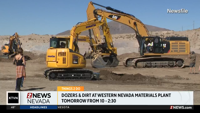
Gossage says one of the biggest problems is the low supply of housing. The population is growing faster than developers and contractors are building. Crews are slated to start building 2,200 multi-family homes and 2,000 single-family homes in 2022. Regionally, there are 55,319 lots that are approved for planned unit developments. Projections show that 14,315 new homes will be built by 2030 but that the population is expected to grow by 49,609 during the same time frame.
"We need to increase the supply at all incomes, all types of housing, single family, duplex, multi-family and we need to increase housing in all neighborhoods," Gossage said.
The solution is not just to build affordable housing. Developers are subject to market instability when they build.
"These contractors and developers, they're struggling to nail down a price for these and they're paying whatever the market has decided for them," Chris Pingree, Director of Development Services for the City of Reno said.
The Reno City Council held a special meeting to address the housing situation in Reno. They say they know what the issues are but finding the solutions is the tricky part. Building affordable units might not be financially viable for developers when comparing it to the cost of labor and materials.
"It's so incredibly hard to do," Mayor Hillary Schieve, City of Reno said. "It's brutal. That's why we're at the state level, pushing and saying you've got to make this process so much easier and that's why developers don't do it because it's almost impossible to do it."
"The presentations are awesome but it's a lot of stuff we already know is true. Right? It is setting that table for us to make the actions but it is time for us to act."
The state does have some programs in place to encourage affordable housing construction. Nevada State Treasurer Zach Conine says the state is 105,000 affordable housing units short of what it should have and that the state needs 84,000 more low-income units.
One tool is the Nevada State Infrastructure Bank. It provides low-interest loans for local governments, non-profit groups and public-private partnerships to urge more building and offset some construction costs.
The City of Reno does not have the authority to implement rent controls or prevent rent gouging.