

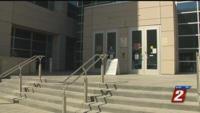



Courtrooms in Washoe county are closed right now, but judges are still handling cases remotely.
"If you'd asked me the first week of January if I would be conducting 60-70 court hearings a week without leaving my house, I would have laughed out loud," said Judge Egan Walker of the Second Judicial District Court. "The courts are still very much in business, all 15 of the District Court Judges here in Washoe County are conducting business from home using virtual private networks."
The judges are still able to preside over most cases, with the exception of jury trials.
"Jury trials were suspended in late March by the order of the Chief Judge and we won't be able to conduct them for several weeks at least," Walker said. "Apart from that, all other business is being conducted. So arraignments, sentencing, probation violations, custody hearings, child support hearings, all of that is still going on."
The basis process is the same, but the dynamic is very different.
"It's very unusual," Walker said. "Conducting business for a judge virtually is a completely different animal than conducting business in person. The theater of the courtroom is a setting designed to make everybody consider the proceedings more seriously. There's a body language, if you will, that occurs in a courtroom that's a formal one. Whereas on the Zoom platform, it's a much different animal. It's much more challenging for me as a judge to maintain control of the proceedings. People just have a different conversation style when they're on their personal phones than when they're in person, and that dynamic is very interesting."
There's a disconnect, he says, that's unprecedented in the legal system.
"Human beings are social creatures by design," Walker said. "Being disconnected, even disconnected from the people I serve as a judge, is very disconcerting for me. When I engage in a major felony canvass of someone accused of a class A felony, there is an important connection that can occur in a courtroom to make sure I understand that that person who is entering a plea of guilty or no contest actually knows what they're doing. The same is true for sentencing. We take victim impact statements by Zoom, supportive statements by family members by Zoom appearance, and it's very different and artificial and I find that stressful."
To help deal with the stress of this new normal, The National Council of Juvenile and Family Court Judges is sponsoring a weekly webinar series called Monday Morning Moments. Anyone is welcome to join in on the sessions by clicking here.
"The mindfulness workshops on Mondays through the National Council are really about reaffirming the mind-body connection, taking a moment to engage in self-care and wellness," Walker said. "Because those judges - but really anyone involved in any system right now - we can't do our job effectively if we are not in a relatively quiescent place, or in a place of wellness for ourselves."
There's no set date for when courthouses will reopen. In the meantime, the wheels of justice continue to turn.
"I think justice is still unequivocally being served," Walker said. "It is not ideal. What I mean by that is I look forward to the day, I think everybody does, when we can meet and interact meaningfully as human beings. The overall message is that we're all in this together and we need to work through it and recover from it together, and we in the courts stand ready, willing and able to serve the people that come to court."
- National Council of Family and Juvenile Court Judges: https://www.ncjfcj.org/
- Second Judicial Court: https://www.washoecourts.com/