
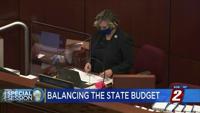

State lawmakers gathered on Wednesday to deliberate over Gov. Steve Sisolak's proposal to plug the state's projected $1.2 billion tax revenue shortfall amid the pandemic.
The Legislative Building will be closed to the public during the 31st special legislative session. (You can watch it on YouTube below.)
But anti-tax crusaders and beneficiaries of state spending are already converging on Carson City preparing to defend their interests with cuts and tax increases on the table.
“I am eager to work with our Nevada lawmakers on this difficult undertaking, and finalize the necessary reductions while prioritizing resources to protect Nevada’s residents as much as possible,” said Gov. Sisolak. “I understand that the COVID-19 public health crisis has put us in the position to make very painful decisions on the State budget, but I am confident we will be able to overcome this challenge together and forge a new path forward.”
The Governor's Office released the proclamation, which includes an agenda for the session. It limits the business that may be considered by lawmakers while in Special Session. Officials said it outlines the actions the legislature may consider to address the budget shortfall.
The proclamation allows the legislature to consider a proposal to authorize the Clark County School District the ability to use unspent funds form the school level to assist with the challenges of providing education during the COVID-19 emergency, should they choose to do so. The Governor's Office says the legislature may also authorize the Nevada Board of Regents to implement temporary waivers or modifications to the continuing eligibility requirements for students receiving the Millennium Scholarship, who were negatively impacted during the pandemic.
The Governor's Office says once the budget shortfall is addressed and the Special Session is concluded, Gov. Sisolak plans to issue a proclamation for the legislature to consider policy items that rise to the extraordinary occasion of the session.
Lawmakers say about $550 million of the $1.2 billion shortfall will come from agency budgets like K-12 Education, Nevada System of Higher Education and the Department of Health and Human Services. Those three agencies add up to almost 84 percent of the state's total expenditures.They could include furloughs for state workers, less than 50 layoffs, a hiring freeze on nearly 700 positions and a freeze on merit salary increases.
"Those are cuts that people are going to feel, the ones that are real, the ones that we're going to have the most concerns about," Sen. Ben Kieckhefer, R-Reno said.
Money from the CARES Act cannot be used for state government shortfalls, so any federal aid would require another congressional bill. Many states are asking congress for help but that is not a guarantee.
"I think there's continued hope that something will happen but it would be irresponsible of us as a legislature to bank on that or bet on the federal government coming through with a bailout," Kieckhefer said.
If Nevada receives federal money to address the shortfall, lawmakers can come back and use it to reverse some cuts.
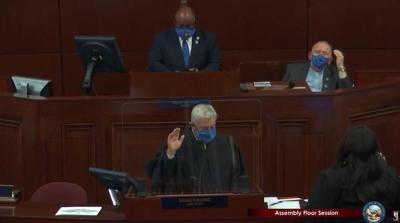
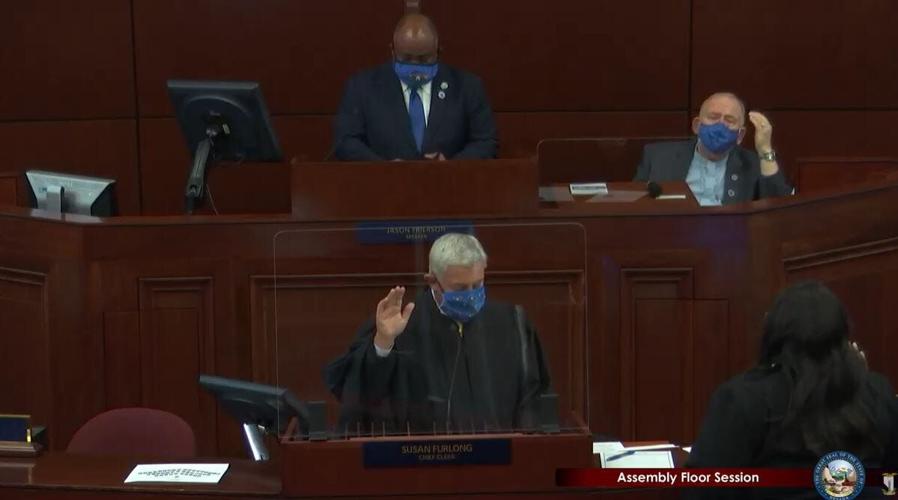
The special session will be much different than those in the past because it is happening during the COVID-19 pandemic. A limited number of people will be allowed in the building, and glass barriers are in place between desks in the Senate and Assembly chambers.
"I haven't been in there, so I don't know but I hear even some legislators will be sitting in the rafters and spreading out," Assem. Glen Leavitt, R-Las Vegas said.
"Everybody up there in the caucus is wearing a mask," Assem. John Ellison, R-Elko said. "They have their masks and of course everyone's got a different type. It's going to be kind of rough and we'll probably do most of it by dialogue on the computers."
Since a smaller number of the public and lobbyists will be allowed in the building, it could also impact testimony.
"It's going to certainly have a different feel and I worry about access that people are going to have to provide public comment about these programs that are going to affect them," Kieckhefer said.
For more information, see the document below: