



Hundreds of K-12 private school students in Nevada are likely not going to be able to afford to go back to the school they attended last year.
This is because the democrat-controlled Nevada Legislature blocked Governor Joe Lombardo's bill to restore funding to the Nevada Opportunity Scholarship Program.
The way opportunity scholarships work is that fundraising organizations, known as Scholarship Grant Organizations (SGO'S) sell tax credits to private businesses in exchange for donations to the Opportunity Scholarship Program.
Last year, tax credit sales were capped at $11.4 Million for opportunity scholarships. This year the ceiling is $6.6 Million.
Essentially, the pot of money has shrunk by about half, and several SGO's are reporting that they are not going to be able provide the number of scholarships they did to students in the past.
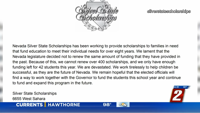
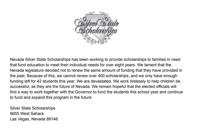
Nevada Silver State Scholarships sent out a statement saying, quote: "We cannot renew over 400 scholarships, and we only have enough funding left for 42 students this year."

"The smaller organizations are having a hard time keeping their students because essentially they all have to fundraise and compete with each other for the pool of money that is available," said American Federation for Children Senior Fellow Valeria Gurr.
A main flash point for opponents is that it is funding being drawn away from public schools for private institutions. But proponents argue that it is not, because it's donations from the private sector in exchange for tax credits.
"They're tax credits, so essentially a tax credit has to be raised by a business in exchange for a modified business tax, so these organizations are the one's that go and secure funding," said Gurr.
Opponents argue that tax credits or abatements decrease money coming into the state, ultimately drawing funding from public schools.
"By increasing or continuing to ramp up the funding for vouchers in Nevada, we are, regardless of whether it's coming exactly from the state education budget, we are having less money that goes to our public schools," said Battle Born Progress Communications Director Amber Falgout.
Students whose family income does not exceed 300% of the federal poverty line are eligible for opportunity scholarships, so Gurr argues these cuts will impact low income families.
"Families shouldn't be held hostage because they don't have enough money to go to a different school," said Gurr.
Falgout says she's skeptical that opportunity scholarships are helpful for most low income families considering sending their child to a private school.
"When we're looking at a family of four who is making 35-thousand as a household income, no one has a very good answer for how they come up with the rest of that money," said Falgout.
The Nevada Department of Education reports that 54% of the roughly 14-hundred students who received opportunity scholarships were minorities.
FOR MORE INFORMATION: https://doe.nv.gov/uploadedFiles/nde.doe.nv.gov/content/Private_Schools/Reports/2022-2023_NevadaEducational_Choice_Scholarship_Report.pdf