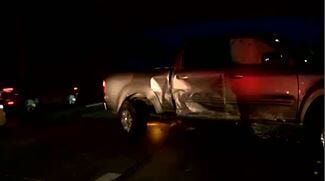
Snowy roads have turned into ice. Road conditions Thursday night were slow slick, crews from around the region were busy responding to several minor and major accidents.
The Nevada Highway Patrol says the concern now is black ice.
"If you don't need to be out, don't go out," said Trooper Duncan Dauber, with the Nevada Highway Patrol. "Chill at home, stay with the family. Be safe inside home because it's going to start to get cold tonight, all this water is going to freeze over to ice and it's going to get really nasty out here for people driving around tonight."
Several rollovers, crashes, and smaller fender-bender accidents occurred throughout Thursday as weather conditions changed.
"Even with the lights on, people aren't paying attention and they're just driving too fast for the conditions," said Dauber.
Going the posted speed limit on the roads is not what you should be following in this kind of weather.
"They don't understand that you can't just go 65 and slam on the breaks," said Cindy Peck, a concerned driver from Reno. Because then you go 'wooo!'. We saw a lot of that."
Taking it slow is the best advice.
"The darkness hit and everything turned into an ice-rink," said Christopher Adams from Reno. "It's a little bit slicker. So if everybody takes it a bit slower, we'll all get home safely."
Ice on the road prevents tires from gripping, so steering is difficult and stopping is harder. That means four-wheel drive vehicles won't help much.
"In situations like this, you're driving in snow and ice," said Trooper Dauber. "It doesn't matter if you have four wheel drive or not. It helps you get going. Doesn't help you stop if you're doing 40 or 50 mph and you're on ice if you need to get out of the way or move. Your vehicle is going to be unable to do that."
The most helpful device for gaining traction on ice is tire chains.
"We're staying local," Eric Arias of Reno told us. "Certainly we're not trying to be in these conditions. We have chains, we're hoping not to use them."
But even with chains, stopping distance is still several times greater than on dry pavement with ordinary tires.
"If you feel you're fishtailing, you know, getting out of control, just take your foot off the gas, kind of loosen your grip. You don't want to go, oh no hands, but you kind of let go and it just kind of rides itself and it goes on," said Peck.