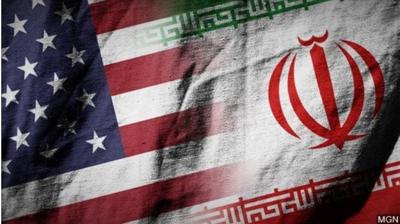
UPDATE: The Pentagon is confirming that Iran has launched “more than a dozen ballistic missiles" at two targets hosting U.S. military and coalition forces in Iraq.
Defense Department spokesman Jonathan Hoffman says “It is clear that these missiles were launched from Iran."
He says the attacks “targeted at least two Iraqi military bases" at Ain Assad and Irbil.
Hoffman says the U.S. is “working on initial battle damage assessments."
Vice President Mike Pence has briefed top Democrats in Congress on the Iranian strikes.
Aides to House Speaker Nancy Pelosi and Senate Minority Leader Chuck Schumer both confirmed the lawmakers spoke with the vice president by telephone Tuesday.
Justin Goodman, a spokesman for Schumer, says the New York Democrat is closely monitoring the situation and is praying for the safety of service members and other personnel.
Pelosi spokesman Drew Hammill tweeted that the speaker returned a call from the vice president moments after presiding over the House.
Iranian state TV says the attack was in revenge for the killing of Revolutionary Guard Gen. Qassem Soleimani, whose funeral Tuesday prompted angry calls to avenge his death.
U.S. forces could not be immediately reached for comment.
State TV said the operation’s name was “Marytr Soleimani.”
It said the Guard’s aerospace division, which controls Iran’s missile program, launched the attack.
Iran’s Revolutionary Guard is warning the U.S. and its regional allies against retaliating over the missile attack in Iraq.
The Guard issued the warning via a statement carried by Iran’s state-run IRNA news agency.
The Guard also threatened Israel.
Iranian state TV says surface-to-surface missiles targeted Ain Assad air base in western Iraq.
Iranian state-run television is running images it describes as the missiles launching into the night skies.
A US official said there are very few if any casualties from the attacks.
The Federal Aviation Administration is barring U.S. pilots and carriers from flying in areas of Iraqi, Iranian and some Persian Gulf airspace.
The agency is warning of the “potential for miscalculation or mis-identification" for civilian aircraft amid heightened tensions between the U.S. and Iran.
Such restrictions are often precautionary in nature to prevent civilian aircraft from being confused for ones engaged in armed conflict.
Iran's foreign minister tweets: 'We do not seek escalation or war, but will defend ourselves against any aggression'.
President Trump says 'All is well!' after the attacks; 'So far, so good' regarding casualties.
This is a developing story.
(Copyright 2020 The Associated Press. All rights reserved. This material may not be published, broadcast, rewritten or redistributed.)
undefined
undefined
Original Story: The killing of a top Iranian general has ratcheted up the anxiety of families of Americans held in Iran. Just a month ago the release of a New Jersey student had given them hope.
The Trump administration has made a priority of bringing home hostages held abroad.
But the prospect of a speedy resolution for the handful of captives in Iran seems to have dimmed with the two nations edging dangerously close to conflict and warning of retaliatory strikes.
It's a contrast from December's release of a Princeton University graduate student in a prisoner exchange.
(Copyright 2020 The Associated Press. All rights reserved. This material may not be published, broadcast, rewritten or redistributed.)