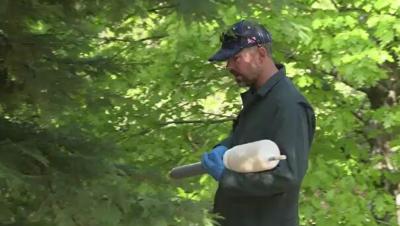
You may start seeing a few men and women in green jumpsuits this week in our local parks, but don't be alarmed, they are just controlling our flea, tick and lice population in squirrels.
Washoe County Health District is spraying what they call 'flea dust' in California Ground Squirrel burros which helps kill fleas, ticks and lice that live on the squirrels and prevent any outbreak. "It is the same plague outbreak that would have caused the Black Death in Europe but we see it in the west for our ground squirrels," says Will Lumpkin, Environmental Health Specialist.
If we were to ever get the plague in our area, some of our favorite local parks could be closed for weeks and even months as the Health District tries to control the outbreak.
Luckily, we haven't had a plague outbreak in years, but if it did happen it could possibly reach our homes. Our dogs and cats could could put their heads into the burros or try and catch those squirrels, bringing those fleas into the home. "Dogs are curious, they will pick it up and sometimes try to eat it and that can cause a plague exposure," says Lumpkin.
It is best for the district to spray the 'flea dust' when the weather is warming up as the ticks and fleas start forming to an adult stage. "They go into a larvae stage during the winter time so they adult stage is the one that feeds on the squirrels' blood," explains Lumpkin.
After spraying the dust, the district waits a few weeks and then goes back out to the parks to catch and test some of the squirrel population in the parks. They put them to sleep for a few minutes and dust off any ticks or fleas the creature might have, they then collect the insects so they can test them for any type of disease. What they use to put the squirrels to sleep is called Ether, and is harmless to the creatures. "It is not going to affect their life. They are out for maybe ten minutes. They are going to wake back up and do back to what they did before, hopefully without fleas," says vector borne disease intern, Kelsie Little.
The district says some signs of a squirrel who may have been affected by the plague is that they will seem a bit 'sluggish', laying down and not moving very much, not typical squirrel behavior. They ask that if you see a squirrel with some suspicious activity to give them a call at (775) 328-2434