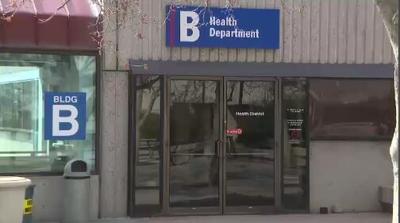

The Washoe County Health District says the University of Nevada Student measles case is linked to an unvaccinated traveler who was exposed in Europe, and developed measles after returning to the San Francisco Bay Area. The six other confirmed cases were unvaccinated patients who are residents of Santa Clara County and Alameda County.
The District says no new cases of measles have been identified, two days after it announced that a University of Nevada, Reno student contracted the virus.
The District says the affected student was vaccinated against the disease.
"The good news is when a vaccinated person does contract the disease, and it happens rarely but it does happen, they are somewhat less likely to transmit the disease to other people," said Randall Todd of the Washoe County Health District. "So that's a bit of good news."
This is the first case of measles in the county since 1999. It appears the student was exposed in another state and didn't know he was infected.
Symptoms can take up to two weeks to develop. "And those symptoms are not going to be your typical measles rash so it could be awhile before you figure it out," Todd said.
Another reason the disease can be tricky to diagnose - the symptoms are very similar to the flu.
"It starts with a fever, cough, runny nose and hives, and that's before you get any kind of a rash," Todd said.
The county says the student does not pose an ongoing risk to the public; however, the individual was at several locations in Washoe County during an infectious period and could have exposed others to the measles virus. The Health District is attempting to notify anyone who may have been exposed while the patient was infectious to prevent further spread of measles.
“Measles is a highly contagious viral disease. A small number of cases are capable of quickly producing epidemics, that’s why it’” says Washoe County District Health Officer Kevin Dick. “Symptoms include fever, runny nose, cough and rash. Although measles is usually considered a childhood disease, it can be contracted at any age.”
"We're very pro-vaccine here at the Washoe County Health District," Todd adds. "It's safe, we have very few problems with it and it works 97% of the time."
The student has been placed in isolation and the University is working with the Health Department to mitigate any risk of infection on campus.
"Per University policy any student that is not vaccinated against the measles is not allowed to be on campus until they are vaccinated or until this occurrence has concluded and they've been allowed back by the health authority," said Dr. Cheryl Hug-English, the University's medical director.
The University is contacting all students that have not been vaccinated. That could be between 200-300 students that will either need to get vaccinated or stay off campus.
Persons who were at the locations listed below during the times listed may have been exposed to the measles virus and should call the Washoe County Health District at 775-328-2447 to determine their risk for measles. Preventative treatment may be recommended for those who were exposed and are unvaccinated and who may be at high risk, such as pregnant women, infants younger than 12 months, and people with severely compromised immune systems.
Measles Exposure Sites
Tuesday, March 27th
UNR Campus: Ansari Business Building, 9am - 12pm.
UNR Campus: Fleischmann Agriculture Building, 1:30pm - 4:45pm.
UNR Campus: Jot Travis Building, 3pm - 6:15pm.
UNR Campus: Mathewson-IGT Knowledge Center, 5pm - 8pm.
Wednesday, March 28th
UNR Campus: William Raggio Building, 1pm - 4pm.
UNR Campus: William N. Pennington Student Achievement Center Building, 2:30pm - 5:45pm.
UNR Campus: Frandsen Humanities Building, 4pm - 7:15pm
UNR Campus: Admissions Building, 2pm - 4:20pm.
UNR Campus: Mathewson-IGT Knowledge Center, 5pm - 8pm.
Thursday, March 29th
UNR Campus: Ansari Business Building, 9am - 12pm.
UNR Campus: Fleischmann Agriculture Building, 1:30pm - 4:45pm.
UNR Campus: Jot Travis Building, 3pm - 6:15pm.
Saturday, March 31st
CVS Minute Clinic, 680 North McCarran Blvd, Sparks, NV 89431, 3pm - 6pm.
Renown Urgent Care – Vista, 910 Vista Blvd, Sparks, NV 89434, 4pm - 7pm.
Squaw Valley Ski Resort, Funitel restroom, 12:30pm - 2:40pm.
Raising Cane’s, 2175 N. Virginia St., Reno, NV 89503, 2:30pm - 5pm.
Sunday, April 1st
Walmart at the intersection of Mae Anne and McCarran, 5260 W 7th St, Reno, NV 89523, 4pm - 7pm.
Monday, April 2nd
UNR Student Health Center, 1664 North Virginia Street, Reno, NV 89557, 9am - 1pm.
If You Were At These Locations
Persons who were at the locations listed above during the times listed may have been exposed to the measles virus and should call the Washoe County Health District at 775-328-2447 to determine their risk for measles. Preventative treatment may be recommended for those who were exposed and are unvaccinated and who may be at high risk, such as pregnant women, infants younger than 12 months, and people with severely compromised immune systems. Persons who were present at any of the locations listed above during the exposure times should also call their health care provider if they experience any symptoms of measles. Contact your doctor’s office or the emergency room and tell them that you may have been exposed to measles. Please call the doctor’s office before physically going to the office, urgent care, or emergency room. You may be asked to put on a mask or take other protective measures to prevent transmission of the virus to others. The last date when a person would develop symptoms from this exposure is April 23rd.
Measles can be prevented with MMR vaccine. The vaccine protects against three diseases: measles, mumps, and rubella. CDC recommends children get two doses of MMR vaccine, starting with the first dose at 12 through 15 months of age, and the second dose at 4 through 6 years of age. Teens and adults should also be up to date on their MMR vaccination.
The CDC says before the measles vaccination program started in 1963, an estimated 3 to 4 million people got measles each year in the United States. Of these, approximately 500,000 cases were reported each year to CDC; of these, 400 to 500 died, 48,000 were hospitalized, and 1,000 developed encephalitis (brain swelling) from measles. Since then, widespread use of measles vaccine has led to a greater than 99% reduction in measles cases compared with the pre-vaccine era. However, measles is still common in other countries. Unvaccinated people continue to get measles while abroad and bring the disease into the United States and spread it to others.
(CDC, Washoe County Health District contributed to this report.)