



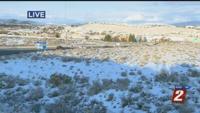

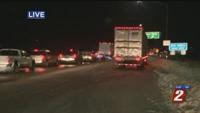

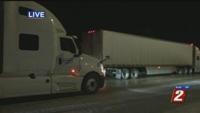

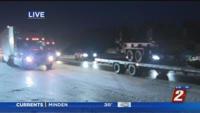

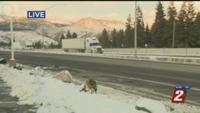


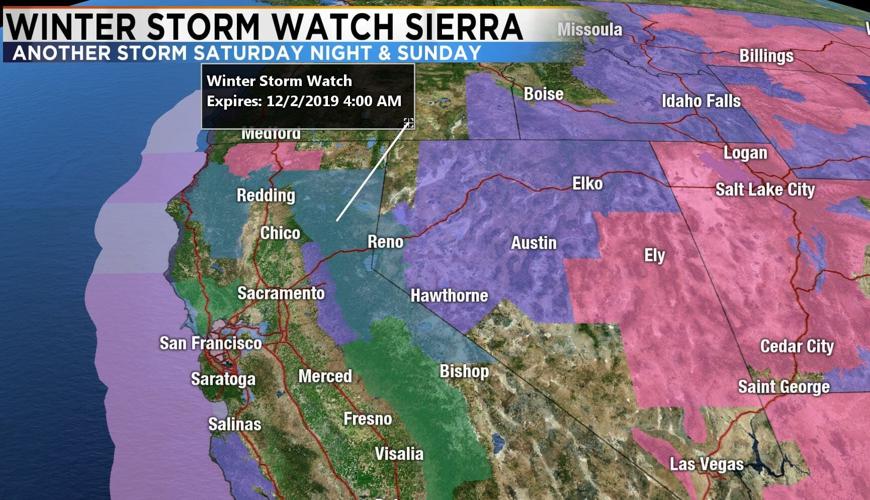
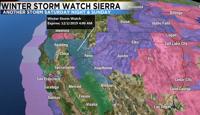
Another storm winter storm hit the Sierra Saturday evening with 2 to 4 feet of snow possible in the mountains making for treacherous road conditions and possible closures along I-80 over Donner pass on Sunday.
Saturday saw good travel weather, with a few snow showers and slick roads on Sunday morning, then it could switch over to a rain and snow mix as we head into Monday.

Check www.nvroads.com for the latest chain controls.
Check http://quickmap.dot.ca.gov/ for the latest on chain controls for travel into California.
Officials with the City of South Lake Tahoe say heavy snow, combined with high winds, could make travel difficult, if not impossible.
"This is one of the busiest travel times of the year, and this storm could make that travel dangerous," said Chris Fiore, Communications Manager for the City of South Lake Tahoe. "We are asking everyone to use their best judgment, and make smart choices before hitting the road."
Officials said drivers should anticipate delays and increased travel time throughout the weekend as well. They said travel could be very difficult as conditions worsen.
"City staff will work hard to keep roads as clear as possible during this winter storm, but we'll need your help," said Ray Jarvis, Public Works Director. "Keep anything that could inhibit snow removal teams out of the City right of way. Illegally parked vehicle can hamper snow removal efforts."
Officials with the City of South Lake Tahoe said city snowplows are deployed when an average of three inches of snow has accumulated on the ground citywide. They said when in snowy conditions, snowplows have the right of way on streets and vehicles left unattended in the streets are subject to a citation or towing.
The City of South Lake Tahoe also has two locations open for people to get sandbags if they need them:
- City Recreation Center, 1180 Rufus Allen Boulevard
- Fire Station 3, 2101 Lake Tahoe Boulevard
Officials said you will need to fill your own bags and transport them back home. Access to sandbags is available during normal business hours, Monday through Friday 7:30 a.m. to 4 p.m.
For the City of South Lake Tahoe snow removal phone line, call this number: (530) 542-6030. For County residents, the snow removal number is (530) 573-3180.
The California Highway Patrol (CHP) also says as drivers head out for Thanksgiving, CHP is preparing to help people get to their destinations safely.
Officials with CHP said a Maximum Enforcement Period will be implemented at 6:01 p.m. on Wednesday and will continue through 11:59 p.m. on Sunday, December 1.
They said officers will actively look for unsafe driving practices, including impaired or distracted driving, unsafe speed and not wearing a seat belt.
“Holiday travel can be stressful. By putting some simple safety measures in place, motorists can help keep themselves and others safe on the road this weekend,” said CHP Commissioner Warren Stanley. “Most important, before you head out, ensure everyone inside the vehicle has their seat belt on, and if there are children along for the ride, check that they are secure in the back seat in the appropriate child safety seat.”
According to CHP data, 59 people were killed in crashes in California during the 2018 Thanksgiving holiday weekend. Officials said among the 42 occupants killed, 43 percent of those were not wearing a seat belt.
CHP officials are urging residents to designate a sober driver as well.
Nevada Department of Transportation offers this winter driving tips -
WINTER DRIVING TIPS
· Only travel in winter weather when necessary, leave enough time to safely reach your destination and plan your route to help avoid snowy/icy areas and steep hills.
· Before driving, check weather and road conditions by dialing 511 within Nevada (or 1-877-NV-ROADS outside of Nevada) or logging on to www.nvroads.com.
· Share your travel itinerary so others know when to expect you.
· Remove snow and ice from all vehicle windows, mirrors, lights, turn signals and license plates.
· Buckle up.
· Turn on headlights to see and be seen.
· Do not rely solely on GPS to find alternate routes, as it could lead to unmaintained roadways or hazardous areas.
· Turn off cruise control.
· Avoid quick starts, stops and fast turns. Accelerate, brake and steer smoothly and gradually.
· Reduce speed. Speed limits are based on normal road and weather conditions, not winter road conditions.
· Do not slam on brakes. Apply steady pressure on ABS-equipped (antilock braking system) vehicles and pump the brakes if necessary on non-ABS vehicles.
· Always comply with all posted traction device requirements.
· If your vehicle has snow tires, install and use them between October 1 and April 30.
· Keep additional distance from other vehicles.
· Watch carefully for snow removal equipment.
· Do not pass without good distance and sight clearance.
· Use extra caution on bridges, ramps, overpasses and shaded areas- they may freeze first.
· Maintain a high fuel level.
· If vehicle begins to skid, steer in direction of slide and slowly remove foot from accelerator.
· Be aware of black ice.
· If parked or stuck in snow, leave window slightly cracked for ventilation and make sure vehicle exhaust system is clear of snow.
BE PREPARED
Check before you go:
· Wipers
· Tires / tread
· Brakes
· Lights
· Battery
· Radiator
· Belts / hoses
· Exhaust / fuel / ignition system
· Heater / defroster
· Thermostat
· Vehicle fluid levels
(anti-freeze oil, windshield, brake fluid, etc.)
· Full gasoline tank
SNOWPLOW SAFETY
· Use caution when following, passing or approaching snow removal equipment.
· Drive a safe distance behind snowplows. Plows often travel slower than other vehicles to remove snow, apply sand and liquid anti-icers and assist stranded vehicles.
· Before attempting to pass snow removal equipment, check direction of snow discharge to avoid snow and debris thrown from equipment. Remember that plows are wider than most vehicles and portions of the plow and blade may be obscured by blowing snow.
· Don’t crowd the plow. Only pass snow removal vehicles when a safe, legal passing area is available and adequately clear of snow and/or treated with salt and sand.
· Don’t travel beside a snowplow. They can shift sideways after hitting snow packs or drifts. Plows also are not able to automatically stop sanding when other vehicles pass. Therefore, sand may unintentionally hit vehicles if not driven a proper distance from snow removal equipment.
· When a plow approaches you, allow the plow room to operate by reducing speed and moving to the right side of the road if there is room to safely do so.
· Do not brake with unnecessary sudden movements when in front of a snowplow - plows cannot stop as quickly as an automobile.
· Don’t drive through white out conditions caused by swirling snow around a snowplow. Safely pull to the side or slow to allow visibility to improve.
· Remember that a snowplow operator’s field of vision is restricted. You may see them, but they may not see you.
NV Energy crews will work around the clock to restore power as quickly and safely as possible in the event of an outage.
Report outages to NV Energy and keep track of restoration efforts by visiting the outage center at nvenergy.com/outage or by calling customer service at 775-834-4444.
Tips:
• People should stay away or in their car if they encounter a downed power line.
• If someone in your house is on life support, develop a backup plan.
• Review safety rules for portable generators if you own one.
• Learn how to override your electric garage door opener.
• Keep refrigerators and freezers closed to reduce food spoilage. If unopened and full, food can last for two days.
(The City of South Lake Tahoe, NV Energy, California Highway Patrol, National Weather Service contributed to this report).