
Standing before a judge, often in handcuffs - and facing the consequences of a criminal act - is an intimidating moment at best. But, in Reno's specialty court it's only a small part of the picture
"She's always had strictly substance abuse counseling."
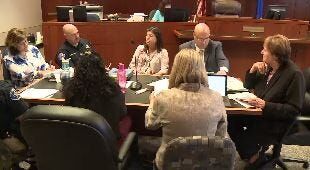
The real work happens, behind closed doors where an entire team gathers every week to discuss each case. More specifically, to talk about the people participating in the individually designed programs
Judge Dorothy Nash Homes has been running the Co-Occurring Disorder Court for the last six years.
"We are dealing with people in this program that have mental illness and addiction - drug and alcohol - that's what the co-occurring part is.”
The approach is about more than just punishment for a crime. The end goal is accountability and recovery ...and the process is very involved. When someone is accepted into the program, he or she will work with a judge, psychologist, social worker, lawyer, case manager and Washoe County marshal.
"That these individuals are involved in treatment, that they satisfy their court obligation regarding fines, complete community service and attend their counseling,” says Judge Ken Howard.
Marshal Joel Harley adds, "We go to their homes and check out their living arrangements, make sure everything's up to par there.”
And if the participant needs somewhere to live or help paying for treatment, the programs takes care of that, too. Yes, it is expensive. Judge Nash Holmes says the cost is more $1 million per year - but the savings to the tax payer are even greater.
"The estimate is for every dollar you put into recovery you get $27 back in recovery of the social system. The family, money you don't have to pay out of welfare or food stamps or un-employment,” says Judge Nash Holmes.
If defendants violate conditions, they face jail time and/or community service.
Discipline and dedication are a must for both the court team and the participant, who work very closely together every week or up to three years.
"They see us every week, at least one time per week, if not more and we get to know a lot about them and their families,” says Marshal Haley.
Judge Nash Holmes adds, "We know them very well, and some of them come back to see us two, three years later and bring their babies and tell us what's going on in their lives. It's extremely intensive, it's emotional.”
And it's effective. Reno's Co-Occurring Disorder Court has an 85% success rate. Men and women who stay clean and sober, find work and stay out of trouble...
And you can check it out for yourself
"We want it to be open so that people understand what it is we're doing, because I believe, there is, often, some type of a misconception about what we're doing and whether drug courts truly work. So, I'd like them to come down and take a moment and see what we're doing,” says Judge Howard.
Specialty courts are held several times a week at Reno Municipal Court and are open to the public.