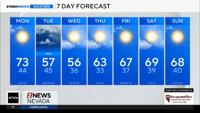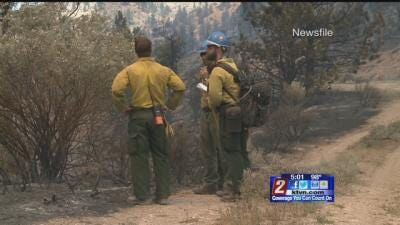
Fire agencies are bringing in extra crews and putting other firefighters on stand-by, with possible thunderstorms on the way to northern Nevada.
"We've got 11 additional engines here, three dozers, we've got extra aircraft, smoke jumpers coming in, extra helicopters," Russell Bird, Forest Management Officer for Humboldt-Toiyabe National Forest said. "So, we're beefed up."
It has been one week since the lightning-caused Washington Fire started spreading. The wildland fire is a perfect example of wildfire danger in our region, after four years of drought.
"We've had abnormally warm winters, no snow pack, our fire conditions are about a month ahead of where they should be at this time," Bird said.
The recent rain has increased the amount and size of cheat grass, and the heat has dried it out. Forests are still very vulnerable.
"Even though we had a little bit of rain in May, it's not enough to get the moisture level back up in those larger heavy fuels," Michael Klug, Regional Forester for the Nevada Division of Forestry said.
Conditions are at the point that fire restrictions are now in place on state and federal lands.
"We can't control the lightning but we can ask people to be very careful with fires," Klug said.
The restrictions mean campfires are not allowed on public lands unless posted otherwise.
"Campfires are okay in designated campgrounds or developed picnic grounds but anything outside of that is no campfires," Klug said.
But that's not all that's restricted. In a nutshell, if something can spark a fire, it's probably not allowed.
"No smoking, out in the brush except in an enclosed vehicle," Klug said. "There's other restrictions as far as no welding."
"Just be extremely careful," Bird said. "Catalytic converters are a big cause of fires. If anybody's out shooting, like with exploding targets or anything like that kind of stuff. As we have seen around here, in the last few years, that kind of stuff can start a fire in a heartbeat."
Another thing you cannot use during the fire restrictions is a charcoal grill. Charcoal burns hotter than wood and much longer. Propane or white gas stoves are allowed.
Written by Paul Nelson