


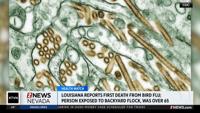

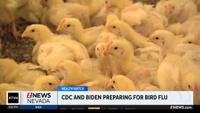



The first U.S. bird flu death has been reported - a person in Louisiana who had been hospitalized with severe respiratory symptoms.
Louisiana health officials announced the death on Monday.
Health officials have said the person was older than 65, had underlying medical problems and had been in contact with sick and dead birds in a backyard flock. They also said a genetic analysis had suggested the bird flu virus had mutated inside the patient, which could have led to the more severe illness.
They have disclosed few other details about the person.
Since March, 66 confirmed bird flu infections have been reported in the U.S., but previous illnesses have been mild and most have been detected among farmworkers exposed to sick poultry or dairy cows. In two cases - and adult in Missouri and a child in California - health officials have not determined how they caught it.
The origin of the Louisiana person's infection was not considered a mystery. But it was the first human case in the U.S. linked to exposure to backyard birds, according to the Centers for Disease Control and Prevention.
Louisiana officials say they are not aware of any other cases in their state, and U.S. officials have said they do not have any evidence that the virus is spreading from person to person.
The H5N1 bird flu has been spreading widely among wild birds, poultry, cows and other animals. Its growing presence in the environment increases the chances that people will be exposed, and potentially catch it, officials have said.
Officials continue to urge people who have contact with sick or dead birds to take precautions, including wearing respiratory and eye protection and gloves when handling poultry.
The virus, also known as Type A H5N1, was detected for the first time in U.S. dairy cattle in March.
Worldwide, nearly 1,000 cases of illnesses caused by H5N1 have been reported since 2003, and more than half of people infected have died, according to the World Health Organization.
How can people protect themselves?
People who have contact with dairy cows or commercial poultry or with backyard birds are at higher risk and should use precautions including respiratory and eye protection and gloves, CDC and other experts said.
“If birds are beginning to appear ill or die, they should be very careful about how they handle those animals,” said Michael Osterholm, a public health expert at the University of Minnesota.
The CDC has paid for flu shots to protect farmworkers against seasonal flu — and against the risk that the workers could become infected with two flu types at the same time, potentially allowing the bird flu virus to mutate and become more dangerous. The government also said that farmworkers who come in close contact with infected animals should be tested and offered antiviral drugs even if they show no symptoms.
(The Associated Press contributed to this report.)
