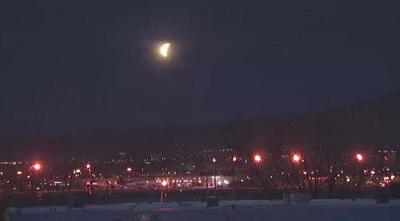
For the first time in 152 years we got to witness a Super Blue Blood Moon, and to celebrate an observatory in Carson City held a viewing party early Wednesday morning.
Dozens of people came out to the Jack C. Davis Observatory at Western Nevada College to catch a glimpse at the rare phenomenon. It was a super moon because the moon was the closest point in its orbit to earth. A blue moon because it is the second full moon in a month and finally a blood moon because the moon turns red during a lunar eclipse, when the earth passes between the moon and the sun.
Over the summer we had a total coverage solar eclipse but here in Nevada we did not receive the full coverage, but for this specific lunar eclipse we did. The totality of a lunar eclipse is also much longer than a solar eclipse, almost an hour compared to a few minutes. A lunar eclipse happens about two to four times a year but they are usually partial coverage.
To have a full coverage, combined with super blue moon was special for these viewers, especially since we got to experience the total solar eclipse last year, "To have the two of them to happen a few months from each other is amazingly lucky for all of us," says Maxine Nietz from Carson City.
For the founder of the observatory it was exciting to see so many people enjoy something he worked so hard for. "When you see people coming in early like this and coming out to see the moon it is a wonderful thing. It really is working the observatory is really working," says Robert Collier, Founder of Jack C. Davis Observatory, which opened back in May of 2003.
For more information about to observatory visit: https://www.wnc.edu/observatory/
To donate visit: https://www.wnc.edu/foundation/
Just put "to the observatory" in the memo line.
From Bangkok to New York City, moon gazers got to see a "Super Blue Blood Moon" illuminate the sky on Wednesday. This "lunar trifecta" occurs when three phenomenons occur at once, which hasn't happened in 36 years. pic.twitter.com/HAqMBihWou
— CBS News (@CBSNews) January 31, 2018