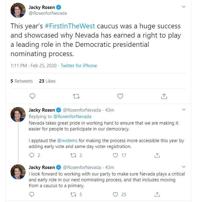
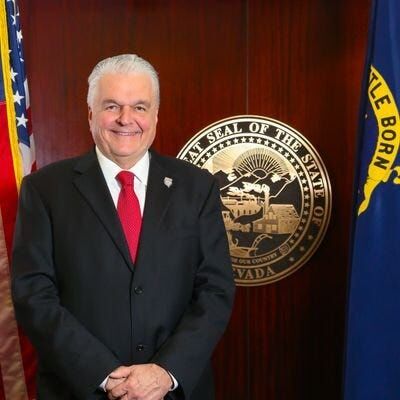
Nevada's caucus system could be a thing of the past. Gov. Steve Sisolak is the latest state leader to push for a presidential primary.
“As Governor, one of my top priorities has been to make access to the ballot box easier for voters, including same-day registration and extending our early vote period," Sisolak, D-Nevada said. "It’s clear to me that despite the strong reforms we instituted for 2020, the caucus process has fundamental challenges that make it too difficult for too many Nevadans to participate. As we look ahead to the next presidential election cycle, I believe we must further open up the process of selecting our nominee and I intend to work with our State Party and leaders in the State Senate and Assembly to review how we could switch to an early presidential primary.”
The state legislature will have to approve the switch to the primary election. The idea has support from some lawmakers on both sides of the aisle.
"When Republicans were in charge of the legislature in 2015, we tried to get this done," Sen. Ben Kieckhefer, R-Reno said. "Ironically, it was Harry Reid who put in calls to stop it from happening at the time."
Former Nevada Senator Harry Reid helped position Nevada as an early caucus state. Now he wants the Silver State to switch to a presidential primary. Nevada State Democratic Party Chair William McCurdy II also supports the switch.
"I believe we need to start having a serious conversation ahead of next cycle about the limitations of the caucus process and the rules around it," McCurdy II said. "If our goal is to bring as many Nevada Democrats as possible into the fold to select our presidential nominee, it’s time for our State Party and elected leaders to look at shifting to a primary process moving forward.”
Kieckhefer says he supports the presidential primary as a stand-alone election, separate from the state's primary election in June. He does not want the other state elections to happen in February but he does not want the presidential nomination to happen later either.
"I think we would be looking at a dual election system in an ideal world where the political parties bear the brunt of the cost of a presidential nominating contest early, and then the state can pick up the cost of running primaries for all other offices," Kieckhefer said.
Other lawmakers say they support the primary unless it jeopardizes Nevada's status as an early state in the nominating process. Nevada is also the first in the west to vote. Nevada gets a lot of attention from presidential candidates and they do not want the state to get lost in the shuffle if it means moving down to Super Tuesday or beyond.
"In a state of just over 3 million people, we don't have a large number of delegates to award so it's that early status that gets candidates here," Assem. Teresa Benitez-Thompson, D-Reno said. "It's that early status that puts Nevada on the map.">
About 105,000 Nevadans voted in the democratic caucuses. That is less than 20% of the party's statewide voters. The expectation is that a presidential primary would help voter turnout.