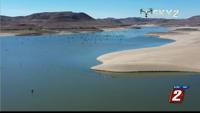

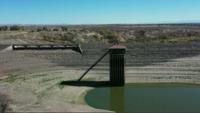

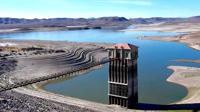
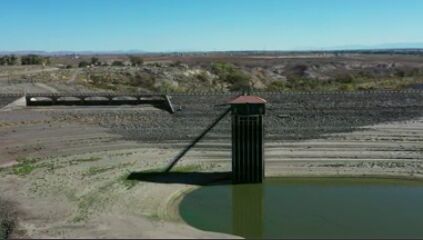
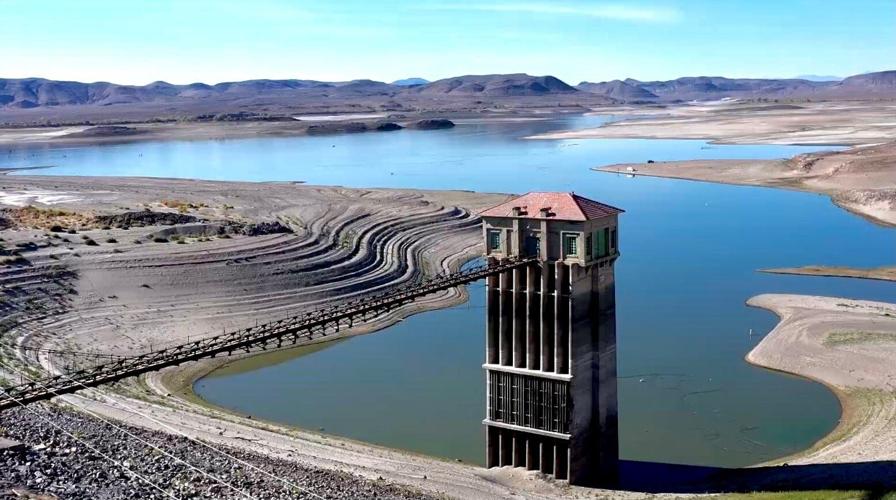
The drought is having a big impact on Lake Lahontan. The reservoir can hold up more than 300,000 acre-feet of water, or enough to cover 300,000 acres with one foot of water. After starting off with low levels in the spring and releasing most of that for irrigation, there is only 5,806 acre-feet left in the lake. That is just two percent of capacity. On that exact day in 2020, the lake had 63,411 acre-feet. In 2019, it had 180,470 acre-feet. That is well above half-full.
"All season long, as people watched that volume of water in Lahontan deplete, they were going 'Where's it going?'" Rusty Jardine, General Manager of the Truckee-Carson Irrigation District said. "Well, of course, it's being called upon by the rightful water right holders."
The water went quickly, too. The last time Fallon's farmers irrigated their crops was in early August.
"Typically, our season runs from mid-March all the way to mid-November so this is extraordinary for us."
Farmers did not get nearly the amount of water that they would during a full water year.
"This year, we had 70 percent," Colby Frey, Farmer and Owner of Frey Ranch said. "So that means basically, we're going to get 70 percent of our water which kind of equates to 70 percent of our income."
Frey says farmers adjusted in the spring when they found out there would be a low supply of water.
"Knowing that it was out go run out early really helped us to figure out how to stretch it and get the most use out of it," Frey said. "We can strategically put the water on the more valuable crops and really utilize it the best way possible. I think that we're going to have a bigger problem next year because our reservoir is empty."
That is because there are no reserves to speak of, heading into the winter. It will take a heavy snowpack to fill the lake to its capacity.
"It tells you we've got to have a major contribution from both river systems," Jardine said. "Not just the Carson but the Truckee River."
The minimum pool of water required at Lake Lahontan is 4,000 acre-feet. That is to keep the fish alive. "You can see it. We're a little bit above that right now but it's happened and its cyclic in nature."
Despite the drought, Frey says he got a good crop. He grows corn, wheat, rye, oats and barley for his distillery, as well as alfalfa. He also grows more than he needs in one year for storage, just in case the following year does not provide a good crop.
"With us and the distillery, we'll be fine because we need about 500 acres for the distillery," Frey said. "We farm about 2,500 acres, so we'll always have enough grain."
A wet winter is not out of the question. In 2017, enough snow runoff flowed into the lake to fill the reservoir three times.