

Hurricane Laura has weakened to a tropical storm with maximum sustained winds of nearly 70 mph. Authorities say the storm is now 50 miles southeast of Shreveport.
Flooding rainfall and damaging winds spread inland over central and northern Louisiana, where the storm made landfall eleven hours earlier as a Category 4 storm.
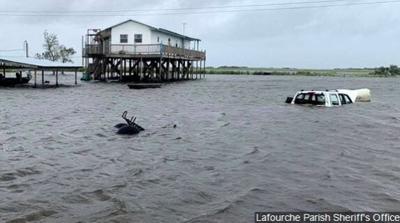
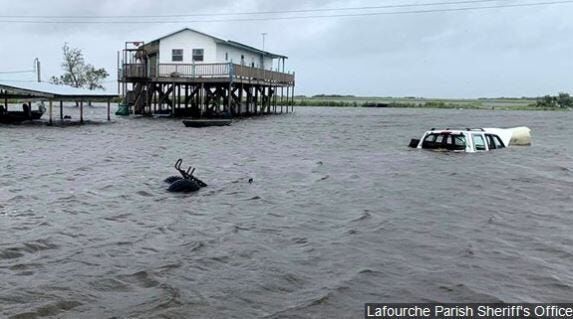
Communities along the Gulf Coast experienced high water levels in the wake of Laura, the strongest storm to hit the U.S. this year.
So far, two deaths have been reported.
More than 700,000 people in Louisiana and Texas were without power Thursday afternoon, according to the website PowerOutage.Us, which tracks utility reports.
National Weather Service officials said the remnants of Hurricane Laura could spawn tornadoes and cause flash flooding in parts of Arkansas and Tennessee.
Related: How Tropical Storms Impact Nevada
Meanwhile, Louisiana State Police say they’re responding to a chlorine leak at a company that makes chemicals along Interstate 10 just west of Lake Charles, which was hard-hit when Hurricane Laura slammed into the Gulf Coast early Thursday.
Police say the leak is at the BioLab chemical manufacturing facility in Westlake. Residents in the area are being told to close their doors and windows, turn off their air conditioning and stay inside.
Police say they’re working with plant managers to try and contain the leak. BioLab’s Lake Charles plant was built in 1979 and manufactures trichloroisocyanuric acid, chlorinating granules and other chemicals used in such household cleaners as Comet bleach scrub and pool chlorine powder.
Both trichloroisocyanuric acid and chlorine are potentially acutely toxic to people and animals if ingested or inhaled. Chlorine gas, which can appear in the air as a greenish yellow cloud, was used as a chemical weapon in World War 1. It is a potent irritant to the eyes, throat and lungs.
undefined
(The Associated Press contributed to this report.)