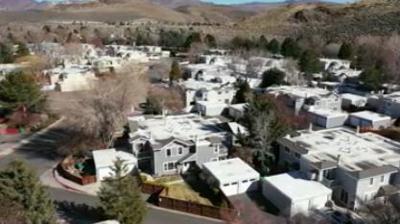


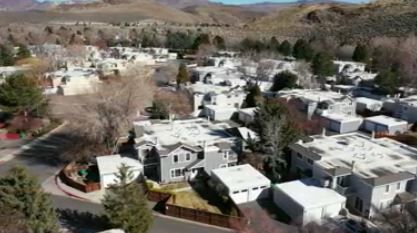
More than 300 million dollars in tax-exempt bonding has been allocated to fund affordable housing projects in the silver state. Right now, median home prices are close to $600 thousand dollars in Washoe county.
This money is being allocated specifically for affordable housing recipients, in the form of tax-exempt bonds.
“The bonding authority allows us to issue the tax credits, those tax credits do go to the developer, but then the developer sells those," said Steve Airchroth, Administrator of the Nevada Housing Division.
This is essentially 87 percent of Nevada’s total tax-exempt bonds for 2021. After the sale of the tax credit bonds, usually to a big company, the revenue is then used for funding of the affordable housing project. This generally represents about 35 percent of the total cost of building and development. There are 2 different ways that developers can use this funding…
“Number 1 is for new construction, so new construction of a new development, and the second is for the rehabilitation of existing units," said Aichroth.
This rehabilitation is designated only for pre-existing affordable housing units.by signing onto the affordable housing credits, developers are contractually obligated to keep those properties rent in a certain range for 30 years. But if developers sign onto a rehabilitation project, that 30 years starts over.
“Those folks that are already receiving benefits of affordable housing but are in an older property that might need some rehabilitation, they are able to stay in those units," said Aichroth.
14 projects are already in the pipeline in reno and Las Vegas, which is expected to bring almost 2,900 units online by 2024. This, unfortunately, is just a drop in the bucket compared to what the national low-income housing coalition estimates we need.
“84 thousand more units of affordable housing units, particularly to serve incomes at the extremely low-income level," said Christine Hess, Executive Director for the Nevada Housing Coalition.
Those who would benefit from this program include working Nevadans making under $35k a year as an individual, $40k as a couple and so on, seniors living on a fixed income, and those with disabilities...but with the rising rent, most Nevadan’s are finding it harder and harder to pay the increasing rent prices.
“It's a real challenge for our community members, and I'm sorry that we can’t build it fast enough, but steps like this are critical and so important," said Hess.
Take Claudia Daane for example, who has lived in Redfield Ridge apartments for 18 years. Last year, her rent was $1145 a month, but after Cloud 10 bought her apartment complex, they are telling her the new bill will be $700 more, sitting at $1850.
"Don't you think this is greed? They just bought it…” said Daane, “There are a lot of people that are older, living more time there than me, like more than 25 years, and everybody is in shock."
Stories like this are becoming all too common, and are forcing longtime residents out of the market they helped create.
"Now we are lost, completely lost and we just have a month and a half to decide what to do," said Daane.
2 News did reach out to Redfield Ridge apartments as well as their parent company to ask why they would increase rent to their tenants by nearly 65%, and have yet to hear back.