



Placer County has denied approval to a massive development that was planned for Olympic Valley.
The Clerk of Supervisors says it was denied due to a lawsuit they are facing.
The project site is located within the 4,700-acre Squaw Valley General Plan (SVGP) area in northeastern Placer County, also known as Olympic Valley.
The Valley is located west of State Route 89, approximately nine miles south of the Town of Truckee, and seven miles northwest of Tahoe City and Lake Tahoe.
The plan area encompasses a total of approximately 93.33 acres consisting primarily of the 85-acre resort village area at the west end of the Valley at the existing ski resort base. In addition, an approximately 8.8-acre area referred to as the East Parcel, is located approximately 1.3 miles east of the main village area and 0.3 miles west of the intersection of State Route 89 and Olympic Valley Road, across the street from the Squaw Valley Public Services District offices and fire station.
On November 15, 2016, the Board approved the Village at Squaw Valley Specific Plan (VSVSP) and associated resolutions, ordinances, and planning approvals.
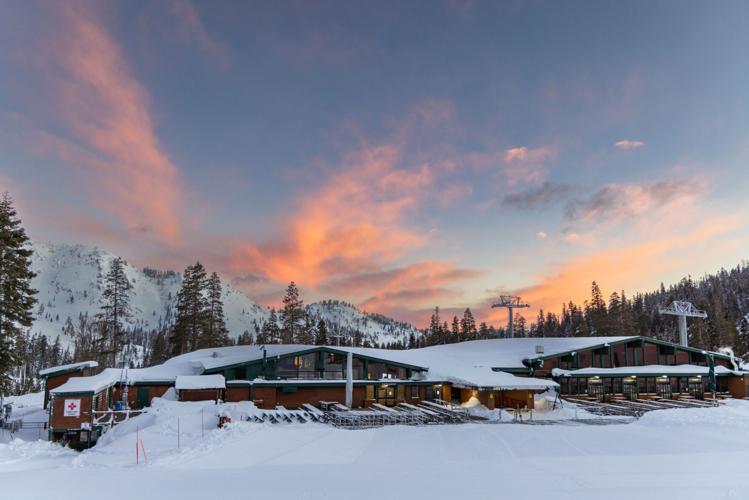
The plan consisted of two components: new development and redevelopment of an 84.5-acre portion of the existing Squaw Valley Ski Resort base area (since renamed Palisades Tahoe) known as the main village, and development of new resort serving land uses on an 8.8- acre parcel known as the East Parcel located 1.3 miles to the east of the ski resort base area.
The project was approved including amendments to the SVGP, a Rezone, a Specific Plan, a Large-Lot Vesting Tentative Map and Development Agreement.
The project would have resulted in a level of development that was approximately 40% of the potential development capacity of the main village area under the existing approved land uses of the SVGP.
Under the VSVSP, development of the main village was approved for up to 850 resort residential units with a maximum of 1,493 bedrooms, plus resort serving commercial land uses totaling up to 297,733 gross square feet of new and replacement commercial land uses, structured parking facilities and supporting infrastructure.
The 8.8-acre East Parcel would have developed surface parking and structured parking facilities with up to 524 total parking spaces, employee housing for up to 300 employees, a 15,000 square-foot resort shipping and receiving facility, and a 5,000 square-foot convenience store.
On December 15, 2016, a lawsuit was filed on the project by the Petitioner, Sierra Watch, for alleged violations of the California Environmental Quality Act (CEQA).
The Petitioner argued eight main points:
- (1) the project failed to adequately describe the environmental setting of the Lake Tahoe basin
- (2) the EIR did not adequately analyze impacts on emergency evacuations,
- (3) mitigation measures for traffic impacts were inadequate
- (4) transit impacts were inadequately analyzed
- (5) the greenhouse gas analysis required recirculation
- (6) noise impacts were inadequately analyzed
- (7) the project’s water source was inadequately analyzed
- (8) the County failed to properly reject project alternatives identified in the EIR.
A writ hearing on the matter was held on May 24, 2018.
The Placer County Superior Court issued a ruling on August 13, 2018 where it found in favor of the County. The court denied the petition in its entirety.
The Petitioner appealed the ruling in October of 2018.
On August 24, 2021, the Court of Appeal issued its decision on the appeal. It held that the County had properly analyzed the following: (1) air quality/climate change impacts, and resultant mitigation, (2) the County’s decision not to recirculate the EIR based on altered emissions, (3) traffic Mitigation measures, and (4) seven of the eight arguments raised by the Petitioner on wildfire impacts.
There were areas where the Court of Appeal found the County’s analysis to be deficient though.
Specifically, the Court of Appeal held that further analysis was needed on: the discussion of Lake Tahoe water quality, evacuation times for wildfires, the discussion of noise impacts, a mitigation measure for construction noise, and a mitigation measure for traffic impacts.
The Court of Appeal ordered the trial court to issue a writ and require rescission of the project approvals.
On August 9, 2022, the trial court issued a Peremptory Writ of Mandate, which was served on the County on August 24th.
The writ directs the County to vacate and set aside its (i) approvals of the Project, including the Specific Plan, the Development Agreement, and the Large-Lot Vesting Tentative Subdivision Map, amendments to the Squaw Valley General Plan and Land Use ordinance, zoning change, development standards and design guidelines, related resolutions and ordinances; (ii) certification of the EIR; and (iii) adoption of the related findings of fact, statement of overriding considerations, and mitigation monitoring reporting program.
Additionally, the Court directed the County to not readopt the Project Approvals or certify a revised EIR unless and until the County complies with CEQA by correcting the deficiencies in the EIR and required the project applicants to suspend all activities based upon the project approvals that could result in any change or alteration to the physical environment.
The writ requires that within 90 days of service of the writ, the County must vacate and set aside its original approvals of the Project. Since the writ was served on August 24, 2022, the approvals were required to be rescinded by November 22, 2022.
The county rescinded their approval on November 8, 2022.
(The County of Placer assisted in this report.)