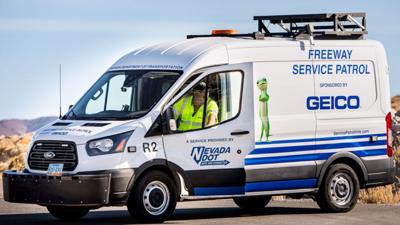
As colder weather approaches, drivers in the Reno area are being urged to prepare their vehicles for winter after the Nevada Department of Transportation’s Freeway Service Patrol assisted with nearly 9,000 incidents on area freeways since the start of the year.
The patrol often sees an increase in disabled vehicles along freeways when weather changes, with some breakdowns tied to drivers not taking steps to prepare their vehicles for colder conditions.
One of the first things drivers should check is their tires. Cold temperatures can lower tire pressure, leading to increased wear and poor handling. Checking tire tread and pressure can help drivers make sure their tires are ready for winter conditions.
Drivers should also check their batteries and cables, lights, windshield wipers, and brakes. NDOT recommends inspecting filters, oil, fluid levels, hoses and belts, along with making sure the cooling system and antifreeze are properly maintained. Windshield washer fluid should be full, and wiper blades should be replaced if needed before winter storms arrive.
Having the right supplies in the vehicle is another part of preparing for winter travel. NDOT recommends packing tire chains, an ice scraper, a snow shovel, extra winter clothing or a blanket, and nonperishable food.
Drivers should also know how to install their tire chains and use their vehicle’s four-wheel-drive and other winter driving systems. The vehicle owner’s manual can provide instructions for those features.
Before heading out, drivers can check highway conditions at nvroads.com or through the Nevada 511 app.
The Freeway Service Patrol operates along fixed freeway routes, helping clear stalled vehicles and assisting at roadside incidents. Its operators also provide basic first aid, extinguish minor vehicle fires, and help manage traffic and safety around incident scenes.
Clearing incidents quickly matters because blocked freeway lanes can create congestion and increase the risk of additional crashes. National statistics show that for every minute a freeway lane is blocked, it takes four minutes for the resulting traffic congestion to clear, while the chance of secondary crashes rises.
Each Freeway Service Patrol operator is a certified automotive technician and receives certifications in emergency vehicle operation, fire protection, CPR, hazardous materials, traffic flagging, and first aid.
The patrol is not available by phone. Drivers looking for information about its routes can visit dot.nv.gov and select “Travel Info.”