

Auditors are revealing some issues they found at the Washoe County Department of Alternative Sentencing (DAS).
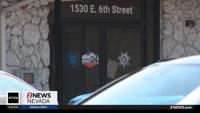
One of the programs that was included in the report is Sober24, a drug and alcohol monitoring system.
The report will be presented to the Washoe County Board of County Commissioners on Tuesday.
The 18-page report from the county's Internal Audit Division goes into details about the program and the department as a whole.
Before we dig into the audit review, the DAS has had a lot happen.
The county confirmed there is an investigation by the Secret Service, but couldn't comment as to why.
The Sober24 program was closed on March 3 and March 4 this year. The chief of the department, Justin Roper, resigned on March 3. The county says he didn't give a reason why he resigned.
The audit report was submitted to county officials in April.
We'll look into some of the specifics with the department before looking into Sober24.
One of the first findings in the report includes the use of county-owned fleet vehicles. The report states officers would routinely take home cars, adding more to expenses.
"It was observed that officers are routinely taking home County-issued vehicles, which is not Washoe County’s best practices. This practice has resulted in increased costs for equipment services, maintenance, and fuel consumption," the report stated.
It also says officers who do not have the citation-writing authority were giving tickets out anyways.
"It was noted that officers, who do not have citation-writing authority, have been conducting traffic stops outside the scope of their official duties. This practice is inconsistent with policies, which do not authorize these officers to issue citations," the report claimed.
In regard to funding concerns, there were a decent amount in the report.
One centered around workers not filling out time cards correctly by including the travel to and from work.
"The internal auditors have been advised that officers may have been given permission to adjust their work hours by arriving up to one hour late and leaving up to one hour early in order to account for travel time to and from their houses, effectively being paid for this travel time," auditors said.
Another finding included invoices that were filed in the incorrect fiscal year.
"It was identified that several invoices were entered into the incorrect fiscal year. This misposting of invoices can lead to inaccurate financial reporting, misalignment of expenses and revenue, and potential issues during year-end financial audits. The incorrect recording of invoices can distort the financial statements and lead to a misrepresentation of Washoe County's financial position, which could impact budgeting and future financial planning," the report stated.
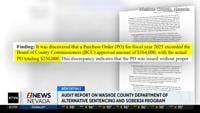
Further in the report, it states that the purchase order for the fiscal year was almost $100,000 more than the approved amount. $164,000 was the approved amount from the Washoe County Commission, but the actual total ended up being $250,000.
Another concern the division saw was that there was no formalized process for what was ordered and paid for goods and services. The report says this can lead to financial misstatements and inefficiencies.
One of the other findings included that the department was forecasted to go over its budget for the fiscal year, for the third year in a row.
"This ongoing trend indicates a lack of budget planning, monitoring, and cost control measures within the department. Repeated overages not only undermine fiscal discipline but also place strain on overall County resources and may impact funding availability for other essential services or programs," the report stated.
The auditors also shared that there were inconsistencies in pricing for similar services.
The report also included a look into management. The first portion saying there was a lack of external management in key operational areas.
Turning to the Sober24 program, some of the issues that arose from the report center around a lack of formal process to review the testing panel. The division claims this can lead to unnecessary testing, increased costs and inefficiencies.
The division also found that the inventory controls for chemicals and supplies were not sufficient.
"Specifically, there is a lack of formal procedures for tracking and securing the chemicals and supplies, such as gloves, cups, presumptive cups, and other lab essentials," the report stated.
The report says the current hours of operations do not fit within the existing budget suggesting that there should be more cost analysis done. Which the report shares - there is work to get some of this implementation done.
Others include changing the 24-hour deadline, creating a disposal process, finding ways to lower costs, and better utilization of some machines.
We did reach out to the county for a comment on Monday, and they said they could not speak on it at the time.