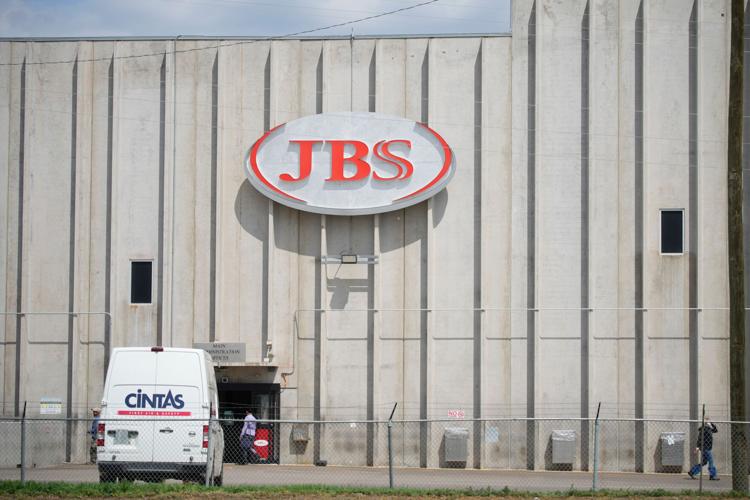





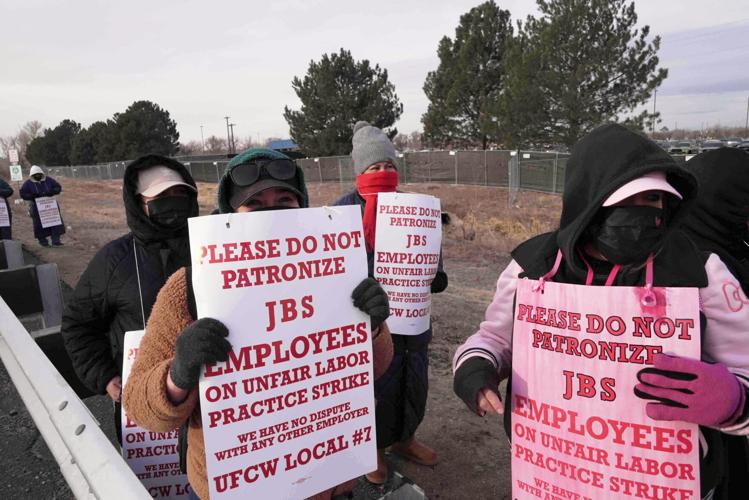
GREELEY, Colo. (AP) — About 3,800 workers for the world’s largest meatpacking company began striking Monday in Colorado, and if they don't get a new contract soon, already costly beef could become even more expensive for U.S. consumers.
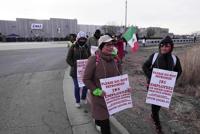
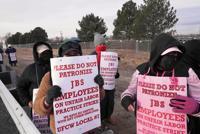
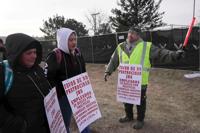
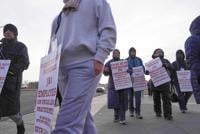
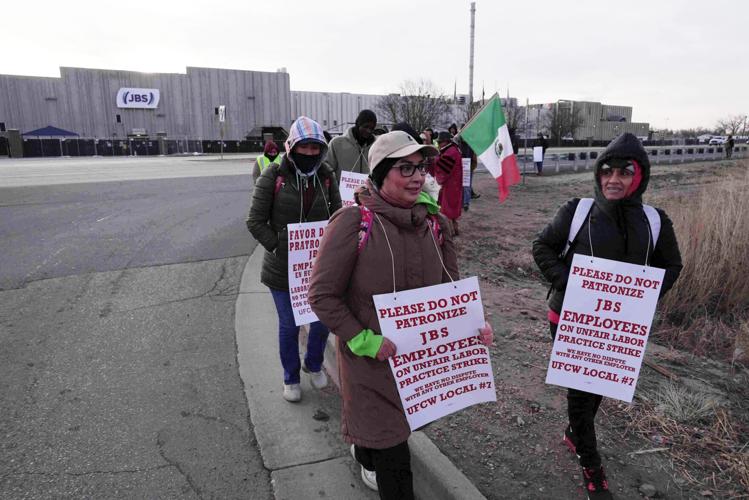
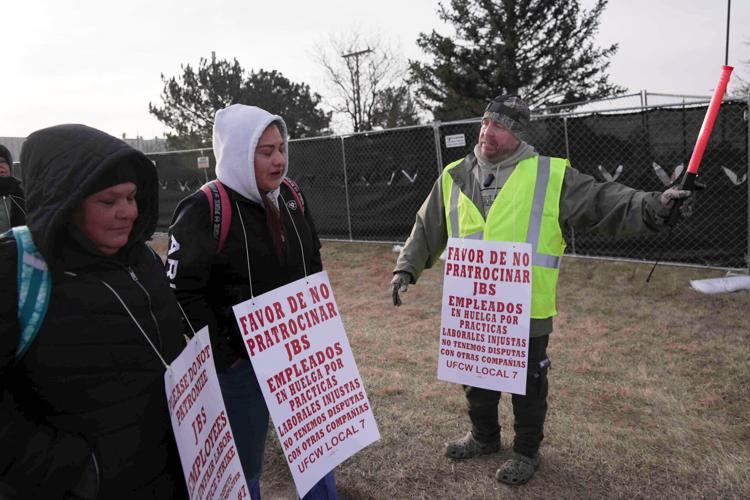
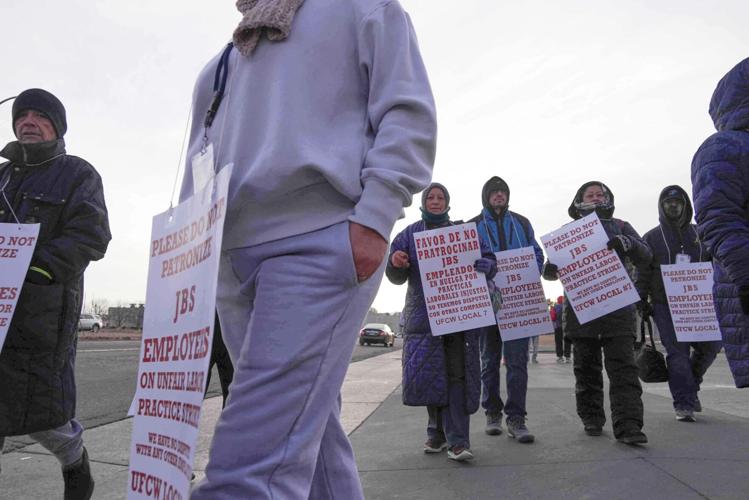
As the sun rose, hundreds of strikers picketed outside the Swift Beef Co. plant in Greeley, owned by JBS USA and one of the largest slaughterhouses in the nation. Walking back and forth in the morning cold, bundled in blankets, some yelled “huelga!” — Spanish for “strike.” Others carried signs saying “please don’t patronize JBS.”
The first walkout at a U.S. beef slaughterhouse in four decades follows accusations from union officials that the company retaliated against workers and committed other unfair labor practices. The union also said the company offered less than 2% more a year in wages, which is less than inflation in Colorado.
A spokesperson at JBS USA denied any labor law violations and said its offer is fair. Each side blamed the other for an impasse before the contract ended Sunday night.
“They don’t really value their workers and we’re the ones that help them get all their profit,” said Leticia Avalos, a 34-year-old union steward and Greeley native who has been working at the plant since 2020. She depends on the job to support her family including a 6-month-old baby, but said she'll make sacrifices to get the company to listen.
Union says workers pay to protect themselves
The union says its workers perform some of the most difficult and dangerous jobs in the country, and deserve higher wages and better health care. It said JBS in many cases has charged workers $1,100 or more to offset the company’s expenses for personal protective equipment needed to ensure worker safety.
Smoke rose from parts of the plant Monday but it was unclear if it was fully operating. JBS spokesperson Nikki Richardson said “many team members” reported to work, but did not provide a precise number.
“Our team members want stability, they want to support their families, and they deserved the opportunity to vote on the company’s historic offer — an opportunity the union leadership has denied them,” Richardson wrote in an email.
She said any employee who didn’t strike would have work and be paid. The company also has said it would move production as needed to other JBS facilities.
A federal probe into soaring beef prices
The strike comes at a 75-year low in U.S. cattle numbers, with a Jan. 1 inventory of 86.2 million animals — down 1% from the prior year. The decline has been driven in part by drought and low prices offered to ranchers. Meanwhile, beef prices have soared to record levels.
President Donald Trump’s tariffs on Brazil, a major beef exporter, have also curbed imports. Pressed to act on “affordability” issues after Republican losses last November, Trump accused foreign-owned companies of driving up U.S. beef prices and asked the Department of Justice to investigate.
The price for 100% ground chuck beef more than doubled over the past two decades from $2.55 to $6.07 per pound, according to the Bureau of Labor Statistics. The increase has added to economic anxiety in the U.S. The Trump administration has promoted a trade deal with Argentina in efforts to lower prices for food, including beef.
The Greeley plant has about 6% of the total U.S. beef slaughterhouse capacity, said Abby Greiman, a livestock market adviser for industry consultant Ever.Ag.
Most ranchers can still get cattle to market because the national herd is smaller, and that could give JBS some leverage in negotiations, since other slaughterhouses can absorb the Greeley plant's work, Greiman said.
Feedlots hold clues to consumer costs
Yet an extended strike at Greeley could disrupt the industry, particularly in Colorado and neighboring states, said Jennifer Martin at Colorado State University’s animal sciences department.
“The feedlots, the people who have the cattle right now -- the longer they sit kind of in a holding pattern, the more expensive they become to feed,” said Martin. “For consumers, it means that prices will likely go up."
The strike follows the January closure of a meatpacking plant in Lexington, Nebraska, which was expected to ripple through the local economy and community. Tyson Foods cited the smaller herd and millions of dollars in expected losses this year.
JBS, the world’s largest meatpacker, has a market capitalization of $17 billion on the New York Stock Exchange after being approved for trading last May, despite environmental opposition and a federal probe that led to its guilty plea in October to bribing Brazilian officials for the financing it used for its U.S. expansion.
JBS is a top local employer
At the Greeley plant, the company tried to intimidate workers to quit the union in one-on-one meetings, union general counsel Matt Shechter said.
Despite the pressure, 99% of workers voted to authorize the strike, said Kim Cordova, president of the United Food and Commercial Union Local 7.
It’s the first strike at a U.S. slaughterhouse since workers walked out at a Hormel plant in Minnesota in 1985, according to Cordova and Martin. That strike lasted more than a year and included violent confrontations between police and protesters, according to the Minnesota Historical Society.
JBS is the top employer in Greeley, a city 50 miles northeast of Denver with a population of about 114,000 people.
“It’s a huge impact in the community for us to be striking,” said union steward Avalos. “I know a lot of us are worried, and hope that nothing goes even more south.”
Brown reported from Billings, Montana, and Lee reported from Santa Fe, New Mexico. With contributions from Colleen Slevin in Denver and Kathy McCormack in Concord, New Hampshire.