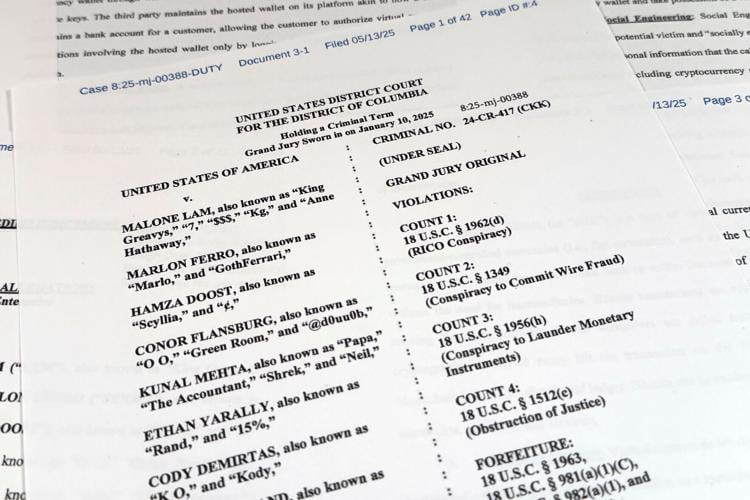







WASHINGTON (AP) — They pulled off one of the largest cryptocurrency thefts in U.S. history, duping a stranger out of bitcoin worth over $240 million. They tried to hide their digital fingerprints, carrying out a sophisticated scheme to launder the proceeds.
And then the party started.
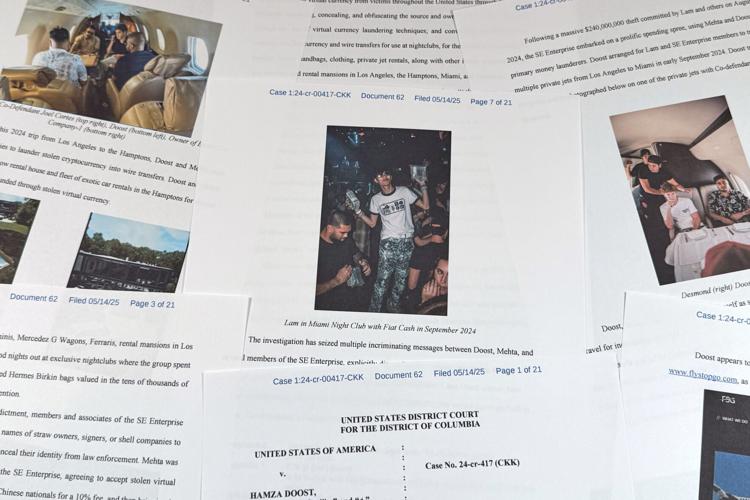
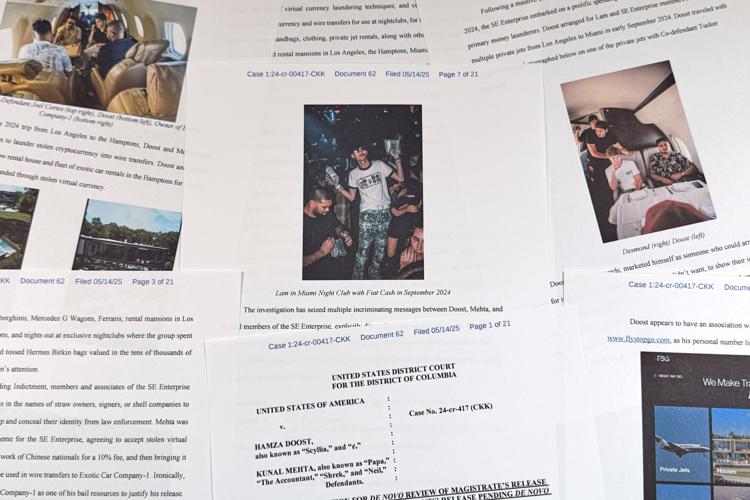
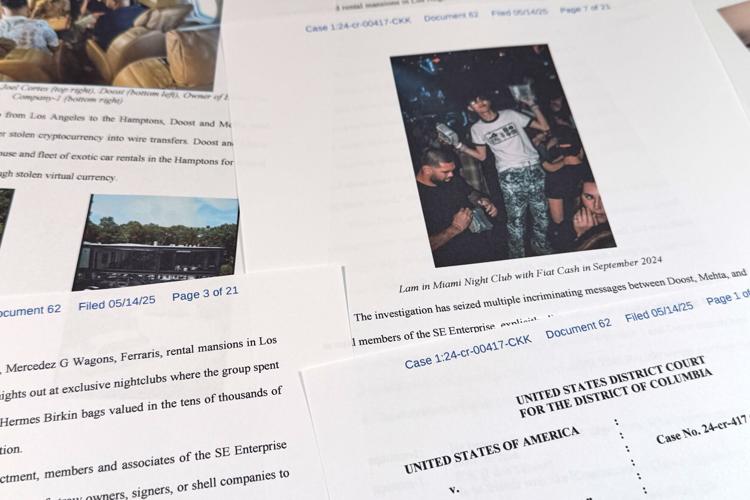
The scammers — a network of young men in their late teens or early 20s — celebrated the August 2024 heist by embarking on a wild spending spree. They purchased fleets of sports cars, flew on private jets, hired security guards and rented mansions in Miami and the Hamptons. An alleged ringleader, 22-year-old Malone Lam, spent over $569,000 in one evening at a Los Angeles night club.
Their bender lasted a month before FBI agents arrested Lam on charges that he organized a "social engineering" attack on the Washington, D.C., resident. Lam, an eighth-grade dropout from Singapore, has a plea agreement hearing set for Tuesday. His conviction would be a capstone for the government's investigation.
The charges against Lam and 17 others are an extreme example of an increasingly common form of cybercrime. Complaints of cryptocurrency investment fraud to the FBI rose by nearly 50% in 2025, while Republican President Donald Trump's administration largely abandoned a regulatory crackdown on the volatile industry.
Last year, the Justice Department disbanded a unit dedicated to prosecuting crypto-related crimes. Meanwhile, crypto companies that complained of unfair treatment during Democratic President Joe Biden's presidency are enjoying the government's hands-off approach under Trump, who took in roughly $1.2 billion from his crypto businesses in 2025.
Cybersecurity researcher Allison Nixon, who has spent years tracking The Com, an underground subculture of young hackers united by the “insane amount of money” that crypto fraud can generate, advocates for more law enforcement resources to go after them.
“If we don’t seriously ramp up the resources to take these people down and do it faster, then it’s going to spread more and more,” she said.
Scammers nabbed millions though ‘social engineering’ heist
A man identified as “Victim 7” in court filings was at home in Washington on Aug. 18, 2024, when his phone rang. The first caller identified himself as a Google representative inquiring about attempts to breach his account. A second, claiming to be from the Gemini crypto exchange, warned the man of a malware attack affecting his crypto wallet.
The callers manipulated the man into giving them access to his Google Drive and revealing security codes that allowed Lam to siphon off over 4,100 bitcoin, according to prosecutors. They said Lam and his friends on the calls — Veer Chetal and Jeandiel Serrano — targeted the man because he was a wealthy, longtime crypto investor.
A private recording captured the moment when the friends realized how much money they just stole, according to a video posted by a well-known private investigator of cryptocurrency crimes who goes by ZachXBT.
“Oh, my God! Bro, bro, I'm going to spaz out!” a voice on the video said.
Once they swiped the man's savings, they used money laundering specialists to wash it through multiple exchange platforms and convert virtual currency into government-issued cash.
It wasn't the first social engineering scam for the friends, who met in online gaming forums. They had teamed up on other multimillion-dollar thefts since late 2023 using a similar playbook, according to prosecutors.
This time, however, one of them made a costly mistake: Serrano failed to conceal his IP address when he created an account on a cryptocurrency exchange to hold nearly $30 million in stolen crypto, according to prosecutors. Investigators linked the IP address to a home in Encino, California, that Serrano was renting for $47,500 a month.
Lavish spending quickly drew attention
Serrano was vacationing in the Maldives when investigators identified him as a suspect. Lam was in Los Angeles, where he and friends spent $4 million at nightclubs in one month, authorities say. Chetal gifted a Lamborghini to his parents and hid a duffel bag filled with $500,000 in cash in their laundry machine.
Word of their windfall quickly spread in crypto scammers' circles. A week after the big score, Chetal's parents were driving in Danbury, Connecticut, when several masked men cut them off, forced them out of their new car, beat Chetal's father with a baseball bat, shoved the couple into a van and bound their hands.
The captors, from Miami, had intended to use Chetal's parents as leverage for extorting him into giving up his share of the stolen crypto. But the ransom plot fell apart when witnesses notified police, who apprehended the carjackers.
The FBI showed up to search Chetal's apartment in Brunswick, New Jersey, on Sept. 9, 2024, and found $37 million in stolen crypto in his possession. He agreed to cooperate with their investigation.
Lam was attracting attention, too, for spending hundreds of thousands of dollars a night at clubs and tossing handbags worth tens of thousands of dollars to women in the crowds. He also used stolen cryptocurrency to buy a $2 million watch and over 30 cars, including custom Porsches, Lamborghinis and Ferraris, according to the FBI.
“This luxury lifestyle, of which so many young men and women could only dream, was just built on a foundation of fraud,” a prosecutor, William Hart, said during a recent sentencing hearing for a money laundering co-defendant.
‘Ferris Bueller gone bad’
Serrano was wearing a $500,000 watch when FBI agents arrested him at Los Angeles International Airport on Sept. 18, 2024. He initially professed his innocence but soon admitted to having roughly $20 million of the D.C. man's stolen crypto, prosecutors said.
Lam was arrested at one of his Miami mansions on the same day as Serrano. An off-duty law enforcement officer had tipped off Lam that authorities were on their way to arrest him, the indictment says.
“We always talked about what it would be like if I were to go down, but never thought it would be this crazy,” Lam told associates from jail on a recorded call, according to his indictment.
The judge for Lam's initial court appearance in Miami sounded astonished by a prosecutor's summary of his lavish spending.
"I could only think of Ferris Bueller gone bad," U.S. Magistrate Alicia Valle said, referring to the school-skipping protagonist of the 1986 movie “Ferris Bueller's Day Off.”
Lam's capture didn't stop the splurging. Ferro, who pleaded guilty to a racketeering conspiracy charge last year, used stolen funds to cover Lam’s legal expenses.
Judgment Days
Eighteen defendants have been charged. Lam would be the 11th to plead guilty. At Lam's first court appearance, a prosecutor estimated that his sentencing guidelines would recommend a prison term of at least 14 years upon conviction.
U.S. District Judge Colleen Kollar-Kotelly, who presides over Lam's case, already has sentenced three of his co-conspirators. She sentenced two money launderers to prison terms of approximately six years.
Chetal pleaded guilty to conspiracy charges in November 2024 and awaits sentencing. Serrano's charges remain pending.
Tucker Desmond, who pleaded guilty to destroying evidence of other plotters' crimes, was sentenced to probation. Desmond apologized at his sentencing hearing in March, saying he “got obsessed with the image of success rather than actually becoming a hard-working individual myself.”
Ferro declined to address the court during his sentencing hearing in May. His attorney, Kevin Wilson, described the co-defendants as mischievous “young kids," but the judge didn't accept that as an excuse.
“Being young only goes so far,” Kollar-Kotelly said.