









The Supreme Court on Monday cleared the way for President Donald Trump to move ahead with his executive order restricting mail-in voting, though it remains unclear how much his administration can implement before the fast-approaching midterm elections.
The decision appears to leave room for additional court challenges that could further slow Trump’s order. And with some states beginning to send mail ballots to voters in just a few weeks, time is running short to impose major changes.
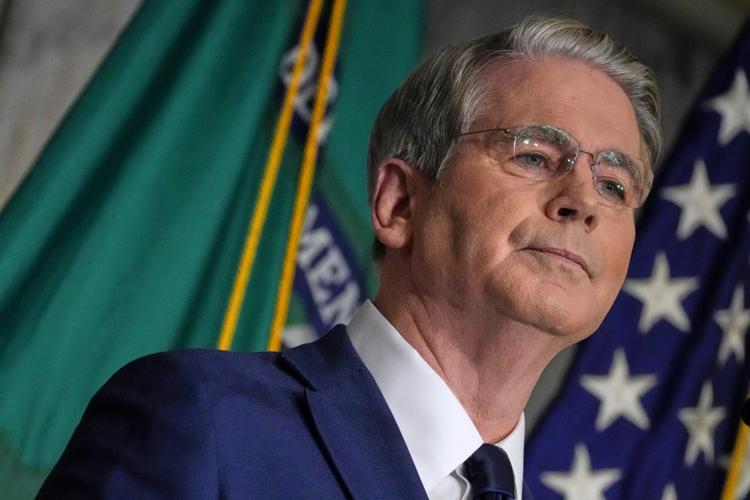
Meanwhile, Treasury Secretary Scott Bessent said Monday that new U.S. secondary sanctions in the pipeline aim to block all potential sources of revenue for Iran, telling nations to cut economic ties to Tehran or face U.S. retaliation. Tehran has withstood nearly five decades of punishing American sanctions. Ahead of the announcement, Iran’s currency hit a record low, dropping to 2.02 million to the U.S. dollar as trading opened on currency markets.
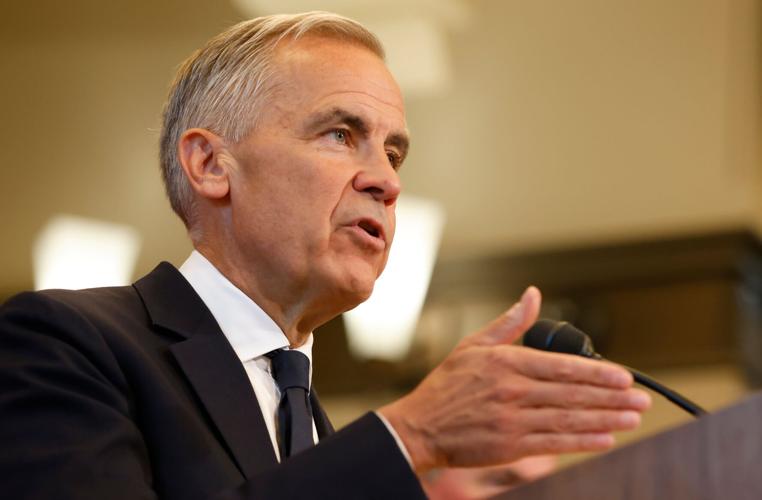
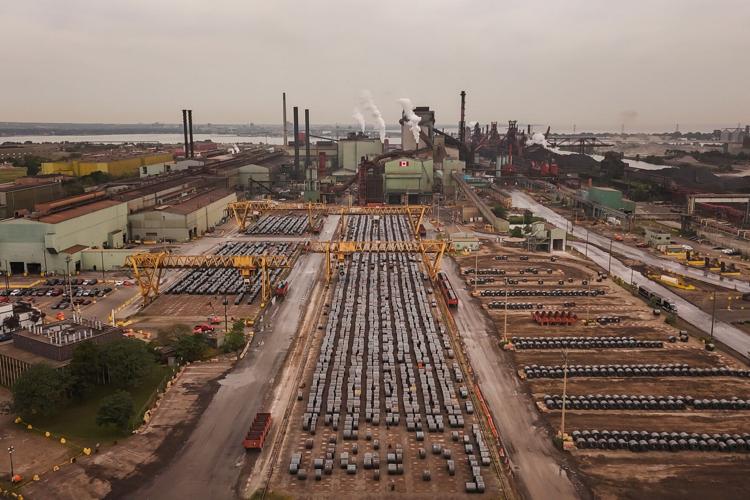
Trump threatened on Monday to impose a 50% tariff on Canadian automobiles, car parts and steel starting next year as the trade rift with Ottawa continued to deepen. The announcement comes after trade talks between the otherwise reliable trading partners collapsed last week. Long-planned U.S. tariffs on various Canadian goods went into effect after the talks broke off, and Canada has vowed to retaliate.
The Latest:
Supreme Court clears the way for Trump mail voting order in advance of midterms
The Supreme Court on Monday cleared the way for President Donald Trump to move ahead with his executive order restricting mail-in voting, though it remains unclear how much his administration can implement before the fast-approaching midterm elections.
The decision appears to leave room for additional court challenges that could further slow Trump’s order. And with some states beginning to send mail ballots to voters in just a few weeks, time is running short to impose major changes.
Mail balloting has long been a favorite target for Trump, who has claimed that it breeds fraud despite strong evidence to the contrary and his own use of the voting method.
The case could be one of multiple voting-related challenges before the justices. The Justice Department had filed an emergency appeal asking the high court to allow work on implementing the changes before the midterms.
US set for largest mass visa revocation in history targeting up to 200,000 foreigners, officials say
The Trump administration is preparing to revoke the business and tourism visas of up to 200,000 foreigners who have applied for or are currently seeking asylum status in the United States. If it happens, the move would be the largest single mass revocation of visas in U.S. history and would likely face legal challenges.
Unless challenged or revised, the State Department is expected to announce in the coming weeks the revocation of so-called B1 and B2 visas issued between 2016 and 2026 whose holders have sought asylum or are now seeking asylum, according to State Department documents obtained by The Associated Press and two U.S. officials. The action will be taken in coordination with the Department of Homeland Security.
“We are coordinating with DHS to identify and revoke the nonimmigrant visas of foreigners who have come to the United States claiming to be short-term visitors, but then file for asylum to stay here permanently,” said State Department spokesman Tommy Pigott.
Hegseth won’t rule out a return to striking Iran
Defense Secretary Pete Hegseth says he is not ruling out resuming strikes to hit Iran amid a lull in hostilities.
“By no means are we foreclosing using kinetic strikes, anywhere, in the Strait of Hormuz or around Iran,” Hegseth told reporters Monday.
It comes as the Treasury Department has announced a new round of sanctions aimed at Iran and warned nations that do business with the Islamic Republic to sever those financial ties or face retaliation from the United States.
Hegseth said that “if Iran is foolish enough to overplay their hand or mess with the American military, we’ll do what we need to do” but he added that “economic pressure we know hurts them the most right now.”
Pentagon won’t cut money for weapons if Congress shrinks military budget, Hegseth says
Defense Secretary Pete Hegseth says the Pentagon will proceed with efforts to significantly boost production of advanced weapons, even if it Congress fails to approve President Donald Trump’s proposed $1.5 trillion budget.
Hegseth said the Pentagon has already inked multi-year deals with various contractors, with many scaling up manufacturing capacity.
“This is not a nip around the margins of a few more weapons,” Hegseth told reporters in Wisconsin. “This is a generational investment of 2X, 3X, 4X war munitions of the ones we know we’re going to need and use.”
U.S. military officials and Washington think tanks have raised concerns that the U.S. depleted many advanced weapons during the Iran war. But Hegseth pushed back, repeating the Pentagon’s stance that the U.S. military has plenty of munitions.
Treasury sanctions nearly 60 Iran-linked entities worldwide on nuclear, missile, cyber and oil networks
The Treasury announced sanctions Monday against nearly 60 Iran-linked entities over their roles in Iran’s nuclear and missile programs, malign cyber activities and oil shipments.
It is part of the administration’s economic campaign against Iran, including warnings to other countries not to do business with Iran in sectors such as shipping, technology and aviation.
The Treasury sanctioned Hong Kong-based Sweet Ocean Industrial Limited and its associated personnel and businesses, accusing them of helping Iran acquire sensitive goods such as laser optics equipment. The Treasury also sanctioned several other Hong Kong-based entities for having provided funds to Sweet Ocean and its network.
Separately, the Treasury sanctioned China-based Shenzhen Huamei, the Hong Kong branch of the Iran-based logistics company BRE Line and its director for their ties with BRE Line in support of Iran’s missile and nuclear programs.
A sanctioned company is cut off from the U.S. financial system.
Trump plays Pied Piper to show off his ballroom
At the end of a Back to School event near the Rose Garden, the president invited the crowd — which included dozens of children — to accompany him and see the White House ballroom being built nearby.
“If anybody would like to walk with me,” Trump said, calling it “a special way the kids could see construction.”
The president added: “I love the sound of construction.”
Trump has taken to calling the project a “ballroom slash military complex.” He noted that Chinese President Xi Jinping is visiting soon and recalled his own visit to China in May.
“We saw the Great Hall of China,” Trump said. “Well, now we’re going to have a great hall, too, in the United States.”
Trump hosts education event in Rose Garden
The president’s main public event Monday is a back-to-school event featuring Education Secretary Linda McMahon.
Many schoolchildren are in the audience during the outdoor event.
“What a nice setting this is,” Trump remarked.
US formally removes Syria from state sponsors of terrorism list
The Trump administration on Monday formally removed Syria from the State Department’s “State Sponsor of Terrorism” blacklist, making permanent a series of sanctions removals that had been initially announced more than a month ago.
Secretary of State Marco Rubio had announced the recission of Syria from the list in early July, but there was a 45-day period for congressional review before it was formalized. That review period has now expired and sanctions related to the state sponsor designation have been almost completely removed, the State and Treasury departments said on Monday.
“Treasury is following through on President Trump’s promise to give the Syrian people a chance at greatness,” Bessent said in a statement. “Today’s action will help foster additional investment in Syria to promote political and economic stability.”
Bessent says no country is ‘above the reach of US sanctions’
When asked that the U.S. could go soft on China to maintain the fragile trade truce between the world’s two largest economies, Bessent said “no one is above the reach of U.S. sanctions”
“If they facilitate transactions and are part of the ecosystem that turns Iranian oil into money, into repression, they will be targeted,” Bessent said.
Experts have said the U.S. is likely to carefully calibrate its actions on China, just a month before Chinese leader Xi Jinping is expected to visit the U.S. to keep the already-fraught relations from falling out.
The Trump administration is challenged to act big with Iran “without escalating tensions with Beijing,” said Wendy Cutler, vice president of the Asia Society Policy Institute.
Bessent says its giving Iran’s trading partners a chance ‘to remedy bad behavoir’
Asked by a reporter Monday about issuing warnings to Tehran’s financial partners instead of promising an ‘economic D-Day’, the Treasury secretary said he wanted countries to shift away from Iran before it was too late.
“Why would I want to blow up the global financial system?” Bessent said. “We believe that it is important to level set and give people a cure period.”
He added, “But they should know that that will move very quickly and that we are serious. Secondary sanctions are a very powerful tool.”
Bessent doesn’t name names, but insists US is making its expectations clear on Iran trade
The treasury secretary said Trump has been “making phone calls to world leaders with specific request to cease their interactions” with Iran and has already seen results.
The UAE announced last week that it was suspending all trade, commercial exchanges, and financial transactions with Iran until further notice.
“I am confident the president, as you all know, is quite persuasive,” Bessent said.
Bessent said that Treasury and State Department officials are following up with calls and visits with officials from countries and entities it wants to see take action and laying out “exactly what we expect and the timelines.”
Iran’s parliament speaker dismisses impact of looming US sanctions
Mohammad Bagher Qalibaf on Monday said Iran’s trading partners were not taking Washington’s “statements into account,” even as the country’s economy reels from months of war and mounting pressure.
“Americans know that no one buys their bombast,” Qalibaf said in a post on X, saying that the United States was “not in an economic position to further restrict its relations with other countries.”
His comments came as Washington prepared to expand secondary sanctions targeting countries and companies doing business with Iran, in an effort to isolate Tehran from the global dollar-based financial system.
Bessent warns nations they can no longer operate in ‘gray zone’ of Iran conflict
Treasury Secretary Scott Bessent says new U.S. secondary sanctions in the pipeline aim to block all potential sources of revenue for Iran, telling nations to cut economic ties to Tehran or face U.S. retaliation.
Bessent added it’s “no longer acceptable to operate in the gray spaces” of Iran conflict as US threaten sanctions against Tehran’s trade partners.
The treasury secretary did not name what countries could face potential secondary sanctions from the United States, but China, Turkey and the United Arab Emirates are Iran’s largest trade partners.
“Let there be no ambiguity as to the position of the United States,” Bessent said at a Monday afternoon news conference. “An economic engagement of any kind with this murderous regime will expose those responsible to the full reach of American power.”
Vance calls Canada ‘a state’ but says doing so was an accident
Asked about the Trump administration escalating a trade war with Canada when Maine depends so heavily on cross-border trade, the vice president said, “Canada is a state” but then added, “Sorry. Freudian slip.”
As the crowd laughed and hooted, Vance added, “That was actually an accident.”
He likened Canada to China in what he called unfair trade practices, saying that “Canada allows itself to be a backdoor for Chinese goods” that eventually are imported into the U.S.
Vance said negotiations between Canada and the U.S. were ongoing and that he thought there’d have been an agreement easing trade disputes by now — but Canada had made “unreasonable” demands.
Vance gives shoutout to ‘our very independent friend, Susan Collins’
Republican Sen. Susan Collins was not accompanying Vice President JD Vance during his manufacturing stop in Brewer, Maine on Monday.
But he still made sure that her presence was felt.
“Whenever I’m in Maine, I got to give Susan a little bit of crap,” Vance told the crowd as he began his remarks. “Because as you know, Susan is the most independent member of the United States Senate, and as the president of the United States Senate, she sometimes makes my job just a little bit harder.”
Vance said Collins, who is up for reelection in the Democratic-leaning state, has visited the vice president’s residence about a half-dozen times. In those meetings, Vance said, Collins is constantly pressing him about how certain policies affect her state.
Vance ended his brief aside on the senator by asking the crowd to give a shoutout to “our very independent friend, Susan Collins.”
The Washington Post must reinstate a Black writer fired for posting about Charlie Kirk
“After wrongfully firing me last year, an independent arbitrator has ordered the @washingtonpost to reinstate me immediately, with back pay,” Karen Attiah posted on Instagram on Monday, calling it “a victory for journalists everywhere.”
The ruling found insufficient cause to terminate Karen Attiah, the last Black full-time member of the Post’s opinion desk at the time.
Kirk, a top conservative podcaster and Trump ally, made provocative statements about race, gender and politics, including calling George Floyd, whose 2020 murder at the hands of Minneapolis police sparked protests, a “scumbag.”
Kirk’s killing on Sept. 10 elicited a torrent of comments, and some who spoke out against him faced sanctions or dismissal at work. One post Attiah made said “Refusing to tear my clothes and smear ashes on my face in performative mourning for a white man that espoused violence is … not the same as violence.”
A Post statement said it respects the arbitration process and declined further comment.
Deportees who refused to exit a US flight in Liberia are sent to Equatorial Guinea
Six people who were deported by the United States to Liberia last week resisted getting off the plane and instead were sent to Equatorial Guinea, a person on the plane and a lawyer in contact with them said Monday.
Under a series of often secret agreements, the Trump administration has deported thousands of people to two dozen countries that aren’t their own as it pushes ahead with its immigration crackdown, advocates say.
The four Cuban men, a Brazilian man and a Cameroonian woman are now being held with other migrants in worsening conditions in a hotel that lacks medical staff, said Meredyth Yoon, litigation director for Asian Americans Advancing Justice-Atlanta.
Equatorial Guinea’s all-powerful president, Teodoro Obiang Nguema Mbasogo, turned the hotel owned by his family into a prison for deported asylum seekers under an opaque $7.5 million deal with the Trump administration. His government did not immediately respond to a request seeking comment.
By Mark Banchereau
Reopening US border to Mexican cattle not expected to drop beef prices anytime soon
The U.S. plans to reopen a border crossing in Arizona to cattle from Mexico on Monday as part of a broader Trump administration effort to reduce record-high beef prices. Economists doubt grocery store shoppers will see any savings soon.
The U.S. Department of Agriculture said concerns about the New World screwworm’s spread lessened enough to allow the movement of cattle from Mexico.
Beef prices clearly are a concern for Trump, who announced Friday that he would allow up to 331,000 tons of ground beef imports, tariff-free, to be sold at below-market prices over the next 90 days.
But the phased reopening means it will take months for Mexican imports to regain their traditional 3% of the U.S. supply, according to Derrell Peel, a professor of agribusiness at Oklahoma State University.
Palestinian American’s home still besieged by Israeli settlers
The homeowner whose residence has been besieged by Israeli settlers said Monday that he still can’t move freely in the West Bank village of Qusra.
Loui Ridi traveled from Ohio to the Israeli-occupied West Bank a week ago to join relatives defending his home from Israeli settlers.
Israel’s military declared the area a closed zone to restore order in Qusra, made a nearby home into a drone base and required Palestinians to coordinate all their movements from the homes that had been under siege.
Ridi said settlers keep returning to the area above his home, without consequences, while his family spends hours coordinating moves to get food, water and other supplies.
Israel’s police has not announced any arrests of settlers, despite condemnation from Israeli rights groups and foreign officials, including U.S. Ambassador to Israel Mike Huckabee, who called the siege terrorism.
China says more US economic pressure won’t end the Iran war
“They will only exacerbate tensions and escalate the situation, which is in no one’s interest,” Foreign Ministry spokesperson Lin Jian said in Beijing as the U.S. threatens sanctions on countries that trade with Iran.
China is calling on all parties to avoid measures “that could further intensify differences and conflicts and disrupt global economic development and financial stability,” he added.
China is considered the biggest buyer of Iranian oil, and was importing more than 80% of Iranian oil before the U.S.-Israeli war with Iran.
Iran-backed rebels hit oil tanker in Red Sea
A crude oil tanker was attacked on Monday in the Red Sea off Saudi Arabia, igniting a fire on its main deck, the British military said.
The United Kingdom Maritime Trade Organization said there were no reports of casualties.
The tanker issued a distress alert and the Egyptian Navy was reported to have responded to conduct a rescue operation, according to Ambrey, a UK-based maritime risk and response company.
The military spokesman with Yemen’s Iran-backed Houthi rebels, Brig. Gen. Yahya Saree, said they targeted the tanker with a ballistic missile.
US and Iranian officials trade threats over new sanctions
“President Trump decimated Iran’s economy to a point where the rial has never been weaker and inflation has rarely been higher,” U.S. Treasury Secretary Scott Bessent wrote Sunday in an opinion piece in the Financial Times. “The regime’s final refuge now lies in the self-deception of fearful nations that still believe accommodating aggression can secure a durable peace.”
Already last week, the United Arab Emirates announced that it was suspending all trade with Iran. The UAE has long been one of Iran’s largest trading partners and its biggest source of imports.
But Iranian Foreign Ministry spokesperson Esmail Baghaei told reporters in Tehran on Monday that “any escalation of this situation will undoubtedly bring about consequences … Our hands are not tied.”