Update, May 5:
The application period for big game tags will be closing this Wednesday, May 8, at 11 p.m.
If you would like to apply, you can do so on the NDOW licensing website.
According to the Nevada Department of Wildlife, you can also change or add choices to your application up until the 11 p.m. deadline on Wednesday.
---
Original Article, March 25:
NDOW's big game tag application period is now open - and Nevada is planning its first-ever moose hunt this fall.
The application period opened on March 25, it will close on Wednesday, May 8th at 11 p.m. PT.
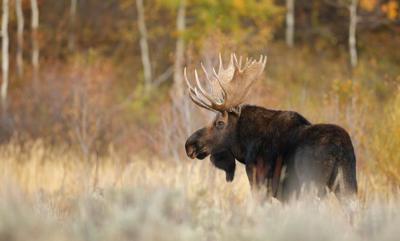
Only one or two of the 100 or so moose in Nevada are likely to be killed, but the plan already has critics.
State officials expect thousands of Nevadans to apply for the chance one hunter says would be like hitting the lottery. Only a few dozen moose had been seen in Nevada until about a decade ago. Scientists are baffled by their southern movement to warmer territory.
They say harvesting some may help them better understand how climate change affects wildlife.
NDOW Director Alan Jenne, says in a message:
"...While records indicate that moose began their exploration of our state dating back to the 1950s the modern establishment seemed to start in 2013. Years of tracking and monitoring our moose population has demonstrated that we have a very healthy and productive population that can sustain the proposed conservative harvest. While the number of public sightings across much of Elko County has exploded in recent years, the information gathered from this hunt will provide substantial benefit to the agency’s future management of this amazing animal..."
But Jenne adds, "Antlerless mule deer hunts have been discontinued until herds can recover. To assist in offsetting this impact to youth opportunity, we are piloting primitive junior hunt seasons in eight different hunt units for 2024. This will provide juniors who wish to challenge themselves by restricting their gear to either archery or muzzleloader another chance at a tag while creating some additional opportunity in the traditional three season hunt. To ensure junior are well informed and prepared for the use of these primitive weapons NDOW will be offering advanced archery and muzzleloader education classes before and after the tag application deadline."
“Moose are newcomers to North America,” said Cody McKee, a Nevada Department of Wildlife specialist.
The last deer species to cross the Bering Sea land bridge into Alaska and Canada, McKee said the movement of moose into the Lower 48 has occurred almost exclusively in the past 150 years.
“Their post-glacial range expansion isn’t really complete," McKee said. “And that’s what we’re currently seeing in Nevada right now, is those moose are moving into the state and finding suitable habitat.”
Only a few Nevada moose, perhaps just one, will be killed across an area larger than Massachusetts and New Jersey combined. But state officials expect thousands of applications for the handful of hunting tags, and it’s already controversial.
“Why a moose hunt at all?” Stephanie Myers of Las Vegas asked at a recent wildlife commission meeting. “We want to see moose, view moose. Not kill moose.”
The first moose was spotted in Nevada in the 1950s, not long before the dim-witted cartoon character “Bullwinkle” made his television debut. Only a handful of sightings followed for decades, but started increasing about 10 years ago.
By 2018, officials estimated there were 30 to 50, all in Nevada's northeast corner. But the population has more than doubled and experts believe there's enough habitat to sustain about 200, a level that could be reached in three years.
Bryan Bird, Defenders of Wildlife’s Southwest program director, is among the skeptics who suspect it's a short-lived phenomenon.
“I believe the moose story is one of `ghost' habitat or `ghost' range expansion. By that I mean, these animals are expanding into habitat that may not be suitable in 50 years due to climate change," Bird said.
Government biologists admit they don’t fully understand why the moose have moved so far south, where seasonal conditions are warmer and drier than they traditionally prefer.
“It seems to be opposite of where we would expect to see moose expansion given their ecology,” said Marcus Blum, a Texas A&M University researcher hired to help assess future movement. He analyzed aerial surveys, individual sightings and habitat to project growth trends.
Six feet (1.8 meters) tall at the shoulder and up to 1,000 pounds (453.5 kilograms), moose live in riparian areas where they munch on berry bushes and aspen leaves along the edges of mountain forests native to the northern half of Nevada.
The Nevada study documented moose spending nearly half their time in areas where that “thermal threshold” was exceeded about 150 days a year, while climate change models suggest the threshold will be surpassed by another 14 days annually by 2050, Blum said.
To be clear, the valleys beneath the snow-capped winter mountain ranges with moose are 500 miles (805 kilometers) from the Las Vegas Strip in the desert many people picture as Nevada.
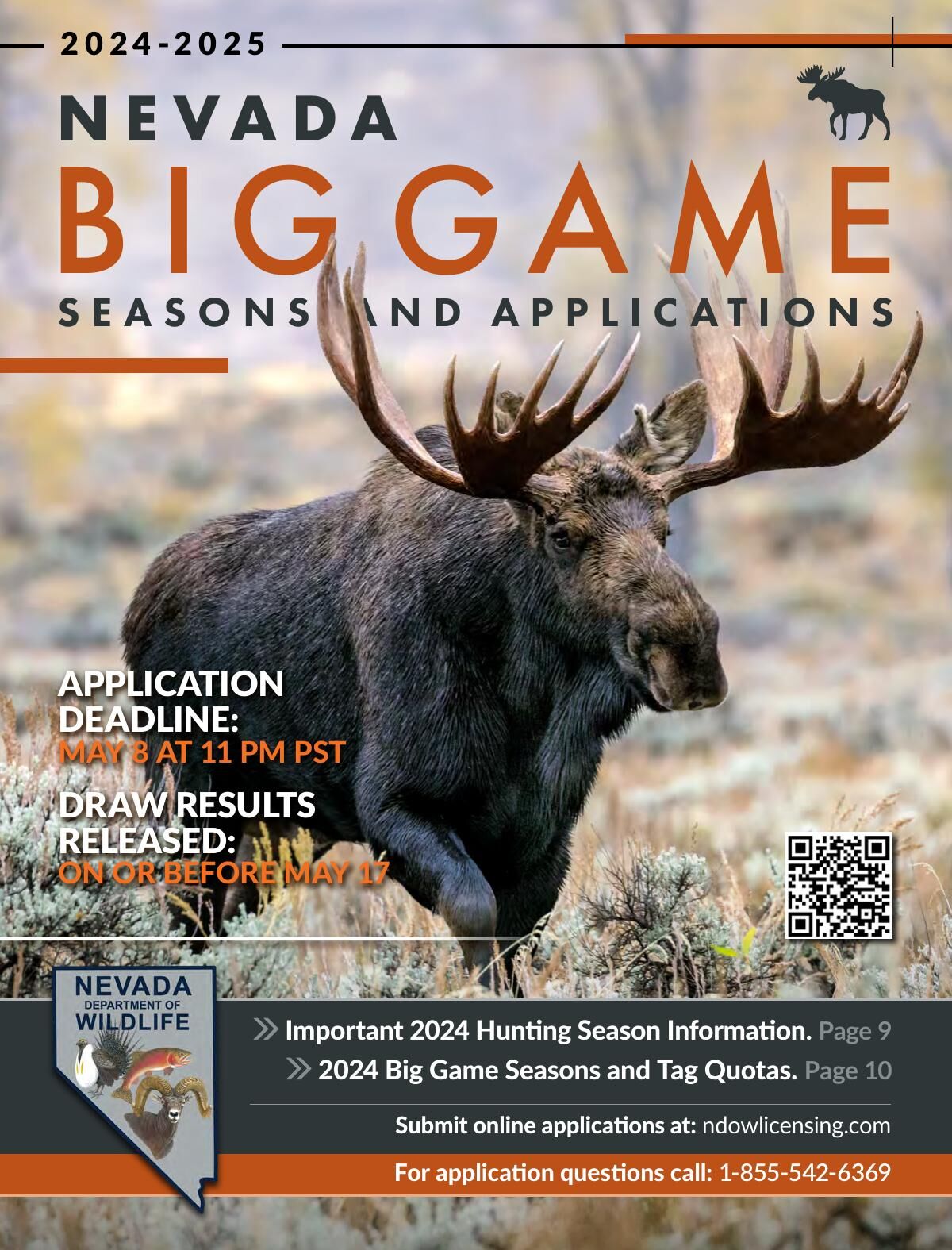
To read his full message and get tag prices, read the PDF below -
Alaska is home to the vast majority of U.S. moose, upwards of 200,000, with about 7,000 harvests annually. Maine has nearly 70,000, which is five times more than any other Lower 48 state, and issued 4,100 permits last year. Neighboring New Hampshire offered only 35 for 3,000-plus moose and Idaho issued about 500 for its 10,000 to 12,000.
No moose were observed in Washington state before the 1960s but its growing population now exceeds 5,000. The state issued three hunting permits in 1977 and now tops 100 annually.
(The Associated Press contributed to this report.)