Tahoe Forest Products LLC (TFP), in a partnership with Washoe Development Corporation (WDC), an affiliate of Washoe Tribe of Nevada & California, recently announced the lease of 40 acres of Washoe-owned land near Carson City, Nev. to build the first significant sawmill in the region in decades.
By creating a local market for green and burned logs, the mill will help to reduce fire fuels to help slow and prevent future fires.
“This project came about because there was no reasonable market for salvage logs and thinnings from the Tahoe Basin or from the Humboldt Toiyabe National Forest,” said Jon Shinn, CEO of TFP. “A local sawmill is one of the critical missing links in beginning to address forest health and resilience, not to mention critical post-fire cleanup efforts from catastrophes like the Caldor Fire.”
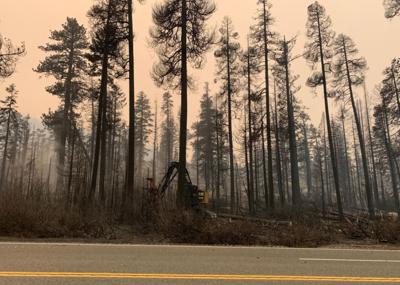
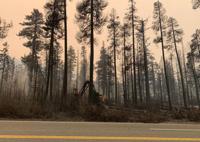
TFP’s first log purchases were from the salvage and clean-up efforts at Sierra-at-Tahoe Ski Resort, which was significantly impacted by the Caldor Fire in the summer of 2021.
"The single biggest challenge to increasing the pace and scale of forest restoration work in Tahoe is the lack of a viable place to take the excess fuel in our forest," said John Jones, Tahoe Fund board member and chair of its forest health committee. "We are ecstatic and relieved to have a new sawmill just ten miles from the Tahoe Basin to help reduce the threat of catastrophic wildfire."
According to a 2021 report from Sierra Nevada Conservancy, more than 1.5 million acres of forest were lost in the Sierra Nevada due to wildfires, including the Caldor Fire near Lake Tahoe.
A recent study published in the journal Forest Ecology and Management, relayed by UC Davis, highlighted the importance of forest thinning to help slow down forest fires and a shift from current forest management strategies. Front line reports from the Caldor Fire showed that areas that underwent fuel reductions (including tree density reductions) significantly slowed the fire’s progress in South Lake Tahoe.
The overgrowth of trees, especially the more than 1 million dead trees throughout the Sierra Nevada, has warranted a shift in thinking around reducing tree density to prevent catastrophic wildfire.
“The Forest Service encourages expansion of sustainable value-added businesses and markets for byproducts of forest restoration and hazardous fuels reduction projects,” said Erick J. Walker, Forest Supervisor for Lake Tahoe Basin Management Unit. “It’s great to have this facility coming online and adding to the suite of businesses that contribute to the restoration economy.”
The mill will cut mostly large fire salvage logs initially but plans to also add a small-log line to effectively process thinnings.
“Tahoe Forest Products is excited to help continue in the effort to make our forests and our communities more fire resilient,” said Kevin Leary, Chairman of TFP and CEO of Hallador, TFP’s primary investor. “To achieve this goal, resilience requires drastically reducing densities – as much as 70-80% of trees in certain areas to return our forests to their pre-European settler status of many fewer, but much larger trees.”
The mill will also present employment opportunities for Tribal members and the local community.
TFP will use approximately 10 acres for buildings and processing facilities and 30 acres for log storage.
The mill will produce about 50 million feet of lumber per year and will employ about 40 people.
More information is available at www.tahoeforestproducts.com