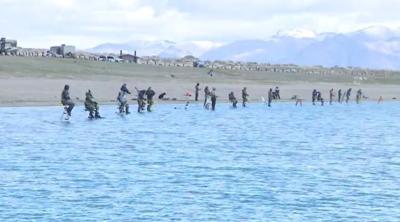



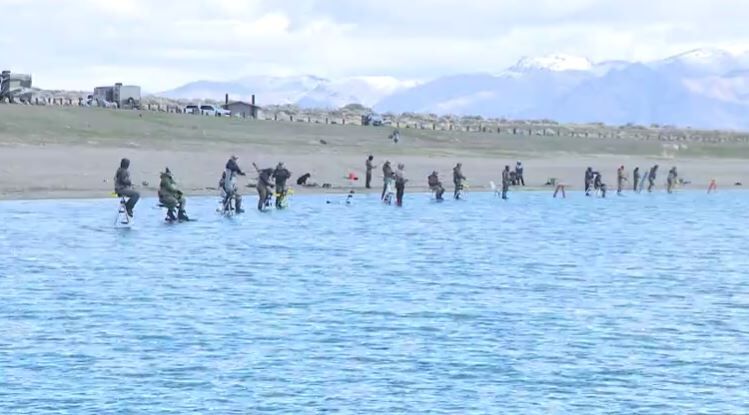
While Pyramid Lake doesn't currently have any harmful species in it that warrant concern, one group wants to keep it that way.
The Pyramid Lake Aquatic Invasive Species Team will be deploying samplers to check for species that are harmful for the lake.
They do this for prevention as some say this lake is the livelihood of the community.
"I really can't say enough about how much this means to the community," said Steven Wadsworth, Chairman for the Pyramid Lake Paiute Tribe. "You know, it's been our life blood for essentially ever."
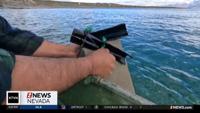
The team deploys the sampler to test what species are in there.
They plan to deploy 11 of them in the lake.
They also test parts of the Truckee River.
The team aims to set them out by April 1 or when the water reaches around 48 degrees Fahrenheit.
They set the first one of the year a couple weeks ago.
The warmer the water gets, the more some invasive species can multiply and the more damage that can be done.
"You know the quagga mussels, they clog up everything," said Justin Jackson, Field Supervisor for the Pyramid Lake Aquatic Invasive Species Program. "Man-made structures. So, they would fowl up any pipes in the lake. So, pumps that fisheries use, anything like that. It would potentially cost up to millions in maintenance per year."
The team uses a buoy in order to find the sampler and a cinderblock to keep it in place.
The sampler provides an artificial habitat for small creatures to land on.
To boil it down, they're looking for anything that shouldn't be in the lake.
In the event they do find something, they say they have it all covered.
"So, if we do get any hits during this process, we can activate our Early Detection Response Plan," Jackson said.
Once the water temperature, GPS coordinates and data are recorded, the sampler gets put back into the water and they check it again in a month.
While the team can only do so much to help preserve the lake, there are ways visitors can help them out.
They are asking for people to clean, drain and dry all equipment and gear before heading out to the lake.
If you would like to learn more about the program, you can find their website below.