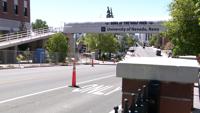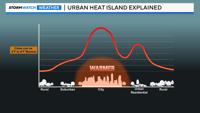
It's been a hot summer with temperatures well above average and multiple records broken. The closer you are to downtown the hotter it usually will be. This is because of the urban heat island effect. It's the same concept as to why you don't want to walk your dogs on the hot asphalt. Asphalt has a much higher heat capacity than grass does.

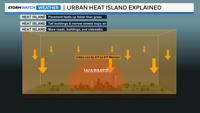
The sun heats the ground, and the ground heats the air. Temperature readings are taken slightly above the ground. Rural areas are usually four to eight degrees cooler than urban areas, because of lack of cooler vegetation. Outlying areas usually cool off much easier when skies are clear and winds are light, compared to urbanized areas.

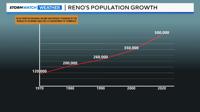
Anything from sidewalks, to roads, and buildings can warm temperatures. Tall buildings with narrow roads can also make the air harder to escape and traps it. Reno's population is growing, going from just over 100,000 people in 1970 to half a million in 2020. Not only does more people typically mean more buildings and asphalt, but that also means more people potentially using their air conditioning. If your air conditioning runs off of fossil fuels, this can lead to smog.

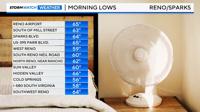
South Meadows is usually a degree cooler than downtown, while the North Valleys can be several. Hidden Valley and Caughlin Ranch are typically a couple degrees cooler as well. Cold Springs can be ten degrees cooler. This impacts snow totals during the winter, but the urban heat island effect is primarily felt during the summer season. This unfortunately makes heat waves worse, and lowers our quality of life.

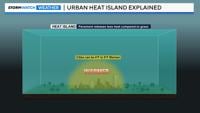
The urban heat island effect is most noticeable in the summer time, but temperatures are usually warmer near downtown and the airport year round. Especially if wind speeds are light. Temperature differences between metro and rural areas are usually more extreme at night. Elevation, wind speeds, and storms can impact temperatures as well. Cooler weather moves in next week with highs in the lower 90's, but we'll be in the upper 90's through Saturday.