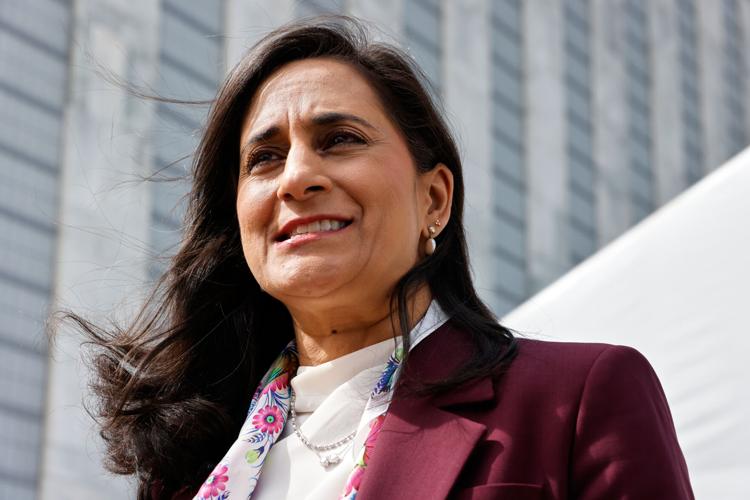
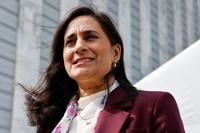


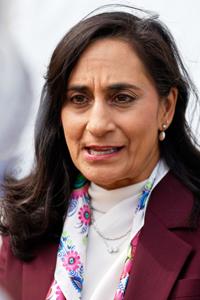



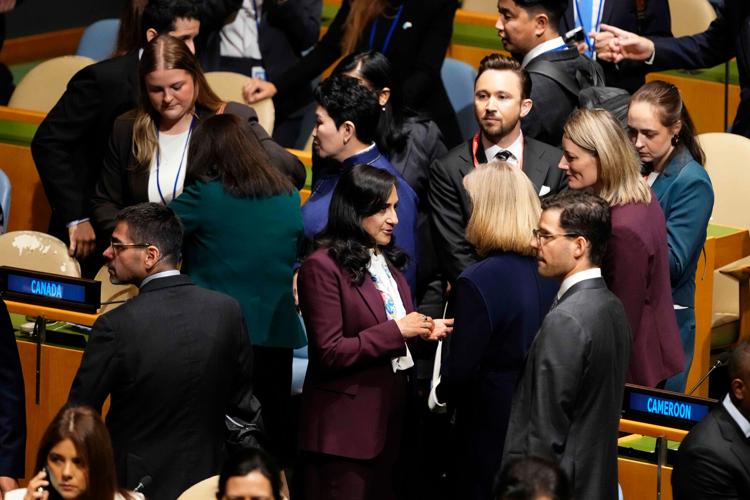
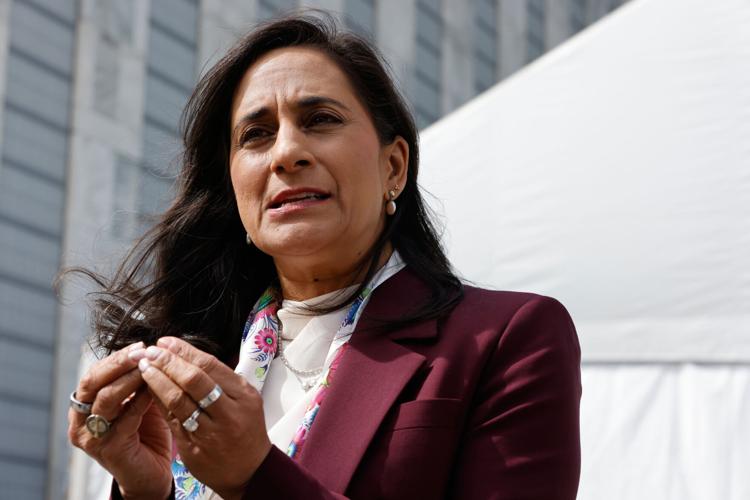
UNITED NATIONS (AP) — Canada is embracing its growing prominence as a champion of “middle powers” at the U.N. General Assembly, Canada's top diplomat said in an interview Tuesday as the international community's biggest annual gathering got into gear.
Prime Minister Mark Carney made a splash last winter by saying frankly that countries like his own could no longer afford wishful thinking about the international system and needed to act together. Nine months later, Foreign Minister Anita Anand said in an interview that Canada sees its “middle power strategy” bearing fruit, and the assembly’s big meeting could seed more growth.
“This is, of course, a key moment because so many countries from around the world come to have conversations about their respective foreign policies. And many middle powers indeed look to Canada, look to us, to lead in this conversation," Anand said.
She spoke a day after her country co-launched a new group of advocates for U.N.-style international cooperation — “Partners for Multilateralism” — on the assembly's sidelines.
Canada is a founding member of the 81-year-old United Nations and has long contributed to its global conversation, humanitarian work and decision-making; the nation has won election to the powerful U.N. Security Council six times over the decades.
But this year has shifted Canada's presence on the international stage — and quite dramatically, as diplomacy goes.
First came Carney's speech at the World Economic Forum in January, when he said that rising, raw geopolitics were creating “a rupture in the world order" and that “middle powers must act together, because if we’re not at the table, we’re on the menu.”
Then, facing U.S. President Donald Trump 's tariffs, insults and cavalier talk of annexation, Carney let trade talks with the U.S. collapse last month rather than accede to terms he called unacceptable.
Carney, a former central bank chief, has set out to double non-U.S. trade within a decade. He convened hundreds of international investment firm executives for a Canadian investment summit last week and is hoping for free-trade deals with India, among others, by year’s end. He also is deepening ties with the European Union.
Canada's objectives — from trade to transatlantic security to Arctic defense to aiding Ukraine in Russia's four-year-old war — aren't new, “but we are bringing them into singular focus with our middle power strategy,” Anand said.
“It provides an impetus for like-minded countries to come to the table,” she said, adding: “We are all seeing the geopolitical shifts in the global environment.”
Anand is set to give Canada's main speech to the assembly on Saturday, for various scheduling reasons. The message “will be very much about implementing the middle power strategy,” said Anand, who described her country’s overall foreign policy as “principled pragmatism.”
Trump, for his part, didn't mention Canada in his address Tuesday. He touted the United States' economic, military and technological might and celebrated international investments in what he called “the hottest country anywhere in the world.”