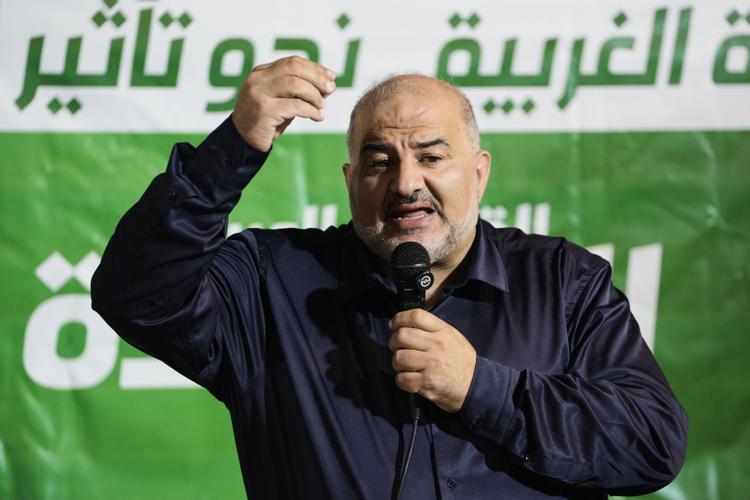







BAQA AL-GHARBIYYE, Israel (AP) — Mansour Abbas has done nearly everything Israel asks of its Palestinian citizens.
The leader of a small Arab political party condemned Hamas’ Oct. 7, 2023, attack. He rarely speaks about the war in Gaza or Israel’s occupation of the West Bank, instead focusing on local issues like crime. He broke a taboo in 2021 by bringing an Arab party into an Israeli government, in which he served as a loyal partner. This time around, the second-ranked member of his party list is a mainstream Jewish candidate.
But Prime Minister Benjamin Netanyahu and his chief rivals have said they won't form a coalition with his or any other Arab-led party after the Oct. 27 election – even if that means months of gridlock and another round of voting.
It’s a measure of where Israel’s long-marginalized Arab minority finds itself three years after the Oct. 7 attack. Their speech is heavily policed, their leaders have been branded as traitors, and at one point their parties were outlawed before a court lifted the ban. Yet in a tight race, Abbas and other Arab politicians are poised to play a potentially decisive role in choosing the next prime minister — a rare opportunity to wield their influence.
The stakes in the coming election are “existential,” said Yousef Jabareen, leader of the Joint List of Arab parties, which adopt a less conciliatory line than Abbas’ Islamist Ra’am party.
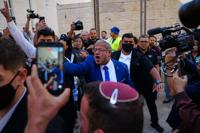
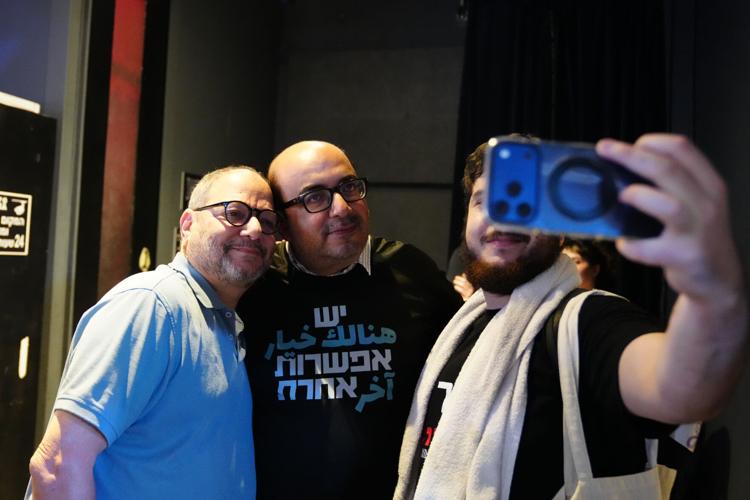
“We have to use our political power in order to basically block the deterioration of the situation,” he said at a small campaign event in Tel Aviv, before slipping out the back to avoid a crowd of far-right protesters.
Activists say protests are heavily policed – crime less so
Palestinians who remained within Israel after the 1948 war surrounding its creation, and their descendants, today make up about 20% of the population. They have citizenship, including the right to vote, but their close family ties and support for Palestinians in Gaza and the West Bank lead many Jewish Israelis to view them with suspicion.
They face discrimination and suffer from soaring crime rates, a problem that Arab activists blame on police negligence and the police say is rooted in the refusal of community leaders to work with them.
The homicide rate among Palestinian citizens is more than 22 times higher than among Jewish Israelis, while arrest and indictment rates are far lower. The Abraham Initiatives, an Israeli organization that advocates for equal rights, has tallied 184 crime-related killings in Arab communities so far this year. The group said in July that only 12% reported in the first half of 2026 had been solved.
Authorities have meanwhile aggressively curtailed freedom of expression, activists say. Police have routinely broken up anti-war protests, restricted displays of Palestinian flags, and arrested hundreds of people over social media posts, according to the Israel-based rights group Adalah.
“They’re not writing ‘Kill the Jews.’ Some of them are writing, ’We pray for Gaza,’” Hassan Jabareen, its general director, said.
The Israeli government says it is a Jewish state in which minorities have equal rights, and that its crackdown on certain kinds of speech and protests is rooted in security concerns.
Jabareen said the perceived over-policing of protests and under-policing of violent crime leaves Palestinians feeling less like citizens and more like threats to be contained.
“We have to choose between the danger of being killed and being discriminated against,” he said.
A taboo was broken, and then Netanyahu returned
Arab-led parties have long served in opposition to a system they believe is fundamentally unfair. Until 2021, none had joined a coalition government.
Abbas’ decision to do so five years ago marked a major shift. The 52-year-old dentist argued that Arab leaders needed a seat at the table. Critics accuse him of sidestepping the larger Israeli-Palestinian conflict to court potential coalition partners, while he argues that focusing on local issues is the best way to serve his constituents.
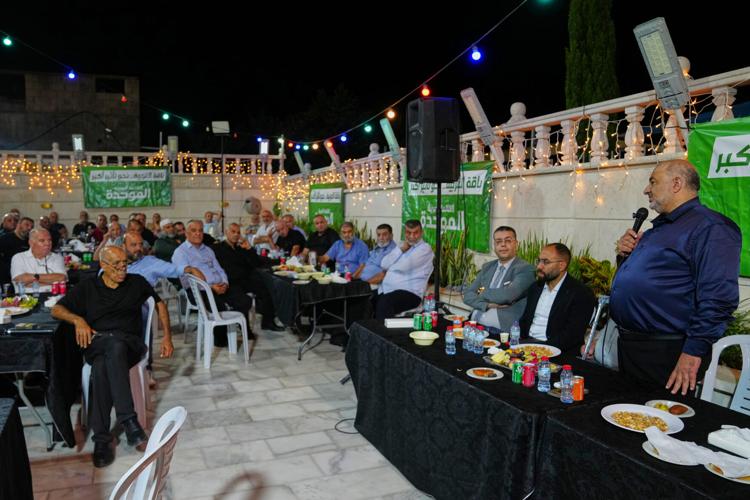
“Crime and murder are issues linked to people’s lives and there is no value higher than the value of human life. We’re responsible, as representatives elected by the Arab public, to serve this public,” he said at a campaign event in northern Israel last week.
The government he joined lasted a little over a year, until new elections in 2022 returned Netanyahu to power at the head of the most nationalist and religious government in Israel’s history.
Far-right Finance Minister Bezalel Smotrich has described Palestinian citizens of Israel as an “internal front” in the war and “an existential threat to the state.”
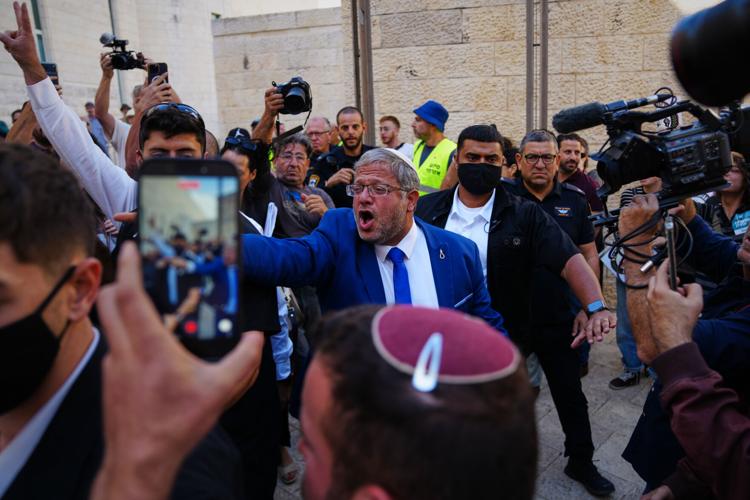
With the far-right National Security Minister Itamar Ben Gvir in charge of law enforcement, at least 200 Palestinian citizens indicted for speech-related offenses have been classified as security prisoners, according to Adalah. They’ve been subjected to brutal conditions, including overcrowding and severe restrictions on food, often in the same facilities as suspected militants from Gaza.
In theory, they could be kingmakers
Multiple parties compete for the 120 seats in Israel’s national assembly, known as the Knesset. None is expected to win anywhere near 61 seats, so whoever succeeds in cobbling together a majority coalition will be the next prime minister. That can give small parties outsized influence.
Netanyahu won’t work with the Arab-led parties, and they have also ruled that out. Netanyahu’s main opponent, the centrist retired general Gadi Eisenkot, also says he won't ally with Arab-led parties. Even Yair Lapid, a center-left leader of the 2021 government, told The Associated Press in May that he would not form another coalition with Ra'am.
They could change their minds, or form a minority coalition backed by Arab-led parties from the outside. Otherwise, a big win for the Arab-led parties would likely lead to another round of elections, with Netanyahu’s government staying on as a caretaker.
Tensions have worsened since Oct. 7
The vast majority of the roughly 1,200 people killed and 251 taken hostage in the Oct. 7 attack were Israeli Jews, but Palestinian citizens of Israel were also among those killed and abducted. Israel’s retaliatory offensive has killed over 74,000 Palestinians in Gaza, according to local health authorities.
Mohammad Darawshe is a director at the Givat Haviva Center for a Shared Society, a decades-old organization that campaigns for Jewish and Arab equality. His nephew, a Palestinian citizen of Israel and a paramedic, was killed in the Oct. 7 attack.
He said there was a brief moment of solidarity between Jewish and Palestinian citizens after the attack, but it soon faded as Israel's military response alienated many Palestinians. Rather than work to heal divisions, Netanyahu and his ministers have fed them, Darawshe said.
“This government provides the ecosystem for racism,” he said.
Still, some Palestinian citizens see it as a duty to participate and vote, even when the government makes them feel like outsiders.
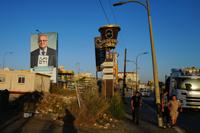
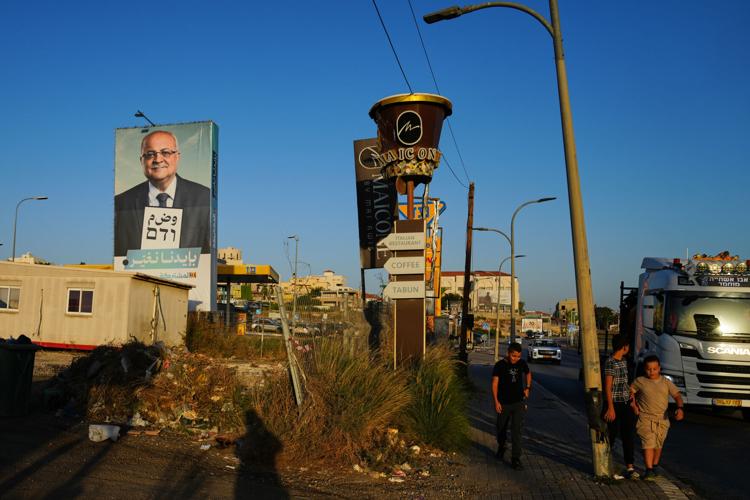
Ahmed Kadan, a 50-year-old guidance counselor in the Arab town of Baqa al-Gharbiyye, said he plans to vote for Ra’am.
Palestinian citizens have a huge presence in Israel’s medical community and other professions, and they pay taxes, but he said the government ignores their needs.
Last month, three young men were found dead in a burning car on the outskirts of the town – apparently a criminal attack. Police have yet to identify any suspects.
“We live in this state and not in any other place,” Kadan said. “We’re doing our duty but not getting what we need.”