





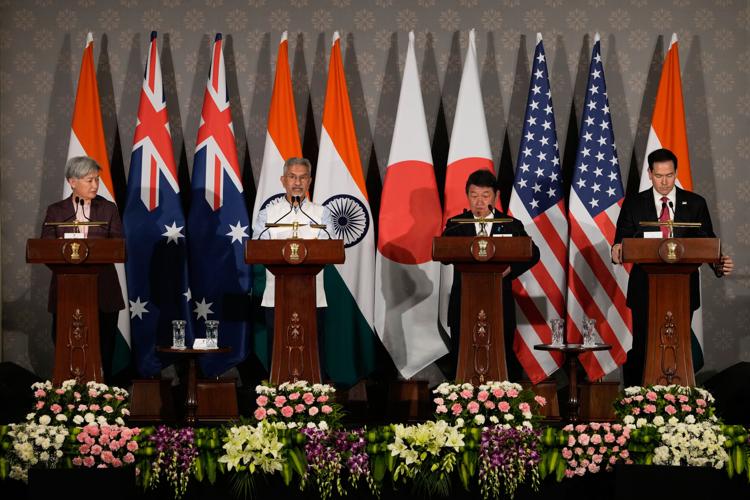
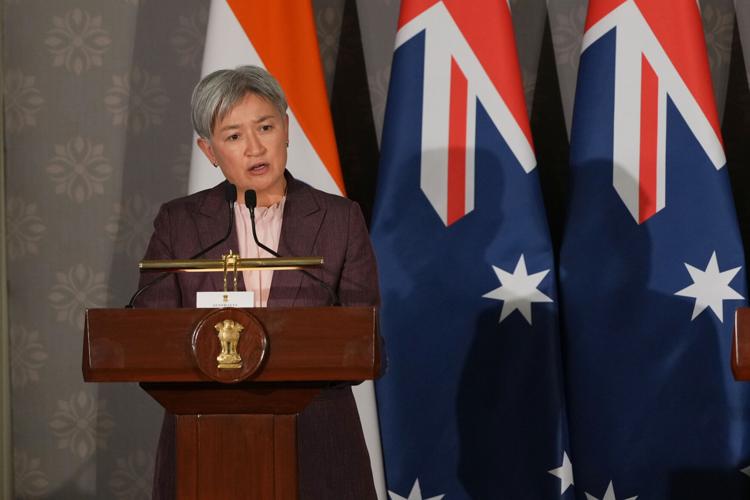
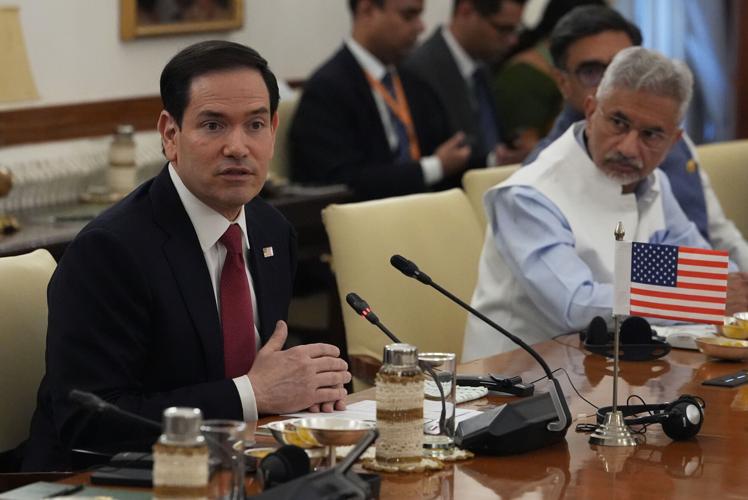
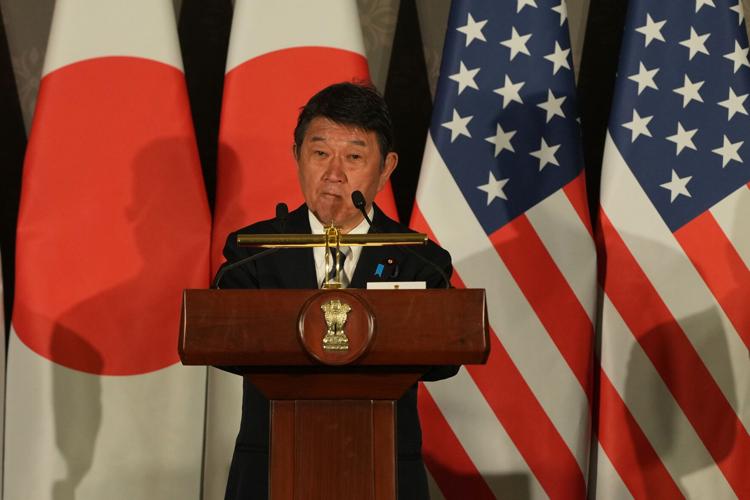
NEW DELHI (AP) — Foreign ministers from Australia, India, Japan and the United States announced new initiatives on Tuesday on maritime security, port infrastructure and energy to boost cooperation in the Indo-Pacific to counter concerns about China’s growing influence.
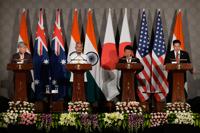
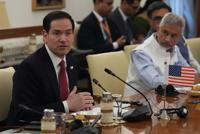
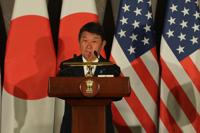
The announcements by the group of nations known as the Quad came after talks in New Delhi between India’s Foreign Minister Subrahmanyam Jaishankar, U.S. Secretary of State Marco Rubio, Japanese Foreign Minister Toshimitsu Motegi and Australian Foreign Minister Penny Wong.
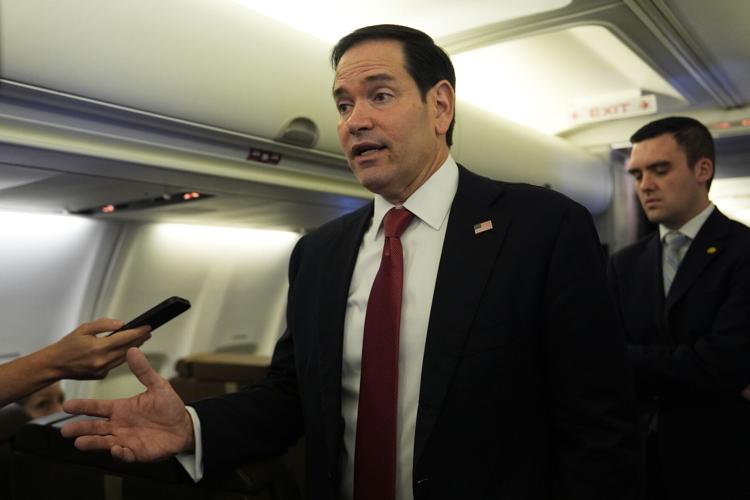
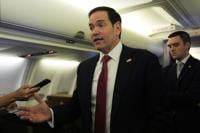
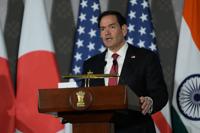
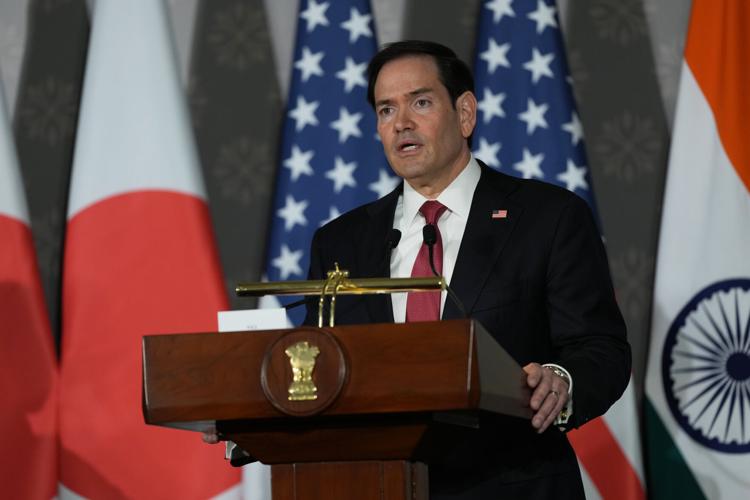
Speaking after the meeting, Rubio announced a new Indo-Pacific maritime surveillance initiative to integrate the four countries’ surveillance capabilities and strengthen real-time information sharing across the region. He said the Quad would work with Fiji to upgrade port infrastructure in the Pacific islands, marking its first joint regional infrastructure project.
The ministers also launched an Indo-Pacific energy security initiative aimed at strengthening regional fuel and energy supply chains, with the U.S. set to host a Quad fuel security forum later this year, Rubio said.
“We are deeply committed to this partnership. It is a linchpin in a cornerstone of our global strategy as a nation,” he said.
Separately, India and the U.S. signed a deal to strengthen cooperation on critical minerals as global concerns grow over reliance on China-dominated supplies.
Asked about the Quad agreements, China said that cooperation among countries should promote regional peace and stability and not target third parties.
“We do not support forming exclusive small groupings or bloc confrontation. Any cooperation should not undermine mutual trust and cooperation among regional countries," Foreign Ministry spokeswoman Mao Ning said in Beijing.
The Quad group is a key strategic partnership for cooperation on maritime security, supply chains and regional strategy as China expands its military and economic influence in the Indo-Pacific.
Its members have repeatedly accused China of flexing its military muscles in the South China Sea and aggressively pushing its maritime territorial claims. Beijing maintains that its military is purely defensive to protect what it says are China’s sovereign rights and calls the Quad an attempt to contain its economic growth and influence.
The Quad meeting comes days after U.S. President Donald Trump visited China, a trip closely watched in New Delhi for signs of any shift in Washington’s approach toward Beijing.
Ahead of Tuesday's talks, Rubio said that Washington wants the Quad to move beyond being a dialogue platform and take more concrete action on issues including maritime security and critical minerals. He also said officials were working toward a summit of the four leaders later this year, although no date has been announced.
The four countries had hoped to hold a leaders’ summit in India last year, but the plan was delayed because of strains in U.S.-India relations, including disagreements over tariffs.
Jaishankar described the talks as “an exercise of considerable value,” saying the ministers also discussed maritime trade, energy and fertilizer supplies, as well as critical minerals. He added that as economic activity, energy, trade and maritime commerce in the region grow, “the responsibilities of the Quad will grow commensurately, and we must prepare for that.”
The leaders also discussed the Iran war and halted energy shipments through the Strait of Hormuz.
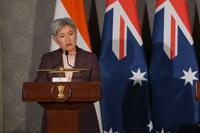
Australia's Wong said the Indo-Pacific was facing “acute economic stress” and warned that any closure of the strait would have serious consequences for regional energy security.
“We recognize the importance of maintaining the principle of freedom of navigation and our opposition to any tolling proposition,” Wong said, referring to Iran’s plan to charge vessels passing through the Strait of Hormuz.
She said the Quad reflects a shared commitment among four sovereign nations to a free and open Indo-Pacific.
“There is great alignment between our interests. We all share a vision for the Indo-Pacific, a region that is free and open,” she said.
——
Associated Press journalist Eduardo Castillo in Beijing, China contributed to this report.